
Last updated November 23, 2026
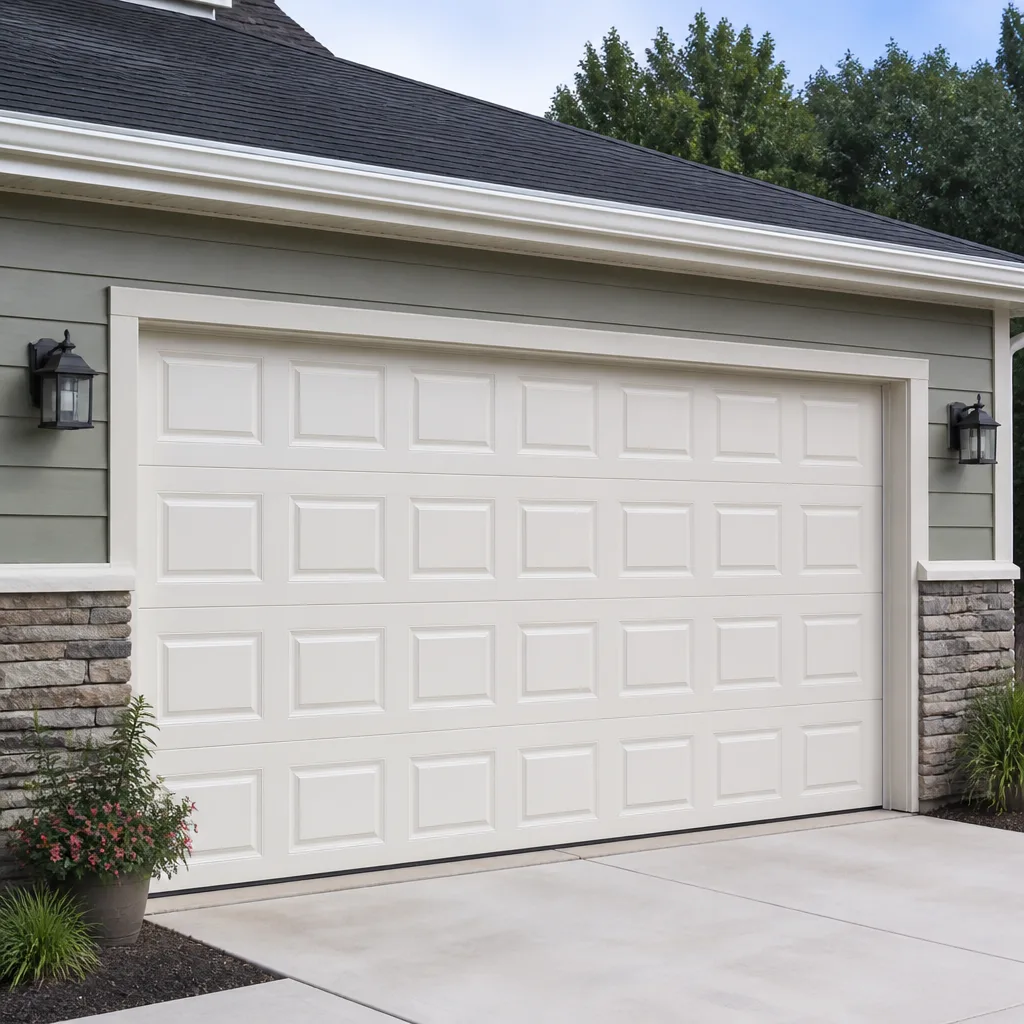 Raised-panel steel
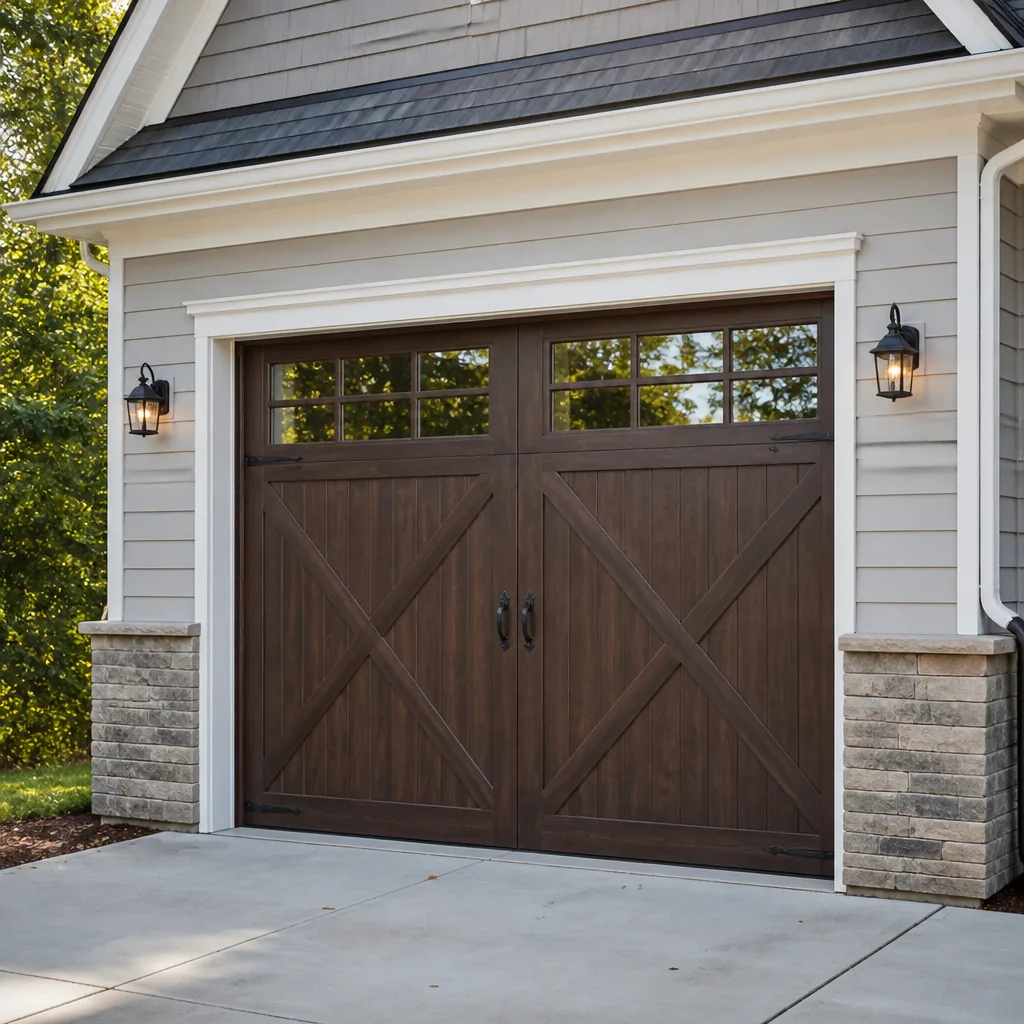 Carriage house
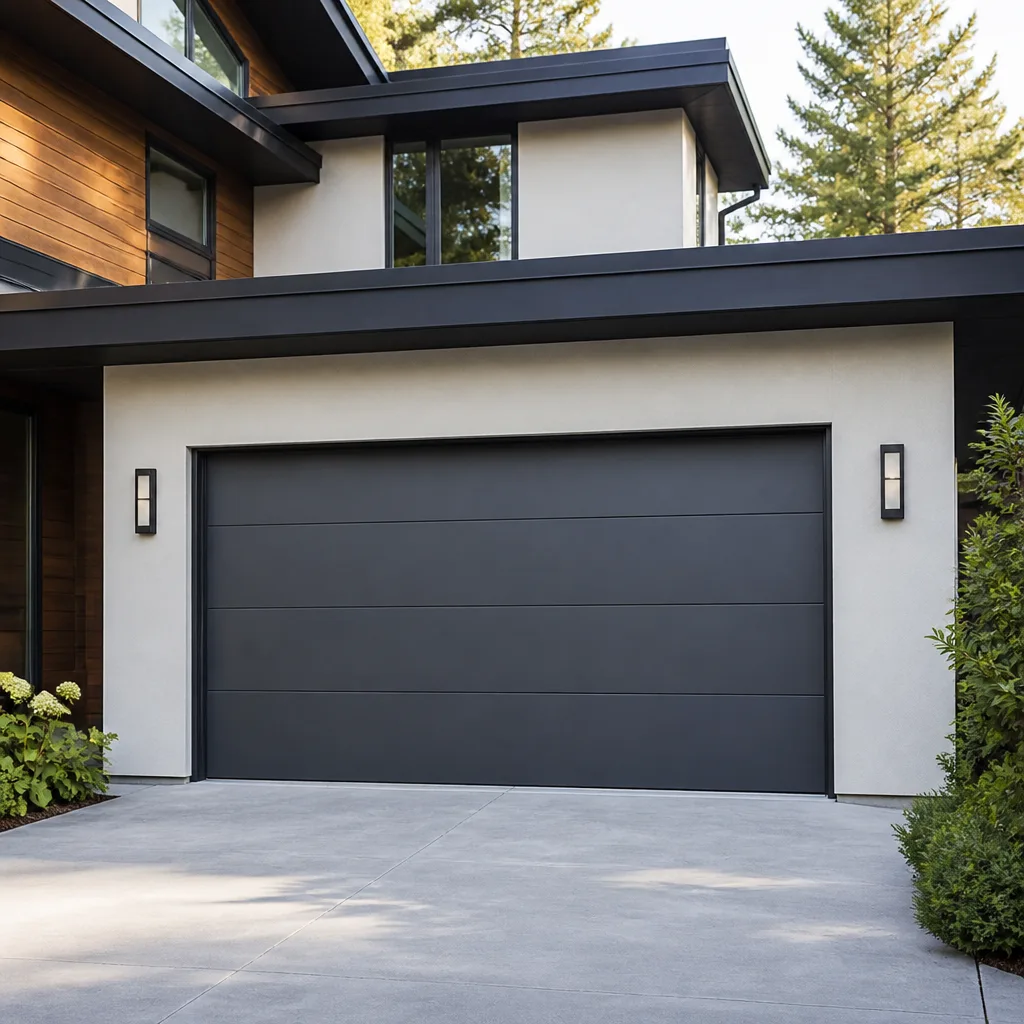 Modern flush
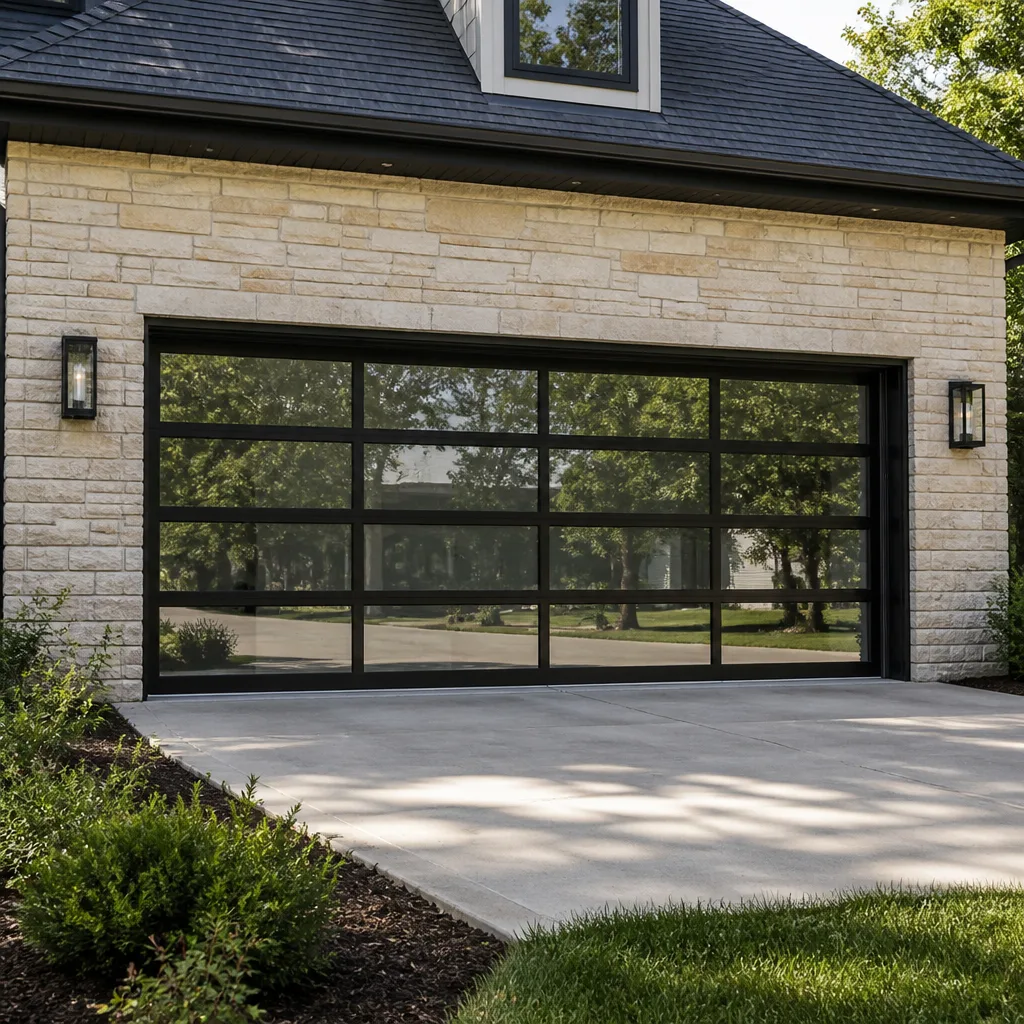 Full-view glass
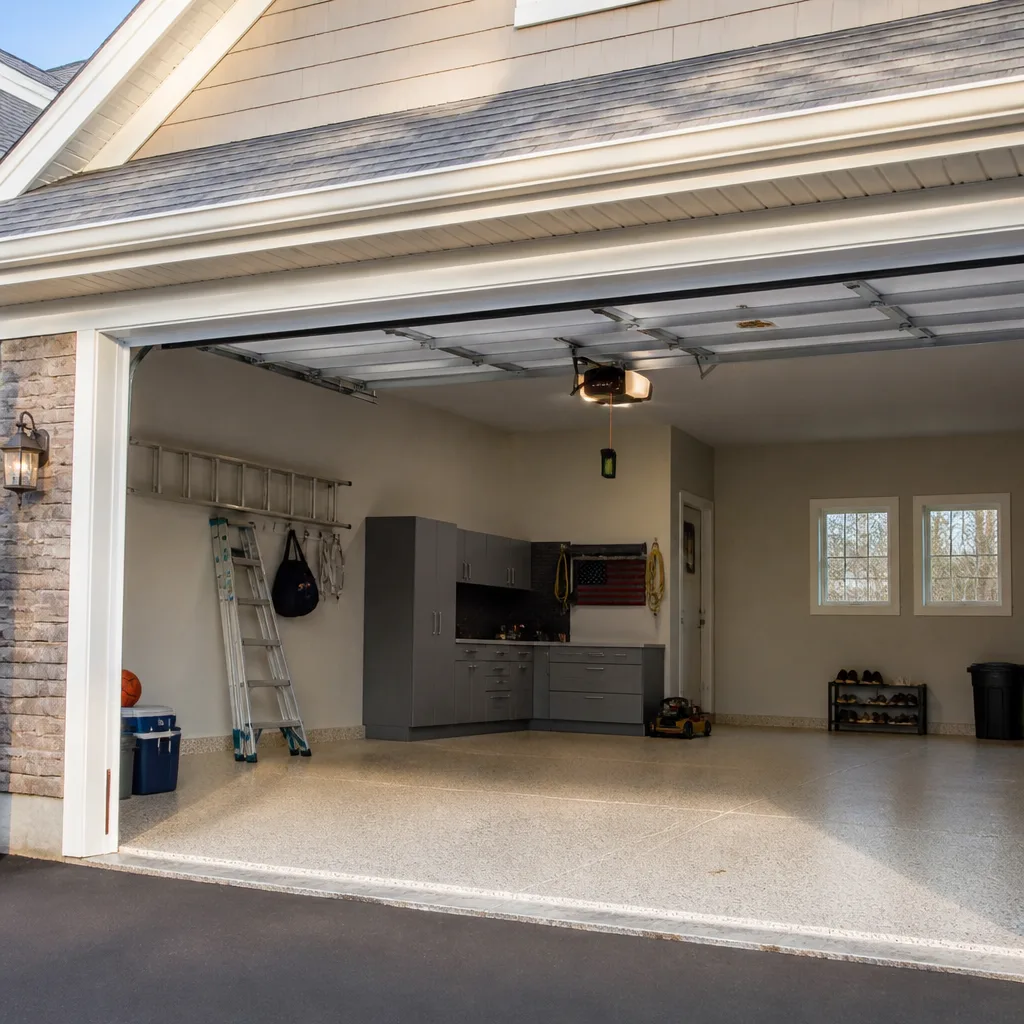 LiftMaster openers
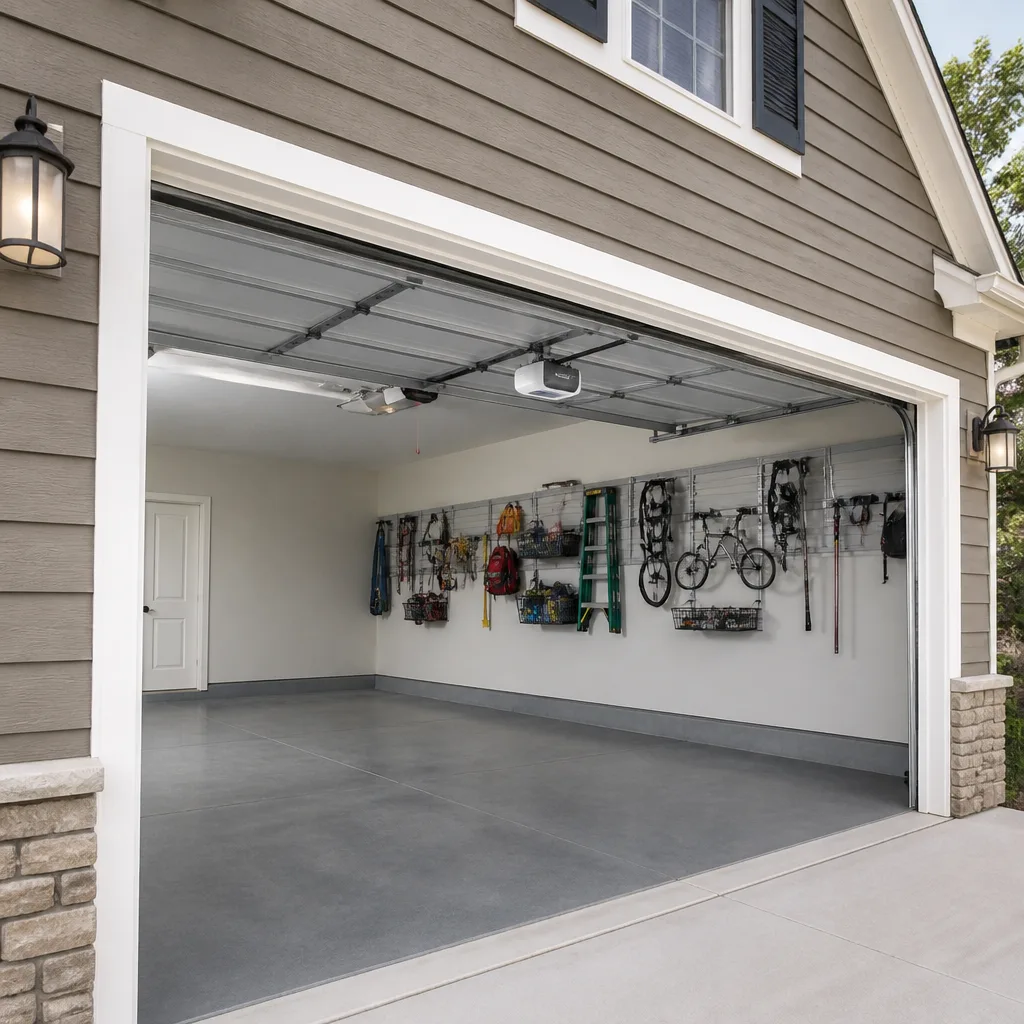 Chamberlain openers
Full 25-point door and opener safety check with every visit - springs, cables, rollers, tracks, and your LiftMaster or Chamberlain opener included
You get a price before we start. It does not change when the pro arrives.
Get your free estimateGarage Door Warning Signs: A Hartford Homeowner’s Reference Guide
A grinding noise on startup and a grinding noise mid-travel sound almost identical through a wall, but they point at completely different parts of your door system. One comes from the opener’s drive gear assembly. The other usually traces back to a binding roller or a dry hinge. Treat them the same and you’ll spend money on the wrong repair while the real fault keeps getting worse. That’s the core problem with how most of us read garage door symptoms: we notice the dramatic ones and overlook the mechanical ones that show up weeks earlier. In our experience across Hartford, most failures signal ahead 60 to 90 days. This guide decodes the specific noises, movements, and visual cues so you know which component is talking to you.
Quick Answer
Garage door warning signs worth acting on include grinding, squealing, popping, or rattling noises, a door that lifts unevenly, springs with a visible gap or rust line, opener lights that blink in a repeating pattern, and a door that closes more slowly than it used to. In Hartford’s climate, a door that worked fine in October but binds or reverses in January is usually a thermal contraction issue in the track or spring, not a sensor fault. Catching any of these early turns a full spring or opener replacement into a smaller repair.
Styles & brands we work with
- Raised-panel steel
- Carriage house
- Modern flush
- Full-view glass
- LiftMaster openers
- Chamberlain openers
Table of Contents
- The Noise-to-Component Diagnostic Map
- Visual Signs of Torsion Spring Fatigue
- Opener Warning Indicators: Blink Codes and Drift
- The Slow-Close Symptom Explained
- The Hartford Winter Warning
- The Full Visual Walk-Around Checklist
- Common Mistakes to Avoid
- When to Call a Professional
The Noise-to-Component Diagnostic Map
Noise is the earliest and most precise warning a garage door gives you. The key is matching the sound to where and when it happens. A sound at startup is different from a sound mid-travel, and a sound on the way down is different from a sound on the way up. Here’s how we read the four noises Hartford homeowners ask us about most.
Squealing. A high, thin squeal usually means dry rollers or a dry hinge. Rollers run on bearings that should carry lubricant; when they dry out, metal rides on metal and you hear that pitch. This is one of the few garage door symptoms a homeowner can address directly with a proper garage door lubricant on the rollers, hinges, and springs, never with household oil, which attracts grit.
Grinding. Grinding is where the location matters most. Grinding right as the opener engages points at the drive gear assembly inside the opener housing, often a worn plastic gear in a chain or belt drive. Grinding mid-travel points at a roller dragging in the track or a hinge binding at a panel joint. Listen for when it starts.
Popping. A sharp pop, often near the top center of the door, is a torsion spring under stress. The spring coils load and unload as the door moves, and a fatigued spring can slip a coil with a pop. A popping torsion spring is a stop-what-you’re-doing sign. These springs hold enormous tension and are not a homeowner repair.
Rattling. Rattling during travel usually means loose hardware: a bracket, a hinge bolt, or a roller stem that’s backed out. But if the rattle comes with a visible gap between panels, that’s panel separation, and it needs a technician to realign before the panels stress and bend.
| Sound | Most Likely Source | When You Hear It |
|---|---|---|
| Squealing | Dry rollers or hinges | Continuous through travel |
| Grinding | Opener drive gear (startup) or roller/hinge (mid-travel) | Startup vs. mid-travel tells you which |
| Popping | Torsion spring under stress | Near top center, during travel |
| Rattling | Loose hardware, or panel separation | Throughout travel |
If any of these has started in your Hartford home, note the exact moment it happens. That detail alone narrows the diagnosis before a technician even arrives, and it’s the kind of brand-and-model-specific read that separates a garage door specialist from a generalist.
Visual Signs of Torsion Spring Fatigue
Torsion springs fail slowly before they fail suddenly. The fracture that leaves your door stuck is almost always preceded by visible signs a homeowner can spot without touching anything. Look at the spring mounted on the shaft above your door, and check for these three things.
- The gap. A healthy torsion spring is a tight, even coil. If you see a visible gap opening between coils, or a coil that looks stretched compared to its neighbors, the spring has lost tension and is on its way out.
- The rust line. A single line of rust running across the coils is often where the spring is beginning to crack. Rust collects in the hairline stress point before the metal separates. A rust line on a torsion spring deserves a look from a technician.
- The uneven lift. Stand back and watch the door open. A door that lifts with one side lagging, or that looks slightly crooked at the top, is telling you the springs aren’t carrying the load evenly. That’s tension fatigue, and it loads the opener and the panels harder every cycle.
A torsion spring is the highest-tension component in any garage door system. A fatigued spring can release that stored energy without warning, and that’s genuinely dangerous. Don’t try to test tension by hand, don’t try to wind or unwind a spring, and don’t cut a spring out yourself. This is a trained-professional repair, full stop. We handle spring repair on staff because it’s the technical heart of the trade, and we recommend you treat any spring symptom as a reason to stop using the door and get it looked at. Call (877) 792-6067 to set up a free estimate. We answer 24/7. Fast dispatch from 7am to 7pm, Sunday through Friday.
Opener Warning Indicators: Blink Codes and Drift
Modern openers talk to you through their diagnostic lights. If you run a LiftMaster or Chamberlain unit, the wall control or the motor head itself will flash a repeating pattern when something’s wrong, and each pattern maps to a specific fault. Learning to read those flashes saves guesswork.
Three opener indicators come up most often:
- Motor thermal overload. The opener flashes a pattern and refuses to run after a stretch of use. The motor has overheated, usually because it’s been fighting extra load, such as a binding door or a weakening spring. The overload is a symptom; the load is the cause.
- Travel limit drift. The door stops short of fully closed, or reverses before it reaches the floor, and the flash pattern points to a limit setting that’s drifted. The travel limits tell the opener where the floor and the fully open point are, and they shift over time as hardware wears.
- Force sensor degradation. The opener reverses on contact with something small, or stops when the door meets resistance it used to push through. The force sensor is designed to reverse on obstruction for safety, but a sensor that’s drifted too sensitive will reverse on nothing. That’s a setting, and it can usually be corrected.
We work on both the smart-home-integrated side (LiftMaster and Chamberlain Wi-Fi, battery backup, and MyQ) and the older legacy openers still running across Hartford garages. Whatever your brand and generation, a blink pattern is a precise clue, not a mystery. Note how many times the light blinks and what the door was doing when it happened, and a garage door specialist can decode it quickly. Our technicians have up to 11 years of experience reading exactly these signals.
The Slow-Close Symptom Explained
A door that takes longer to close than it used to is one of the most misread symptoms on any garage door. Most homeowners assume the opener has slowed down or a speed setting got changed. In our experience it’s almost always spring tension. Here’s why.
Your torsion springs are what actually lift and control the door. The opener’s job is to start the motion and manage the travel; the springs carry the weight. When a spring loses tension, the door gets heavier and the opener has to work harder to move it. A tired opener moving a heavy door reads to the homeowner as a “slower” door. The speed didn’t change. The load did.
This is why adjusting the opener speed won’t fix a slow-close door. The opener is compensating for a spring that’s fading, and if you push the speed up you’re just asking a strained motor to work harder, which shortens its life. The right answer is to check the spring tension and the door’s balance.
A simple balance check you can do safely: disconnect the opener (pull the release handle with the door in the closed position) and lift the door by hand to about waist height, then let go. A properly balanced door should stay roughly where you put it. A door that sinks on its own, or that feels heavy and hard to lift, has a spring problem. Reconnect the opener only after a technician has looked at it. This one check tells you more about slow-close than any other symptom. If your door is doing this, call (877) 792-6067 for a free estimate; the price is quoted and agreed before any work starts.
The Hartford Winter Warning
Here’s a pattern we see every cold season in Hartford: a door that worked fine in October starts binding, grinding, or reversing unexpectedly by January. Homeowners often blame the safety sensors. It’s usually not the sensors.
It’s thermal contraction. Metal contracts in the cold, and that contraction shows up in two places on your door system:
- The track. Steel tracks contract slightly in freezing temperatures, and a track that was running true in the fall can pinch or misalign in the cold. A roller that had clearance in October can bind against the track in January, which produces grinding and uneven travel.
- The spring. Torsion springs are steel too, and cold temps change how they behave. A spring already weakened by fatigue can lose the last of its effective tension in the cold, which is why doors that were borderline in the fall fail in the winter.
Hartford’s winters swing between freeze and thaw, and that cycle is hard on door hardware. The practical takeaway: have your door checked before the cold sets in, not after it stops working. A door that’s showing any noise, uneven lift, or slow-close in the fall is a door that’s likely to fail when the temperature drops. If your door has already started binding this season, that’s a repair, not a sensor reset. For reference, doors from Clopay, Amarr, and Wayne Dalton all behave the same way in the cold because the issue is metal physics, not the brand. The fix is a track and spring inspection by someone who knows the hardware. A stuck door in freezing weather is also a security gap: a door that won’t close leaves your Hartford home open, and that’s why we treat emergency response as the safety issue it is. Call (877) 792-6067 and we’ll get a technician out. Fast dispatch from 7am to 7pm, Sunday through Friday. We answer 24/7.
The Full Visual Walk-Around Checklist
Ten minutes with your eyes, no tools, tells you most of what you need to know. Run this checklist every few months, and again before winter. It’s the same walk-around our technicians do first on any call.
- Look at the torsion spring. Check for a gap between coils, a rust line, or a stretched look. Any of these means a technician should look at it.
- Watch the door lift. Stand back and see if it rises evenly. A door that lags on one side or looks crooked is showing you tension trouble.
- Listen to the door. Note any squeal, grind, pop, or rattle and when it happens (startup vs. mid-travel).
- Check the rollers and hinges. Look for a roller out of its track, a hinge bolt backed out, or a bent bracket. A roller visibly sitting crooked in the track is a binding point.
- Inspect the panels. Look for gaps between sections, dents, or cracks. A panel gap means the door needs realignment before the panels stress.
- Check the weather seal. A torn or flattened bottom seal lets cold air and moisture in and can make the door reverse on the way down. This is a common Hartford issue after a hard freeze.
- Watch for opener flashes. If the opener light flashes a pattern instead of running clean, note the count and what the door was doing.
- Do the balance check. With the opener disconnected, lift the door to waist height and let go. It should stay put. If it sinks or feels heavy, the springs need a look.
None of these steps require you to touch a spring or adjust the opener’s force settings. If you find anything on this list that concerns you, that’s the point at which a call makes sense. If you need garage door repair, a technician can run through the full system and give you a written price. The estimate is free, and nothing gets done until you’ve agreed to the price.
What Different Warning Signs Mean for the Opener Itself
Not every symptom traces back to the door. Sometimes the opener is the failing part, and the signs cluster differently. If the door itself moves smoothly by hand but the opener struggles to move it, the opener is the likely source. Common opener-specific warnings include:
- The opener runs but the door doesn’t move. Could be a broken drive gear, a snapped belt or chain, or a released trolley. A grinding on startup points toward the gear assembly.
- The opener clicks but won’t engage. Often a logic board or capacitor issue, especially on older legacy units.
- The opener reverses instantly on command. Force sensor or travel limit drift, or a failing safety sensor, though on cold days read the winter section first.
- Repeated thermal shutdowns. The motor is overheating because the door is fighting it. This is the opener telling you the door load is too high, which points back at springs or track, not the opener.
For garage door opener repair, the brand and generation of the unit matter. A Genie from the 2000s and a LiftMaster with MyQ need different diagnostics and different parts, and a technician who knows both reads the fault faster. Our technicians are trained on eight major residential brands, including LiftMaster, Chamberlain, Genie, Clopay, Amarr, Wayne Dalton, Craftsman, and Raynor, so the diagnosis gets specific instead of guesswork.
See the difference
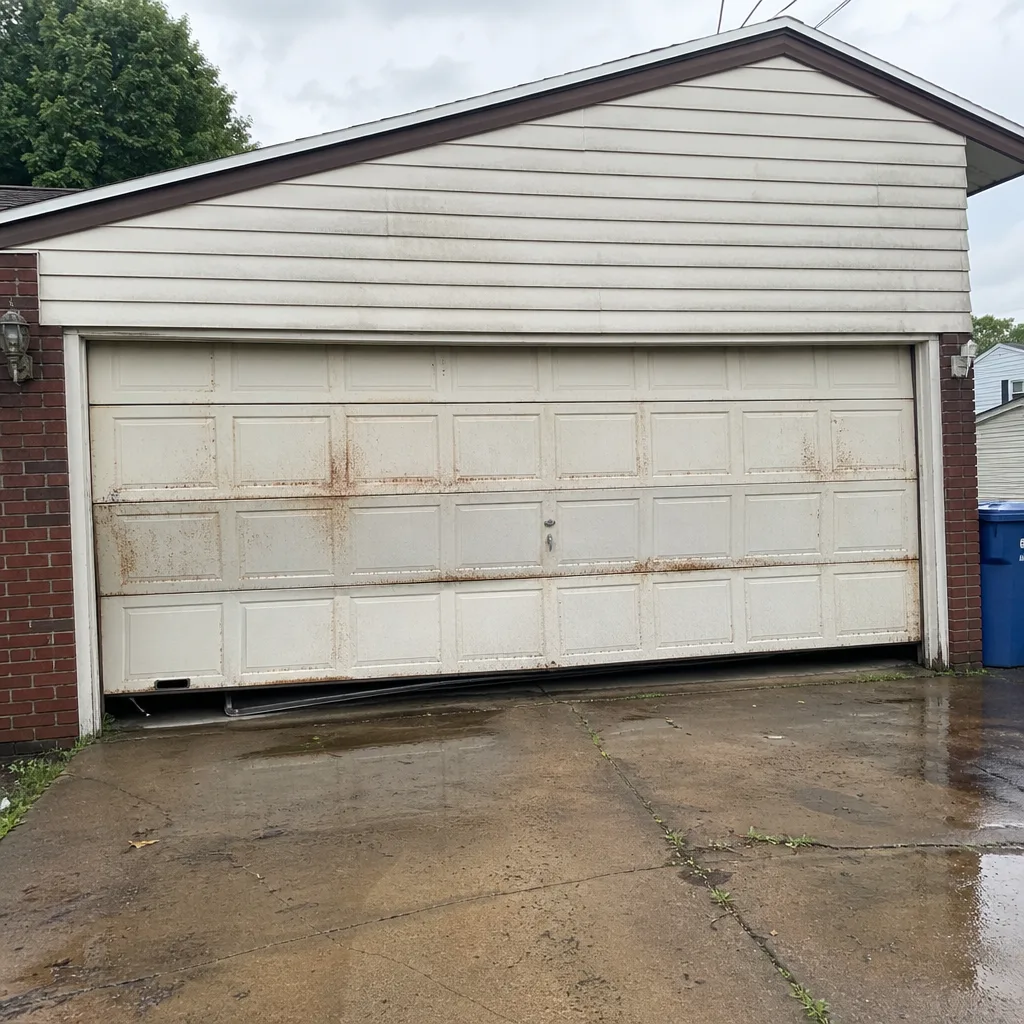 Before
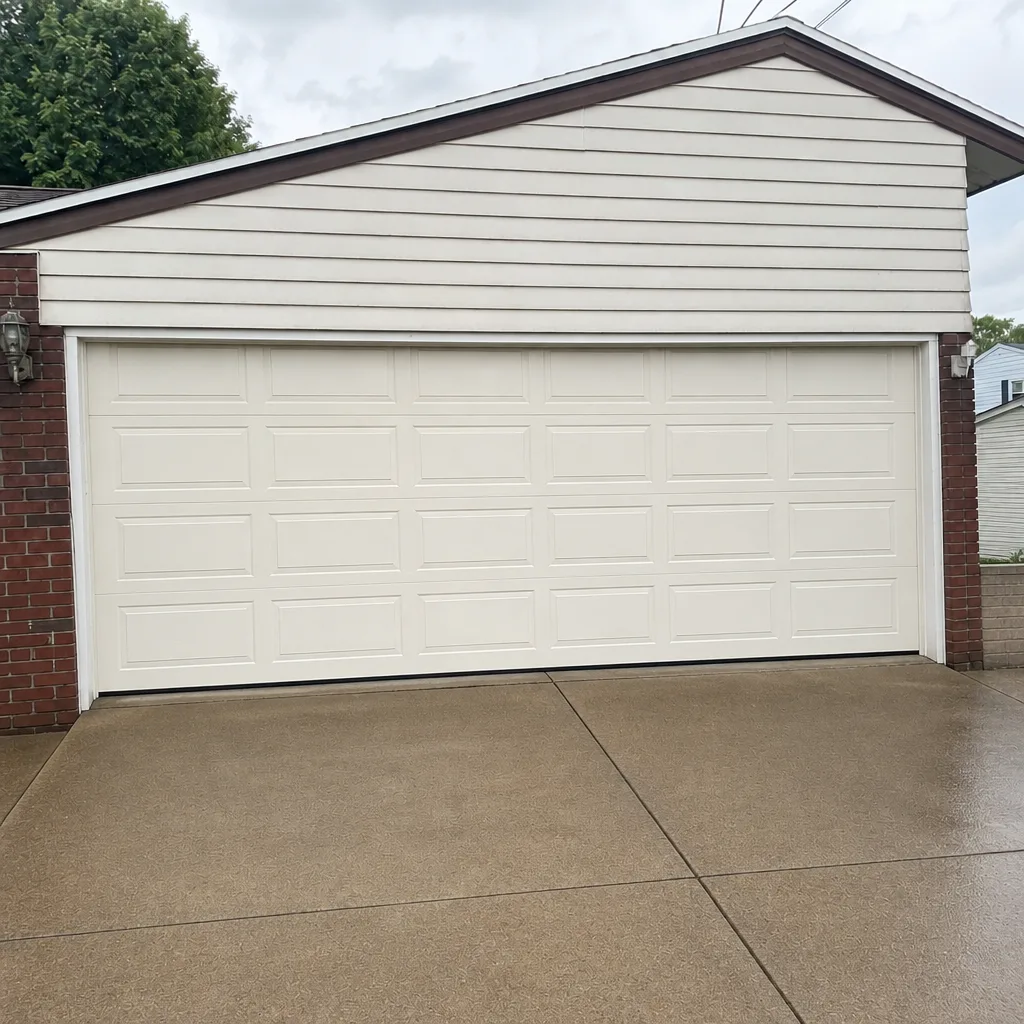 After
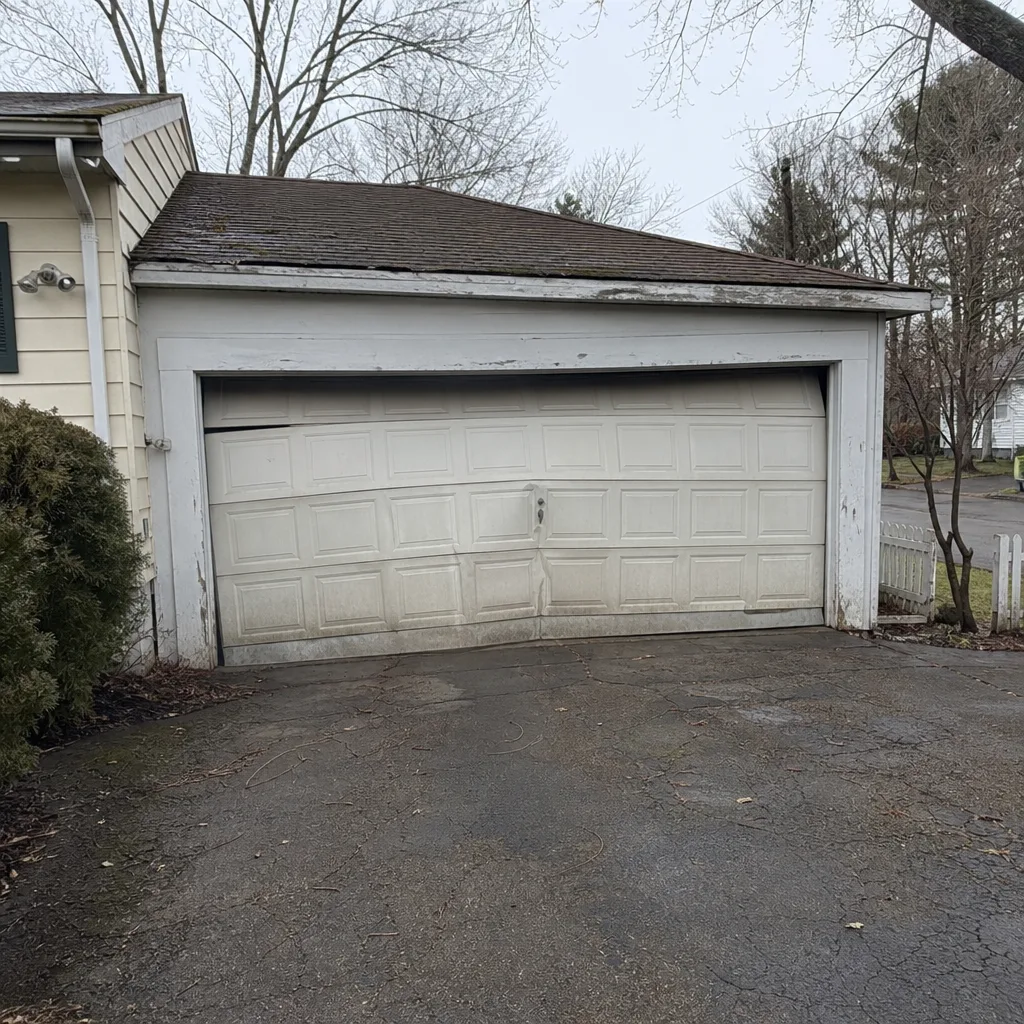 Before
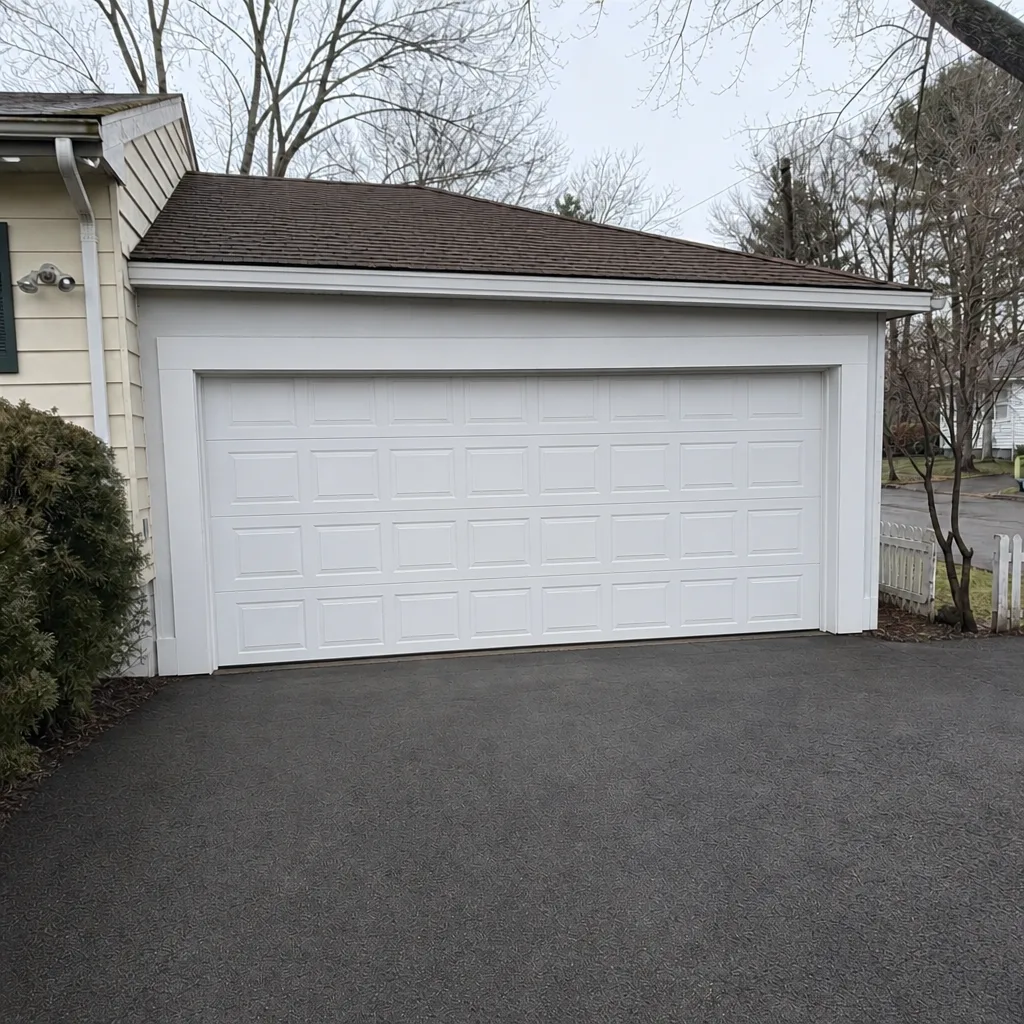 After
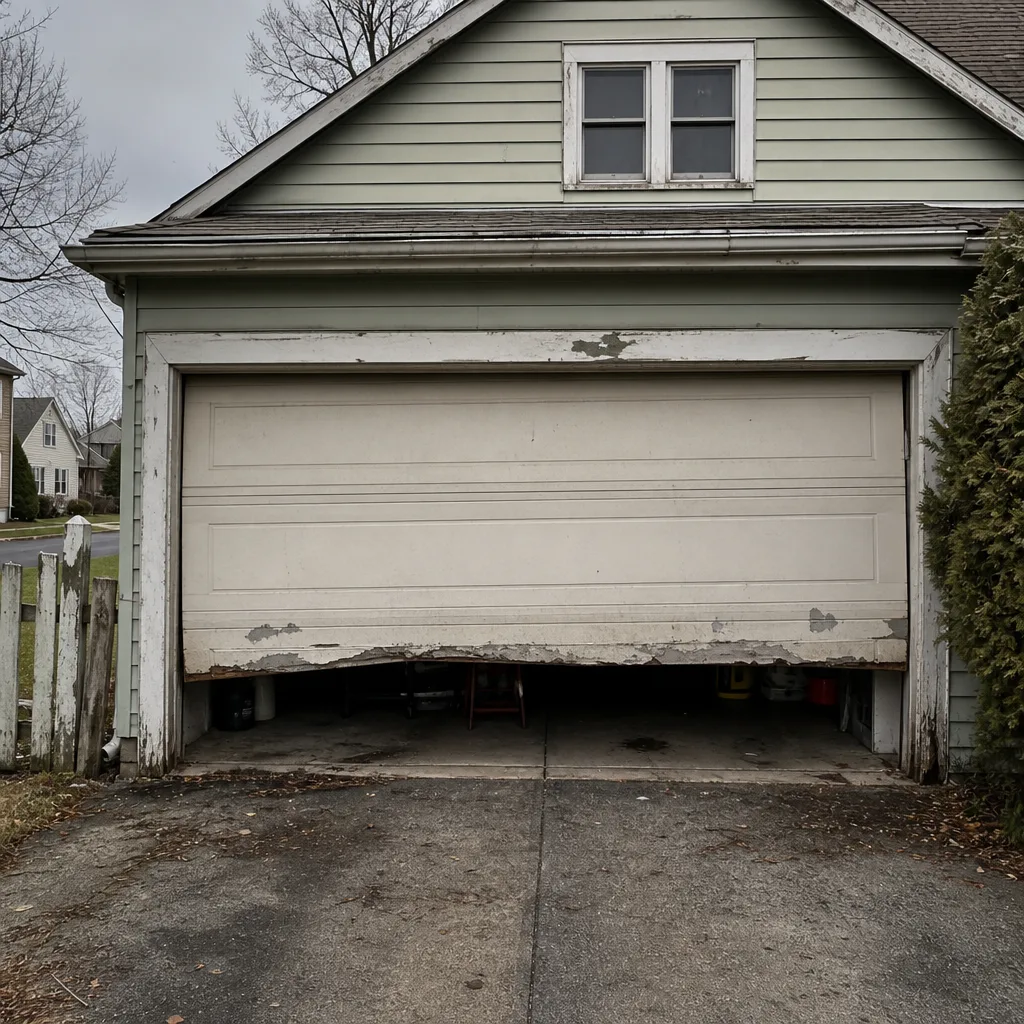 Before
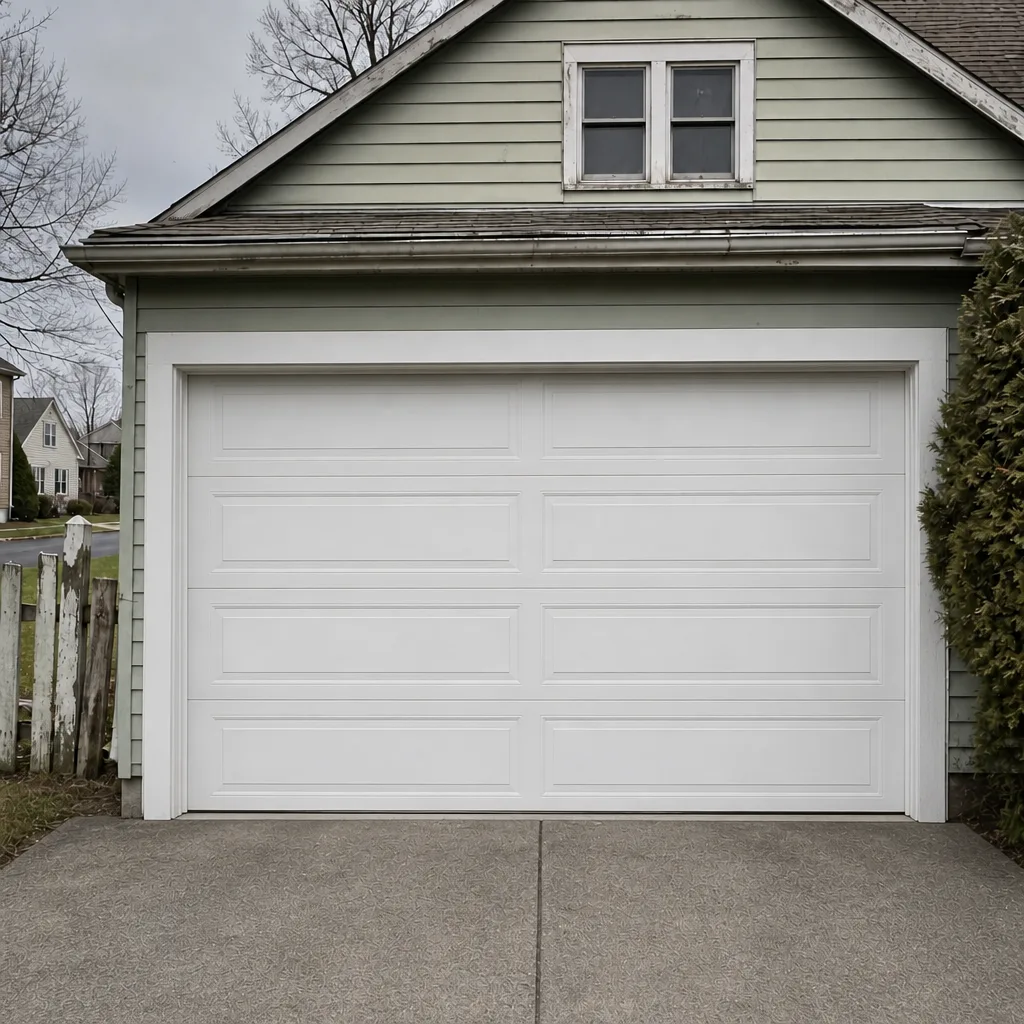 After
Why Catching Warning Signs Early Saves Money
A warning sign is a repair that hasn’t happened yet. A roller dry-out caught early is a lubrication job; ignored, it drags the track and bends a panel. A spring showing a rust line caught early is a spring replacement; ignored, it fractures and can leave the door stuck open in the cold, which is exactly when you can least afford a security gap in Hartford. A force sensor with drift caught early is a setting adjustment; ignored, it reverses on the floor and stresses the panels on every cycle.
The pattern is consistent: the earlier the symptom, the smaller the job. That’s why we read noises by location and timing, not just by how loud they are. A grinding noise at startup and a grinding noise mid-travel point at different components, and matching the symptom to the part is what keeps a repair small. If you’re unsure which category your symptom falls into, the fastest path is a diagnostic look. Call (877) 792-6067 for a free estimate.
If your door has reached the point where repairs are piling up or the panels are beyond realignment, garage door installation is worth a conversation. That’s a measured, scheduled job with a written price, not a same-day repair.
Common Mistakes to Avoid
- Treating all grinding as one problem. Startup grinding and mid-travel grinding point at different parts. Ignoring the timing means you might replace the wrong component and still have the real fault.
- Adjusting opener speed to fix a slow door. A slow door is almost always a spring load issue. Raising the opener speed makes a strained motor work harder and shortens its life.
- Testing a torsion spring by hand. A fatigued spring stores enormous energy. Don’t wind it, cut it, or test tension yourself. This is a trained-professional repair for a reason.
- Blaming the safety sensors for a winter reversal. In Hartford cold, a door that reverses in January is often a thermal contraction issue in the track or a cold-failing spring, not a sensor fault.
- Spraying household oil on the springs and rollers. Household oil attracts grit and makes wear worse. Use a proper garage door lubricant, and only on the moving parts that call for it.
- Ignoring a rust line on the torsion spring. A rust line is where a spring is beginning to crack. Waiting for the fracture turns a spring replacement into an emergency.
- Leaving a door that won’t close. A door stuck open or ajar is a security gap in your Hartford home, not just an inconvenience. That’s an emergency call, and we treat it that way.
When to Call a Professional
Call a garage door specialist when you hear a popping sound near the top of the door, see a gap or rust line on the torsion spring, notice the door lifting unevenly, watch the opener light flash a repeating pattern, or find the door closing slower than it used to. Any of those is a component telling you it’s failing, and early is cheaper than late. Call immediately if the door is stuck open or stuck closed, if a spring has visibly fractured, or if the door reverses on nothing on a regular basis. Hartford Garage Door Repair Pros offers free estimates in Hartford, and our technicians have up to 11 years of experience reading these symptoms across the major brands. Call (877) 792-6067. The price is quoted and agreed before any work starts, so the invoice matches the estimate.
Frequently Asked Questions
A visible rust line or a gap between coils on the torsion spring is usually the first warning sign. An uneven door lift and a door that feels heavy by hand often appear around the same time. Any of these means the spring needs a professional look before it fractures; call (877) 792-6067 for a free estimate.
It’s usually thermal contraction in the track or a spring that’s lost tension in the cold, not an opener speed setting. Metal contracts in freezing temperatures and a track that ran true in October can pinch in January. Call (877) 792-6067 for a free estimate.
The blink pattern maps to a specific fault, such as motor thermal overload, travel limit drift, or force sensor degradation. Count the flashes and note what the door was doing when it happened. A technician can decode it; call (877) 792-6067 for a free estimate.
You can address simple squealing with a proper garage door lubricant on the rollers and hinges, never household oil. Anything involving grinding, popping, spring tension, the opener’s internals, or a panel gap needs a trained professional. Call (877) 792-6067 for a free estimate.
If the door moves smoothly by hand but the opener struggles, the opener is the likely source. If the opener runs fine but the door binds or feels heavy, the problem is the door, a spring, or the track. Call (877) 792-6067 for a free estimate.
Treat it as a security issue and call a garage door specialist. Don’t force the door by hand or try to run the opener repeatedly on a stuck door. Call (877) 792-6067. We answer 24/7. Fast dispatch from 7am to 7pm, Sunday through Friday; a call outside dispatch hours is booked into the next opening.
The Bottom Line
Garage door failures rarely happen without warning. They announce themselves 60 to 90 days ahead in noises you can pinpoint, movements you can see, and blink codes you can read. The trick is matching the symptom to the component instead of reacting only to the dramatic failures. Grinding at startup is not grinding mid-travel. A slow door is a spring load, not an opener setting. A January reversal is often thermal contraction, not a sensor fault. Learn to read those early cues, avoid the common mistakes, and call a garage door specialist before a small repair turns into an emergency. For a free estimate, call (877) 792-6067. We answer 24/7. Fast dispatch from 7am to 7pm, Sunday through Friday.
Ready to get your door checked? Hartford Garage Door Repair Pros is a garage door specialty company, not a general contractor, and we cover the whole system from the opener motor to the bottom panel across the major brands. Call (877) 792-6067 for a free estimate. See more about Hartford Garage Door Repair Pros.
Written by the team at Hartford Garage Door Repair Pros.