
Last updated November 23, 2026
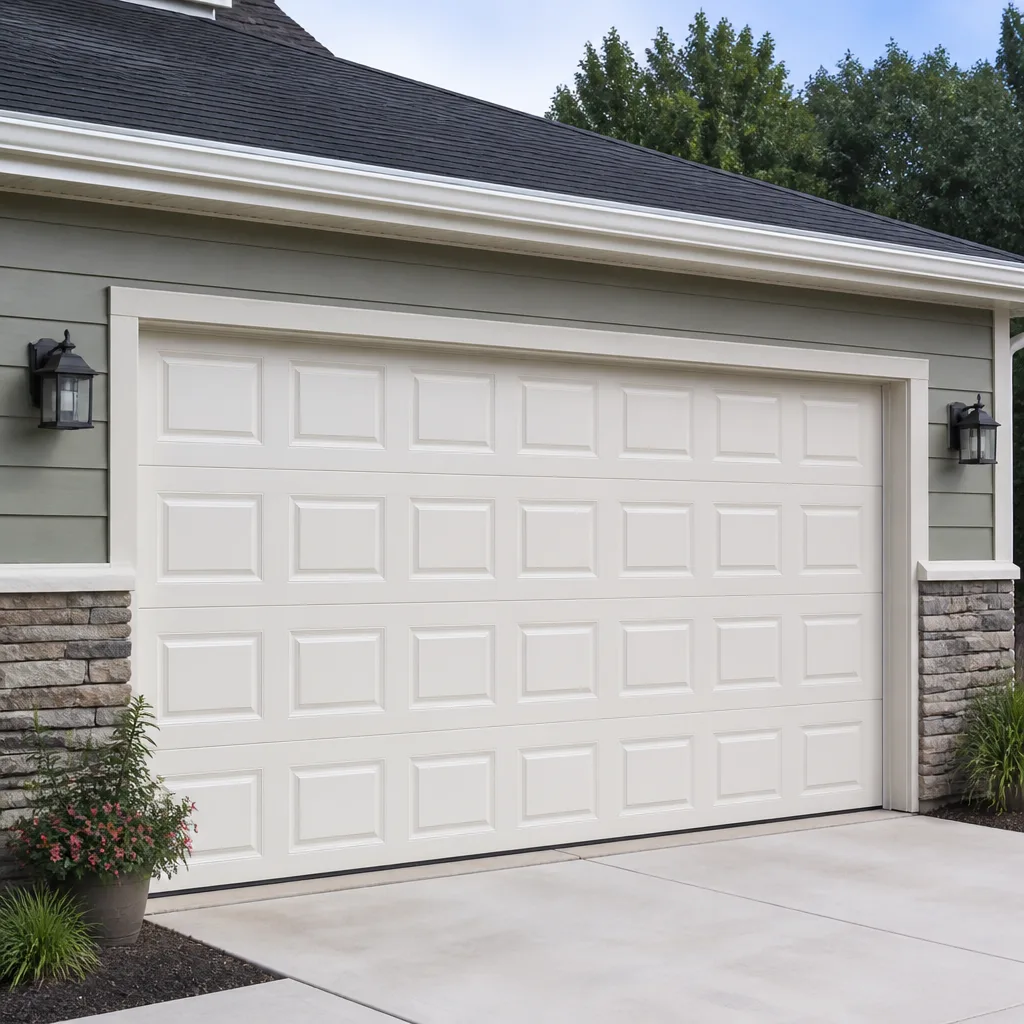 Raised-panel steel
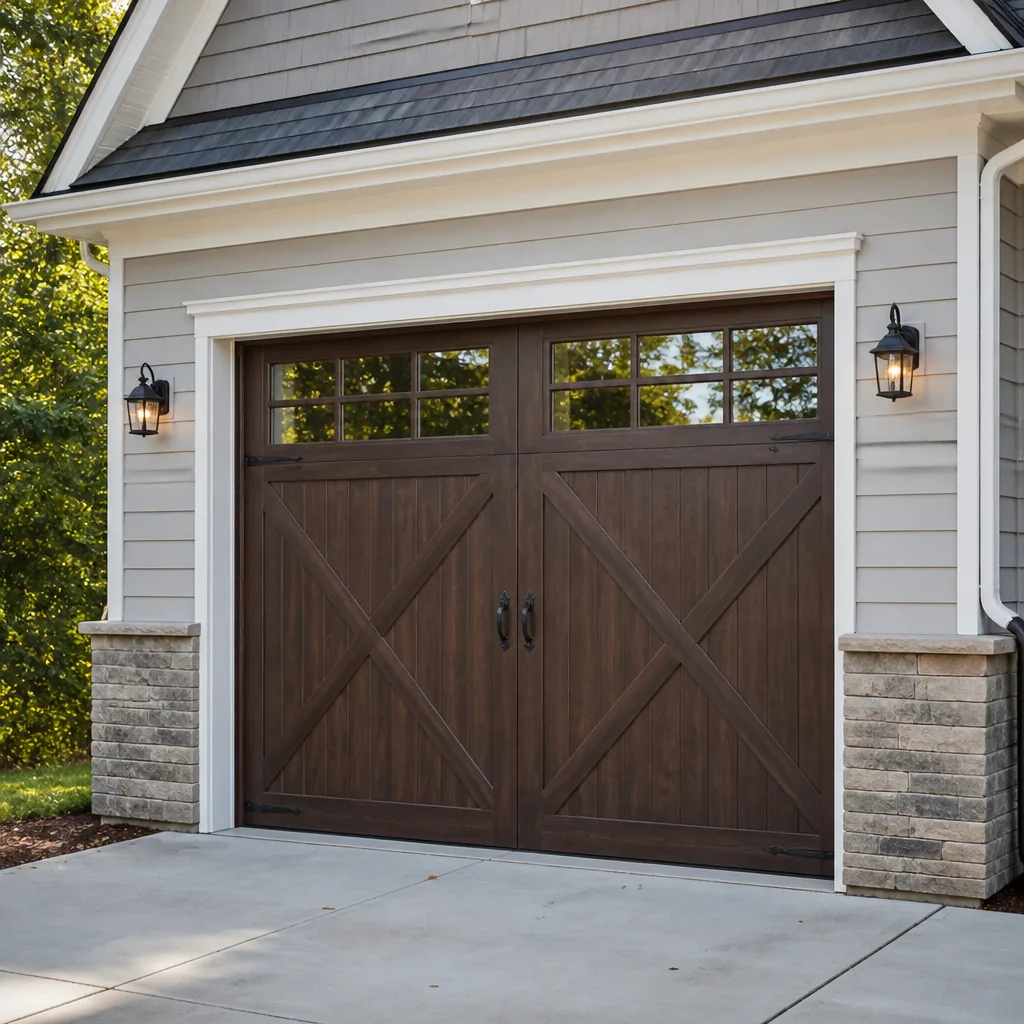 Carriage house
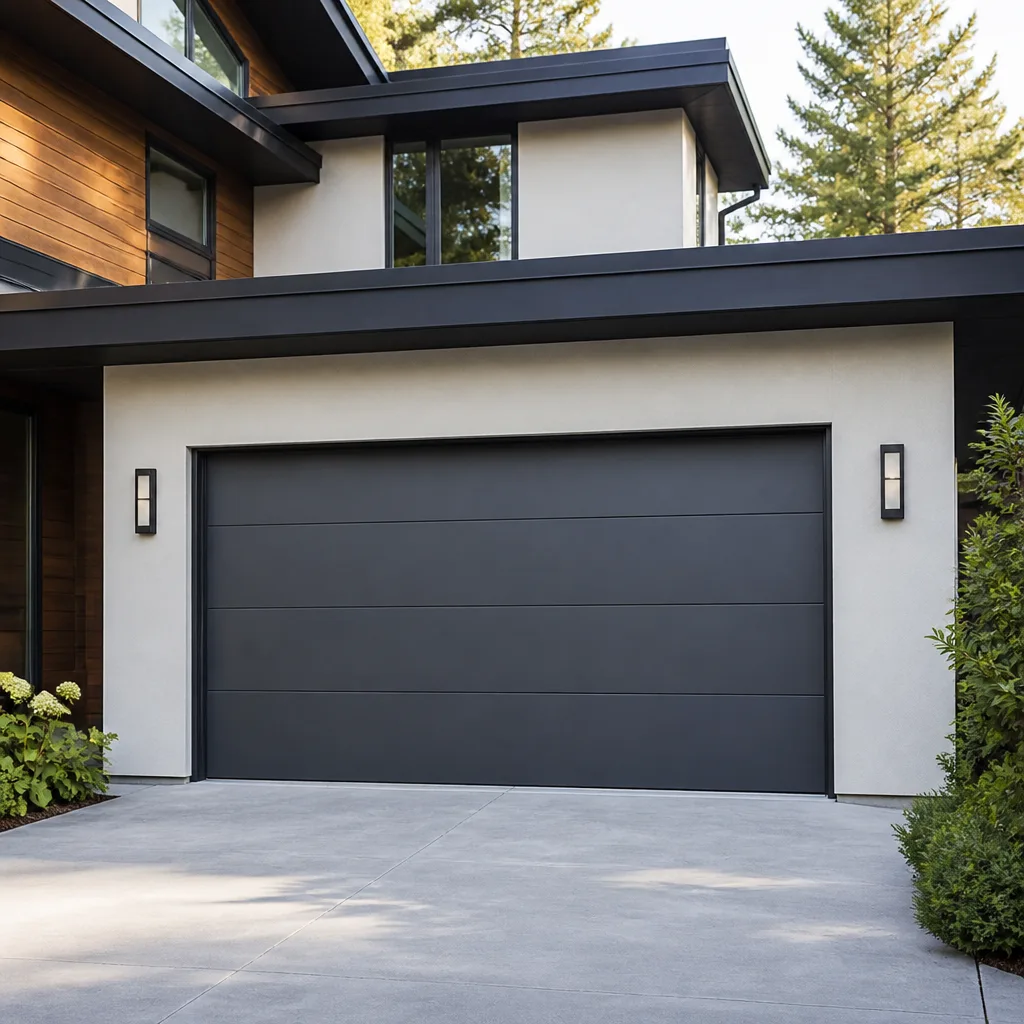 Modern flush
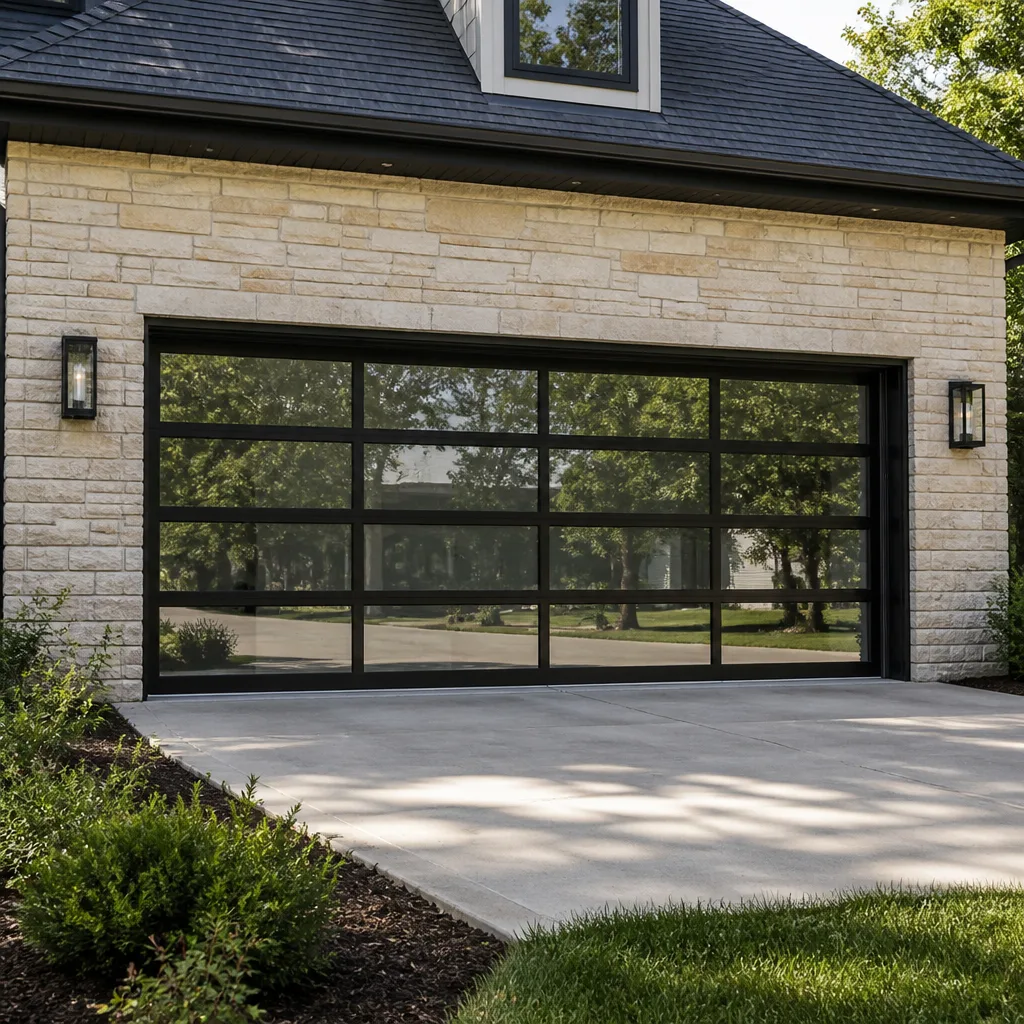 Full-view glass
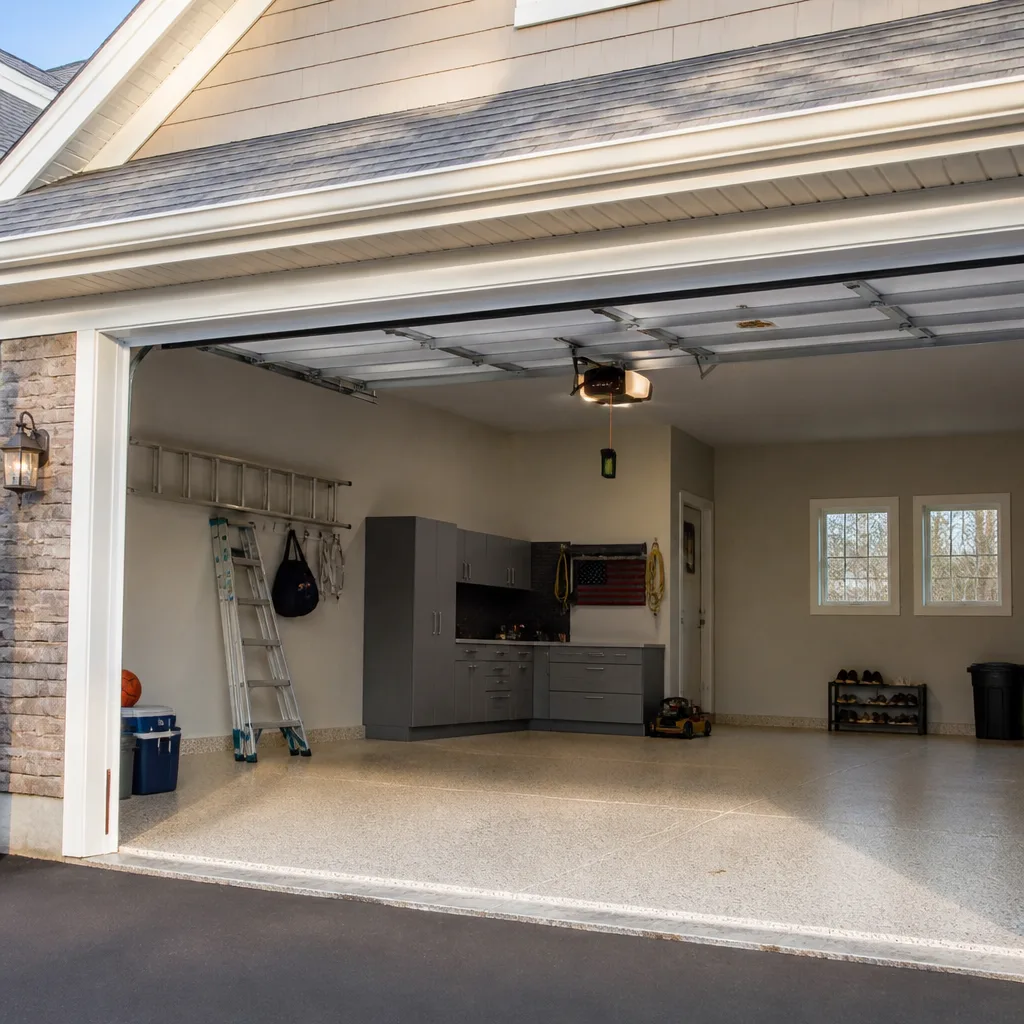 LiftMaster openers
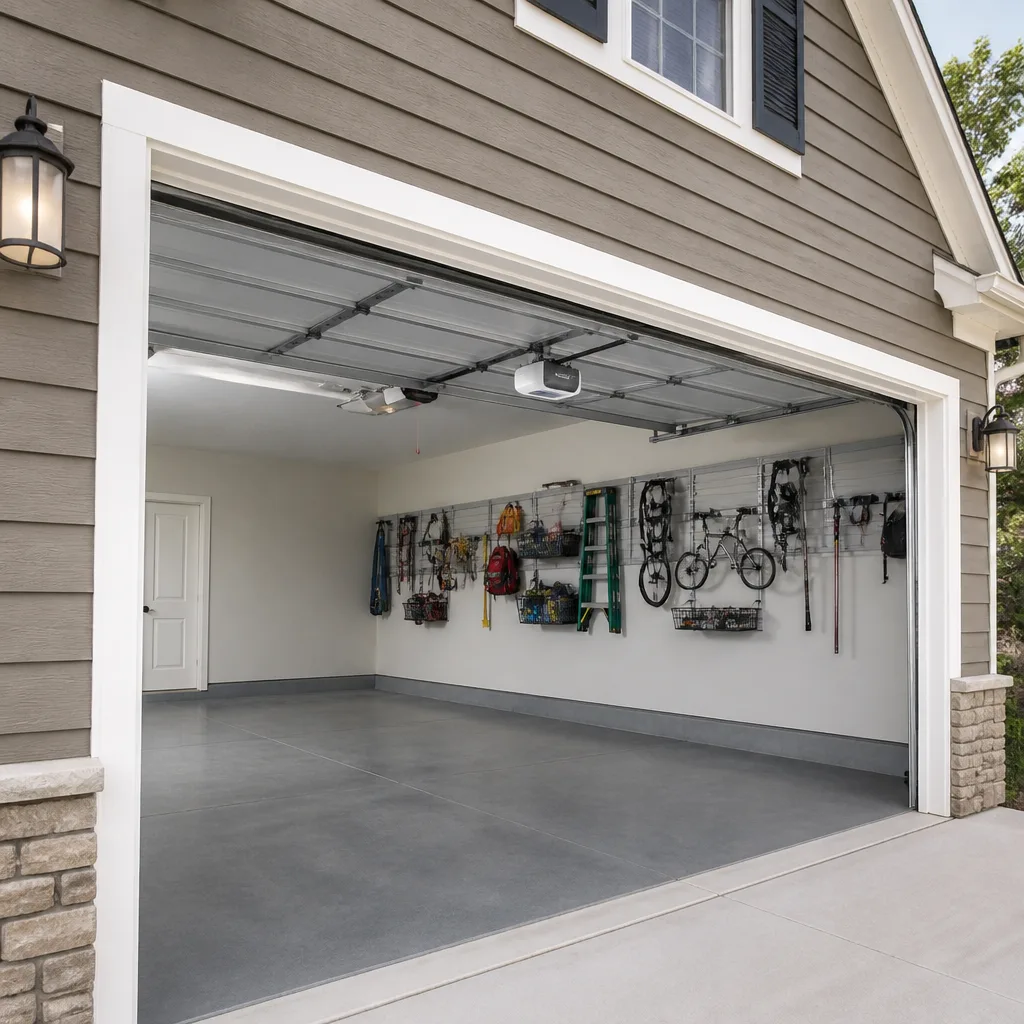 Chamberlain openers
Full 25-point door and opener safety check with every visit - springs, cables, rollers, tracks, and your LiftMaster or Chamberlain opener included
You get a price before we start. It does not change when the pro arrives.
Get your free estimateThe Complete Guide to Garage Doors in Hartford
Most Hartford homes were built long before the modern garage door existed in anything like its current form. A cape cod from the 1950s, a colonial from the 1920s, a triple-decker converted from carriage storage: these houses were framed to dimensions that the door industry did not standardize around, and the “standard” 9×7 replacement your neighbor down the street bought may not fit your opening at all. That single fact drives more confusion, more failed DIY swaps, and more bad quotes in Hartford than any other. This guide covers what actually matters here: how the local freeze-thaw cycle wears components, what your home’s framing dimensions probably are, which materials survive Hartford’s humidity swings, and how to read a quote line by line.
Quick Answer
A garage door in Hartford needs three things done right: a correctly measured rough opening (older city homes rarely match the 9×7 standard), components rated for repeated freeze-thaw cycling, and installation that respects Connecticut permit rules for structural and electrical work. Steel doors with insulated cores handle the humidity swings best; springs and opener electronics are the parts that fail first. A written, line-item estimate is the only reliable way to compare quotes in this market.
Styles & brands we work with
- Raised-panel steel
- Carriage house
- Modern flush
- Full-view glass
- LiftMaster openers
- Chamberlain openers
Table of Contents
- How Hartford’s Freeze-Thaw Cycle Wears Out Garage Doors
- Framing Dimensions in Hartford’s Pre-1980 Housing Stock
- Which Garage Door Materials Hold Up in Hartford?
- Repair or Replace? An Honest Map
- How to Read a Hartford Garage Door Quote Line by Line
- Brand Matters: Why Model-Specific Diagnostics Save Money
- Permits and Code in Hartford
- A Maintenance Calendar That Matches Hartford Weather
How Hartford’s Freeze-Thaw Cycle Wears Out Garage Doors
Hartford winters average more than 20 freeze events per season, meaning the temperature crosses the freezing mark and comes back repeatedly. That number matters more than total snowfall, because it is the repeated crossing that does the damage. Every thaw pushes moisture into a seam, a hinge pivot, a bottom seal, or the concrete at the door’s threshold. Every refreeze expands it. Do that twenty-plus times between November and March and you get accelerated wear in specific places.
Here’s what we see fail first in Hartford:
- Bottom weather seals. A rubber or vinyl seal that sits in standing meltwater on the apron cracks and then tears. Once it tears, it lets water under the door and onto the opener’s floor-mounted components.
- Hinge and roller pivots. Cold stiffens lubricant. Stiffened lubricant stops protecting the pivot. Moisture gets in, and the pivot rusts from the inside out.
- Steel panel seams. Paint micro-cracks at seams let water in. The rust starts at the very bottom edge and creeps up the panel.
- Torsion spring performance. Springs don’t care about temperature in the way people assume, but the cycles per day do matter. A door that binds in the cold draws more force every cycle, and force shortens spring life.
The fix is not exotic. It’s lubrication, seal inspection, and tension checks done before the first hard freeze rather than after. We’ve found that doors serviced in October last noticeably longer than doors serviced in January, simply because the January visit is already repairing damage.
Framing Dimensions in Hartford’s Pre-1980 Housing Stock
The garage door industry settled on a handful of nominal sizes: 8×7, 9×7, 9×8, 16×7, 16×8, and a few larger widths. Those nominal sizes assume a rough opening with standard clearances. Hartford’s older neighborhoods, particularly the cape cods and colonials of the west end and the multi-family conversions near the city center, often present something different.
Common deviations we measure in Hartford homes:
- Opening height just under 7 feet. A 6’10” or 6’11” rough opening will not accept a 7-foot door without either adjusting the header or ordering a custom height.
- Widths that don’t round to a standard. 8’6″ and 15’4″ show up more than you’d expect. These are not stock sizes.
- Low headroom. Older garages were framed with a shallow header or a beam that leaves less overhead clearance than modern low-headroom kits assume. This affects how the door tracks, and whether a standard torsion setup works at all.
- Out-of-plumb jambs. Wood settles. A jamb that is half an inch out of plumb over a 7-foot opening creates a door that rubs from day one.
None of these are disasters. They’re just reasons to measure before you buy. A door ordered to the wrong nominal size is a door that comes back. This is the single most common reason a Hartford replacement project goes sideways, and it’s entirely avoidable with a tape measure and 20 minutes.
If your opening measures outside standard tolerances, garage door installation becomes a measurement project first and an install project second. That’s the right order.
Which Garage Door Materials Hold Up in Hartford?
Hartford’s humidity swings between July and January are wide. That is the variable to design around, more than cold alone. A material that absorbs moisture in summer and dries in winter will move, warp, and crack over seasons. A material that ignores moisture and handles cold is stable for decades.
Insulated steel is the practical default for this climate. A modern Clopay or Amarr steel door with a polyurethane or polystyrene core resists both humidity and cold, holds paint well when maintained, and can be repaired panel by panel rather than wholesale. This is what most Hartford homeowners land on, and reasonably so.
Aluminum is lighter and does well with moisture, but full-view aluminum doors with glass panels are a design statement more than a thermally efficient choice. That’s fine if you want the look. Just know what you’re buying.
Wood and wood composite look great and can be refinished, but they require real maintenance in this climate. A wood door in Hartford needs annual inspection of the finish and prompt repair of any seam failure. A Wayne Dalton composite can offer a middle path, holding a wood appearance with less vulnerability to moisture, but it still requires more attention than steel.
One thing to check on any steel door before you buy: whether the panel edges are roll-formed or hemmed to a tight seam. Loose-seamed panels let water in at the bottom rail, which is exactly where freeze-thaw does its work.
Repair or Replace? An Honest Map
There’s a straightforward way to think about this, and it comes down to which component failed and what condition the rest of the door is in. A door is a system, not a single object. Treating it that way prevents two opposite mistakes: replacing a door that just needs a spring, and repairing a door that’s about to fail again in a different place.
Repair usually wins when:
- The failure is isolated. A single dented bottom panel, a failed opener, a snapped spring, a broken hinge: these are component repairs, not door replacements.
- The door panels are structurally sound and the finish is intact.
- The door is under roughly 15 years old.
- The hardware is still moving freely and the rollers are round, not flat-spotted.
Replacement usually wins when:
- Rust has spread through panel seams in more than one place. Rust is not reversible once it reaches the steel.
- Multiple panels are bent or the bottom rail is crushed.
- The door is out of balance in a way that keeps bending tracks or snapping springs.
- You’re paying for the third spring in a few years. Repeated spring failure is usually a sign that something upstream is wrong: door weight, track alignment, or opener force.
One component that should never be evaluated by a homeowner alone is the torsion spring. It’s under enough tension to cause serious injury, and a snapped spring can release that energy instantly. We handle garage door repair on springs as a routine part of our work, but that’s exactly why we say plainly: don’t attempt it yourself. Have it inspected, replace it as a matched pair, and let a trained technician do the winding.
If you have a quote from another contractor and you’re not sure whether it’s a repair or replacement job in disguise, an honest second read costs nothing.
How to Read a Hartford Garage Door Quote Line by Line
Most Hartford garage door quotes are written in a way that leaves real ambiguities, and the ambiguities surface later as cost additions. A written estimate should include every line below. If any of these is missing, it’s worth asking about before any work begins.
- Door size and rough opening. The quote should list the size of the door AND the measured rough opening. If they don’t match your framing, the quote is incomplete.
- Brand and model number. “Steel door” is not a specification. “Clopay Bridgeport, model number, insulated steel, 1-3/8 inch” is. We keep brand and model details in every estimate for a reason: a fair comparison requires identical products.
- Torsion or extension spring, matched pair. A line that says “springs: $X” should specify whether one spring or a matched pair is priced. A single spring is usually replaced as a matched pair, so a quote listing one spring and a delivery of two is a source of friction later.
- Opener make, model, and whether it’s a replacement or an addition. If opener work is included, the model should be on the quote. A LiftMaster or Genie model number lets you verify that you’re getting the smart-home feature set you asked for.
- Track and hardware condition. A note about whether existing tracks will be reused or replaced, and what the technician found on inspection.
- Torsion winding, adjustment, and final balance testing. These should be explicit line items, because they are where quality lives.
- Haul-away. What happens to the old door and old opener.
- Permit and inspection where required. Whether the job needs a Hartford permit and who’s handling it.
- Written total and expiry. A quote that doesn’t have a single agreed total and a date isn’t a quote, it’s a conversation.
The price on your written estimate is the price. We don’t change the number after the work starts if the work was described accurately, and we’d rather add a line item upfront than surprise you later. For a closer look at the opener side of a quote, see our page on garage door opener repair.
Brand Matters: Why Model-Specific Diagnostics Save Money
Garage door hardware is not interchangeable across brands in the way that, say, a standard light socket is. Spring wire diameters, drum profiles, and opener travel settings vary by manufacturer. A technician who knows your equipment doesn’t measure and guess; they recognize the symptom and go straight to the part.
We cover eight major residential brands: LiftMaster, Chamberlain, Genie, Clopay, Amarr, Wayne Dalton, Craftsman, and Raynor. That matters in Hartford because these are the brands actually installed in the housing stock. A colonial with a Wayne Dalton door and a triple-decker with a Genie opener present very different diagnostic paths, and knowing both means the visit is a repair rather than an investigation.
Two brand-specific patterns we see often:
- Legacy openers with failing logic boards. Older Genie and Craftsman units are common in Hartford homes that haven’t replaced their openers in a while. Sometimes a board replacement is cheaper than a new opener. Sometimes it isn’t. A technician who can read the model number knows the difference.
- Smart-home opener setup issues. LiftMaster and Chamberlain Wi-Fi units, including MyQ and battery backup models, fail in ways that are not mechanical: connectivity, sensor pairing, force sensitivity. These are electronics problems, not springs problems, and they need a different diagnostic approach.
Our technicians have up to 11 years of experience, and every job we take starts with brand and model identification rather than a blank-slate assessment. That’s not a marketing point; it’s how the cost of a repair is kept in line with what the repair actually is.
Permits and Code in Hartford
Connecticut requires permits for many garage door installations, particularly when structural work is involved: widening an opening, changing a header, adding a beam, or running new electrical for an opener. A straight replacement in the same opening often doesn’t require a structural permit, but the city’s building department is the only authority on what applies to your specific job. Ask them before you book a date, not after.
A few things to ask your Hartford building department:
- Does a same-size replacement in an existing opening require a permit?
- Does adding a new opener circuit or outlet require an electrical permit and inspection?
- If the door is wider or taller than the existing opening, is that a structural permit?
We don’t pull permits for you and we don’t tell you a permit isn’t needed. What we can do is describe the work clearly enough that you can have that conversation with the city before committing. The written estimate we provide will identify anything that clearly falls on the structural side so you don’t discover it mid-job.
A Maintenance Calendar That Matches Hartford Weather
Garage door maintenance in Hartford has two anchors: before the first freeze of the year and after the last thaw. Everything else is cleanup in between.
- Early fall (before first freeze). Lubricate hinges and rollers with a product designed for cold weather, inspect the bottom seal for cracking, and have torsion springs inspected if you’ve heard unusual noise during the summer.
- Midwinter. After heavy precipitation that involves meltwater on the apron, clear standing water away from the bottom seal. Check that the door opens and closes without hesitation in cold weather. Hesitation is a symptom.
- Spring (after thaw). Look for rust blooming at panel seams and bottom edges. Check the concrete apron for cracks that could let water under the door. Test the safety reverse function.
- Summer. Verify the opener’s force sensitivity and travel limits are still correct. High humidity can make an aging door bind slightly, and the opener compensates with force, which masks the underlying problem.
The single highest-value habit is calling when you notice a change, not waiting for a failure. A door that hesitates, squeals, or reverses unpredictably is telling you something is failing. Getting it looked at before it stops opening is almost always cheaper than getting it looked at after.
Common Mistakes to Avoid
- Ordering a standard 9×7 without measuring. Hartford’s older housing stock has non-standard rough openings more often than the suburbs do. Measure twice, order once.
- Replacing one torsion spring when both are the same age. A matched pair fails together because it has cycled together. Replacing one and returning to the other a few months later costs more than doing both.
- Adjusting the opener’s force setting to compensate for a binding door. This masks a mechanical problem and stresses the opener. Fix the door, then reset the opener.
- Ignoring the bottom seal. The seal is the first line of defense against water under the door, and it’s the cheapest thing on the door to replace. Replacing a torn seal in October prevents an opener repair in February.
- Using a general handyman for spring work. Torsion springs are the highest-tension, highest-risk component in the entire system. This is not a job for someone who has not done many of them.
- Accepting a quote without a model number. A quote that says “steel door” tells you nothing about what you’re buying. Brand and model should be explicit on the estimate.
- Assuming a permit isn’t needed. Ask the Hartford building department directly. It’s a five-minute phone call that resolves the question.
See the difference
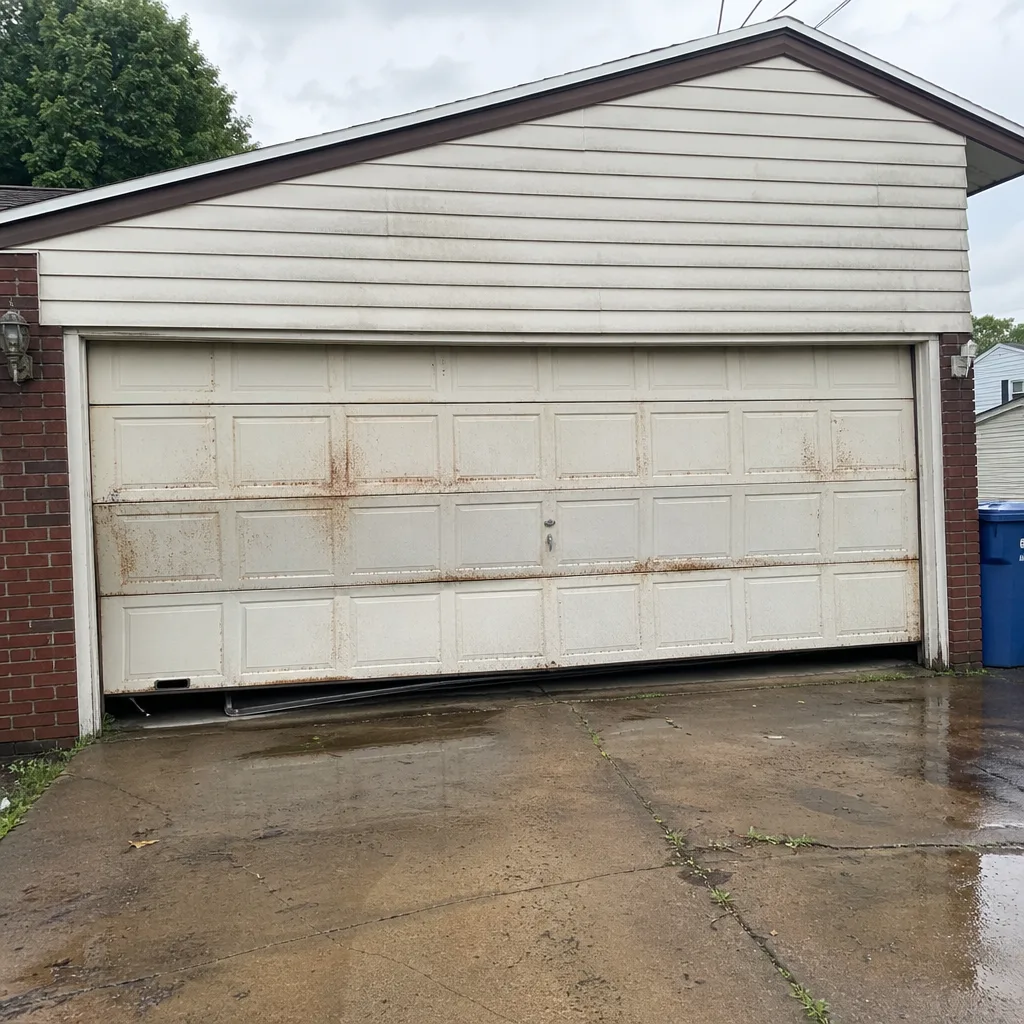 Before
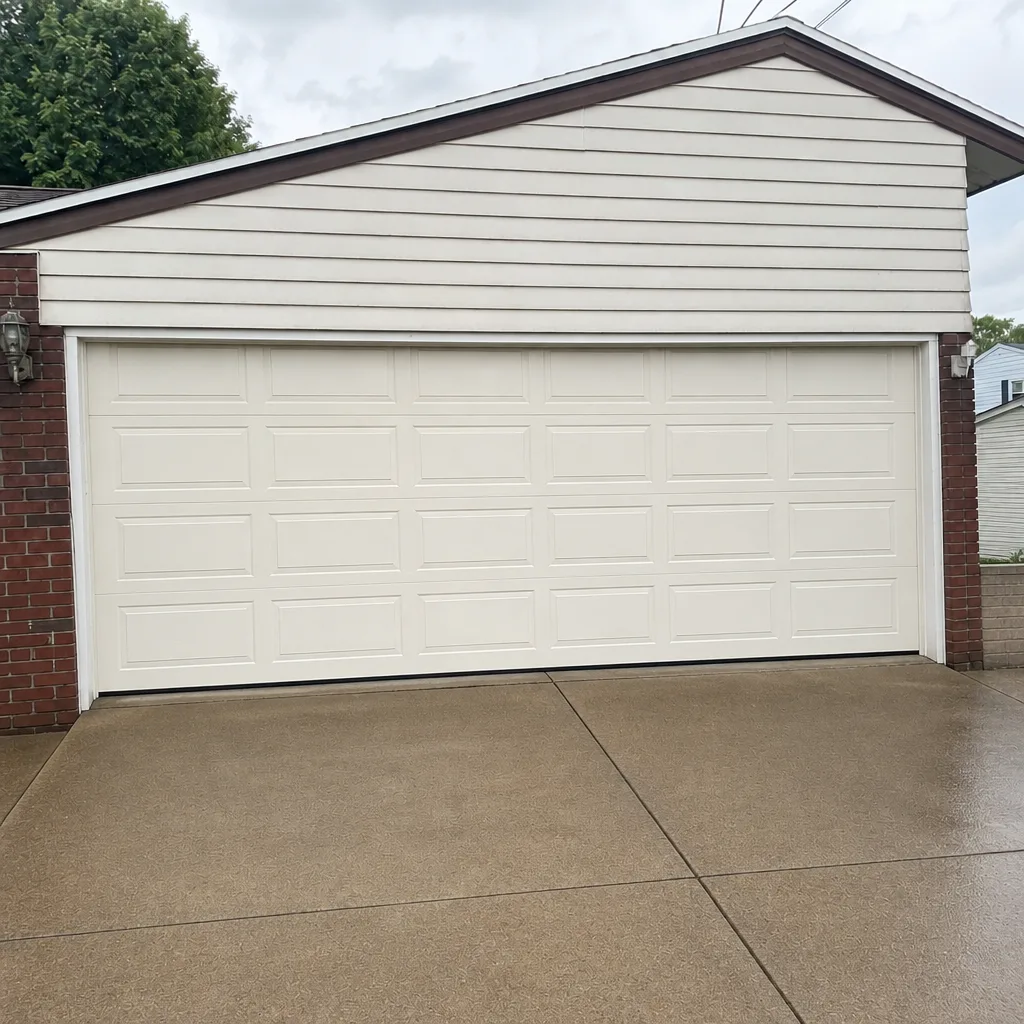 After
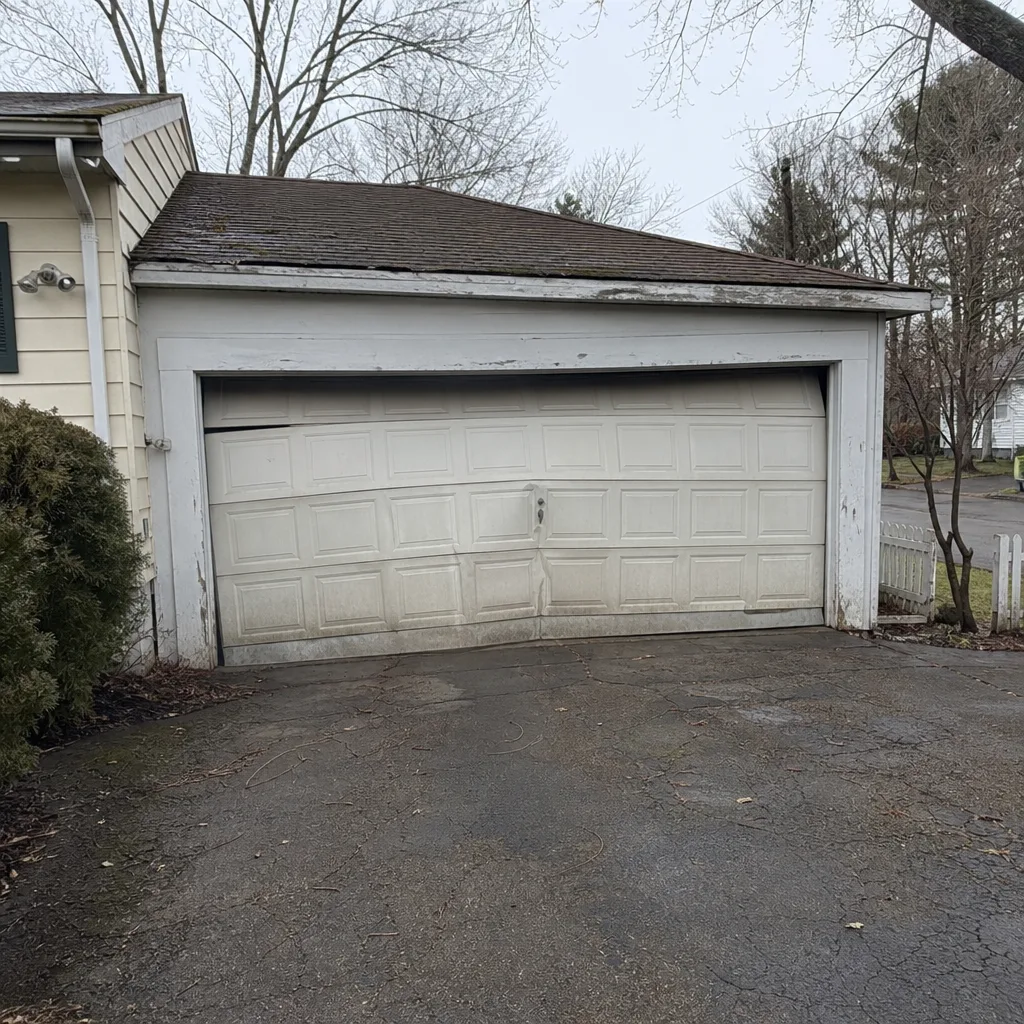 Before
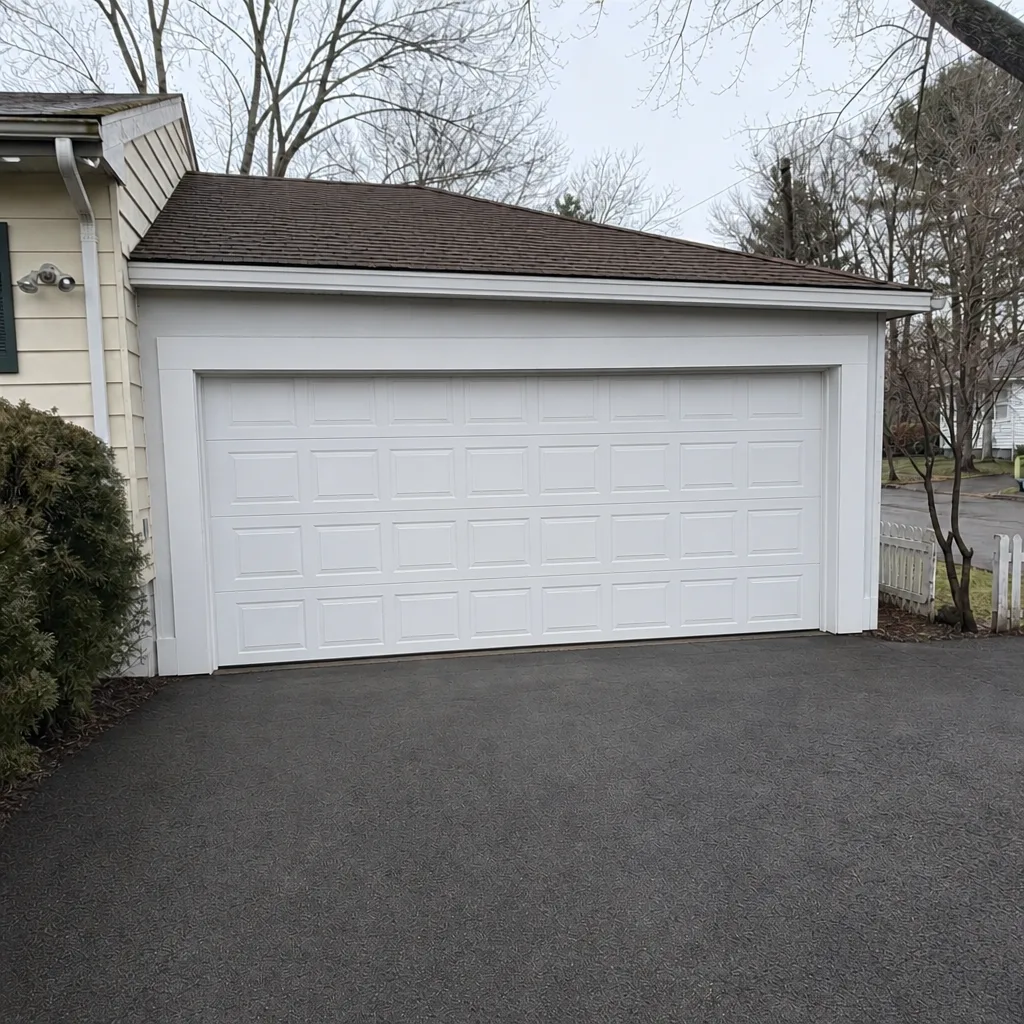 After
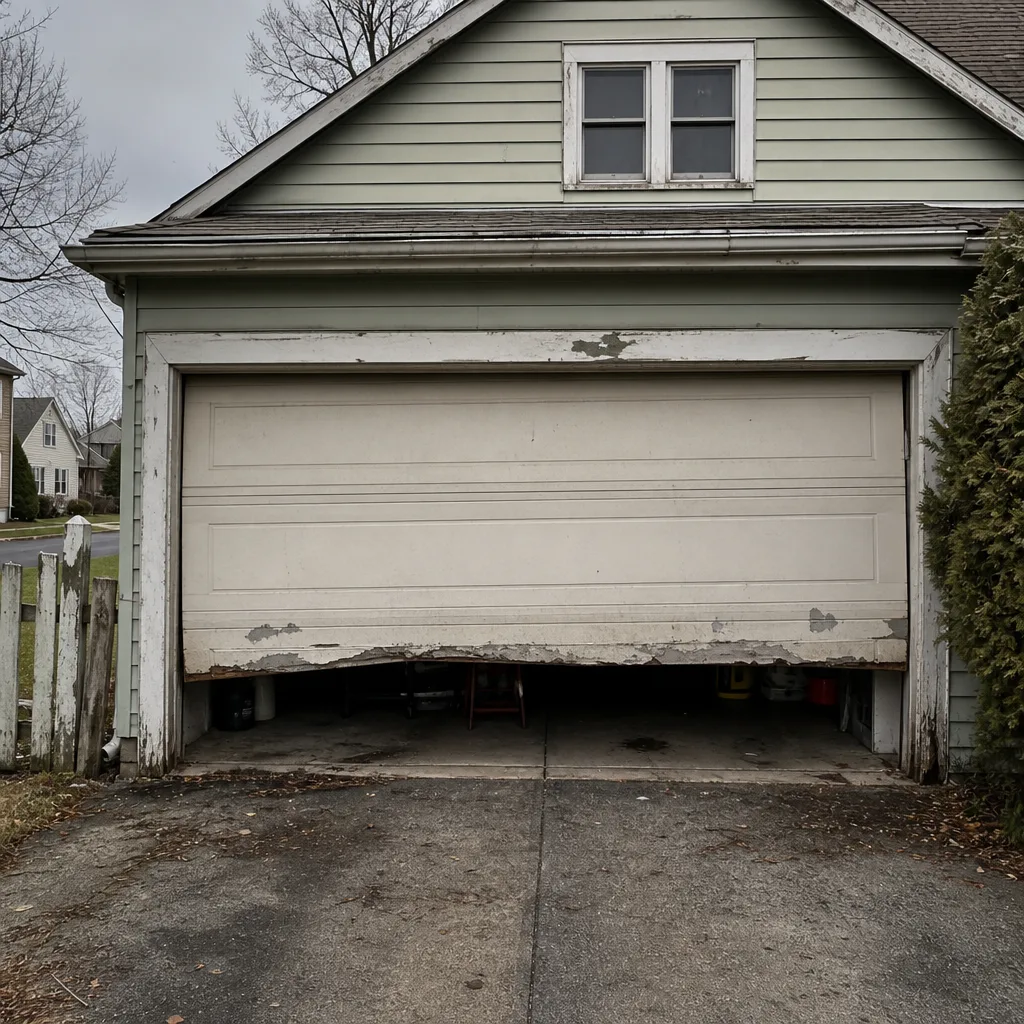 Before
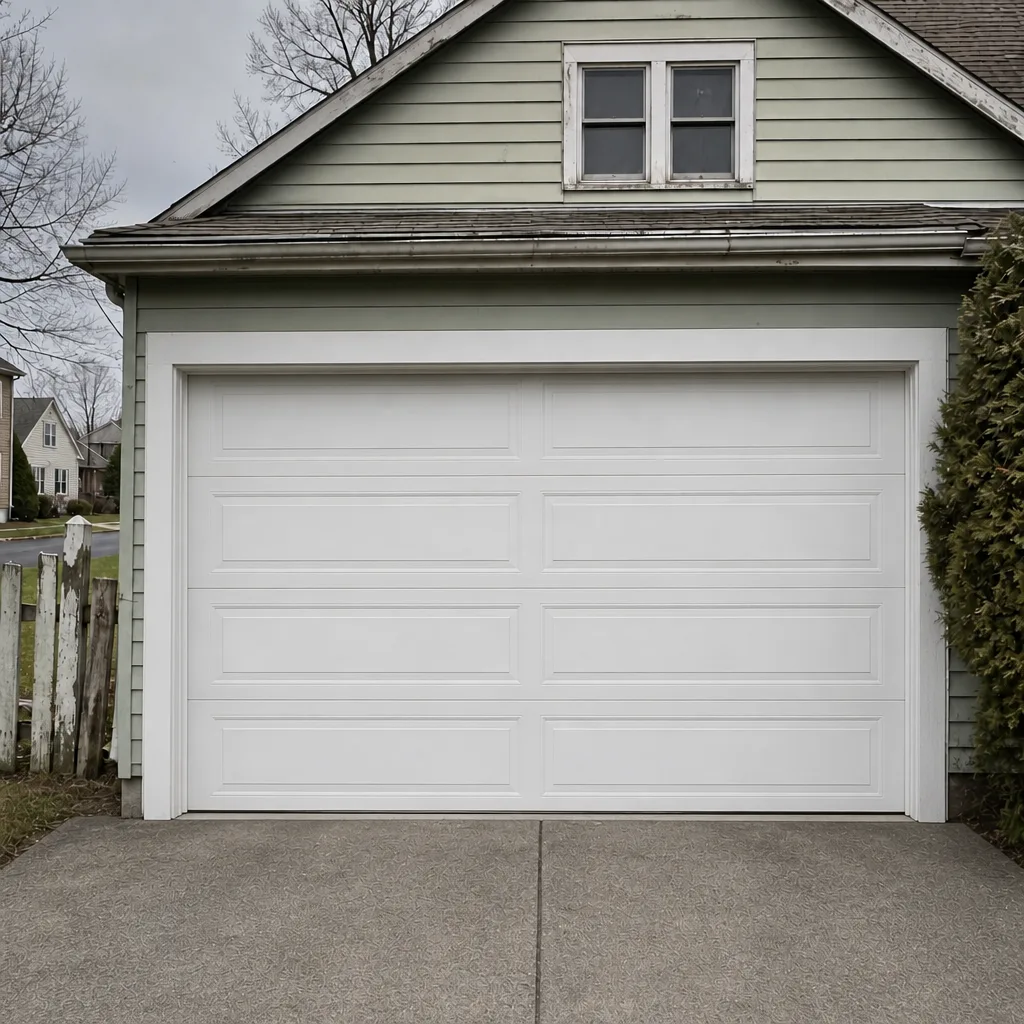 After
When to Call a Professional
Call a trained garage door specialist if any of these describe your situation: the door won’t open or close, the door reverses before reaching the floor, you hear a snap or bang from the torsion bar, the door sits crooked or one side hangs lower, the opener runs but the door doesn’t move, the opener hums and stops, the door is difficult to lift by hand, the bottom seal is torn, or the door has rusted through at a seam. Any of these is a sign that something has failed or is about to, and delaying the call tends to turn a repair into a replacement.
Hartford Garage Door Repair Pros offers free estimates in Hartford. Call (877) 792-6067. We answer 24/7. Fast dispatch from 7am to 7pm, Sunday through Friday.
Frequently Asked Questions
Broken torsion springs and damaged bottom seals are the two most common repairs in Hartford, largely because the freeze-thaw cycle accelerates seal wear and spring stress. Hinge and roller pivot failures follow closely behind. All three are usually straightforward repairs that don’t require door replacement. Call (877) 792-6067 for an assessment. Estimates are free.
Yes, when the door is stuck open or stuck closed. A stuck-open door leaves the house exposed to weather and to entry, and a stuck-closed door leaves a car trapped or a home inaccessible. Broken springs and a dead opener both fall into this category. Call (877) 792-6067. We answer 24/7, and fast dispatch runs 7am to 7pm, Sunday through Friday.
We don’t recommend it. The safe part of the project is setting panels and running track. The dangerous part is the torsion spring, which is under enough tension to cause serious injury if it releases unexpectedly. Even a full door replacement requires winding the spring at the end, which is the step that consistently causes injuries in DIY projects. Have a trained technician handle it.
It depends on the job. A same-size replacement in an existing opening often doesn’t need a structural permit, but anything involving an opening change, a new header, or new electrical for an opener typically does. Ask the Hartford building department directly; they’ll tell you what applies to your address. We identify structural work clearly in our written estimates so you know what to ask about.
An insulated steel door that’s maintained properly typically lasts a couple of decades or more, and steel is the material that handles Hartford’s humidity swings best. Wood and wood composite doors need more frequent refinishing and last shorter in this climate if not maintained. Springs are a wear item and fail on a much shorter cycle than the door itself; how often depends on how many times a day the door runs.
No, not if the work described on the written estimate matches what we find. The price is quoted and agreed before any work starts, and that written number is the price on the invoice. If we discover something additional during the inspection, we’ll tell you before we do it, not after. Call (877) 792-6067 for a free estimate.
The Bottom Line
Garage door work in Hartford has some specific constraints that generic guides ignore. Older housing stock rarely matches standard sizes, so measuring the rough opening is the first step, not the last. The freeze-thaw cycle wears bottom seals, spring systems, and hinge pivots faster than a climate with fewer crossings would. Insulated steel is the practical material for this climate; wood and aluminum are viable with the right expectations. Repair is usually the answer when the failure is isolated, and replacement is the answer when rust, structural damage, or repeated spring failure point to a deeper problem. The written estimate is the number you pay, and it should list brand and model, door size, spring pairing, and permit requirements. If you’re stuck on any of it, Hartford Garage Door Repair Pros is a Hartford specialist operation that exists to take that work off your hands. For a broader look at the practice itself, see Hartford Garage Door Repair Pros.
To book a free estimate, call (877) 792-6067. We answer 24/7. Fast dispatch from 7am to 7pm, Sunday through Friday. Closed Saturday.
Written by the team at Hartford Garage Door Repair Pros.