
Last updated November 23, 2026
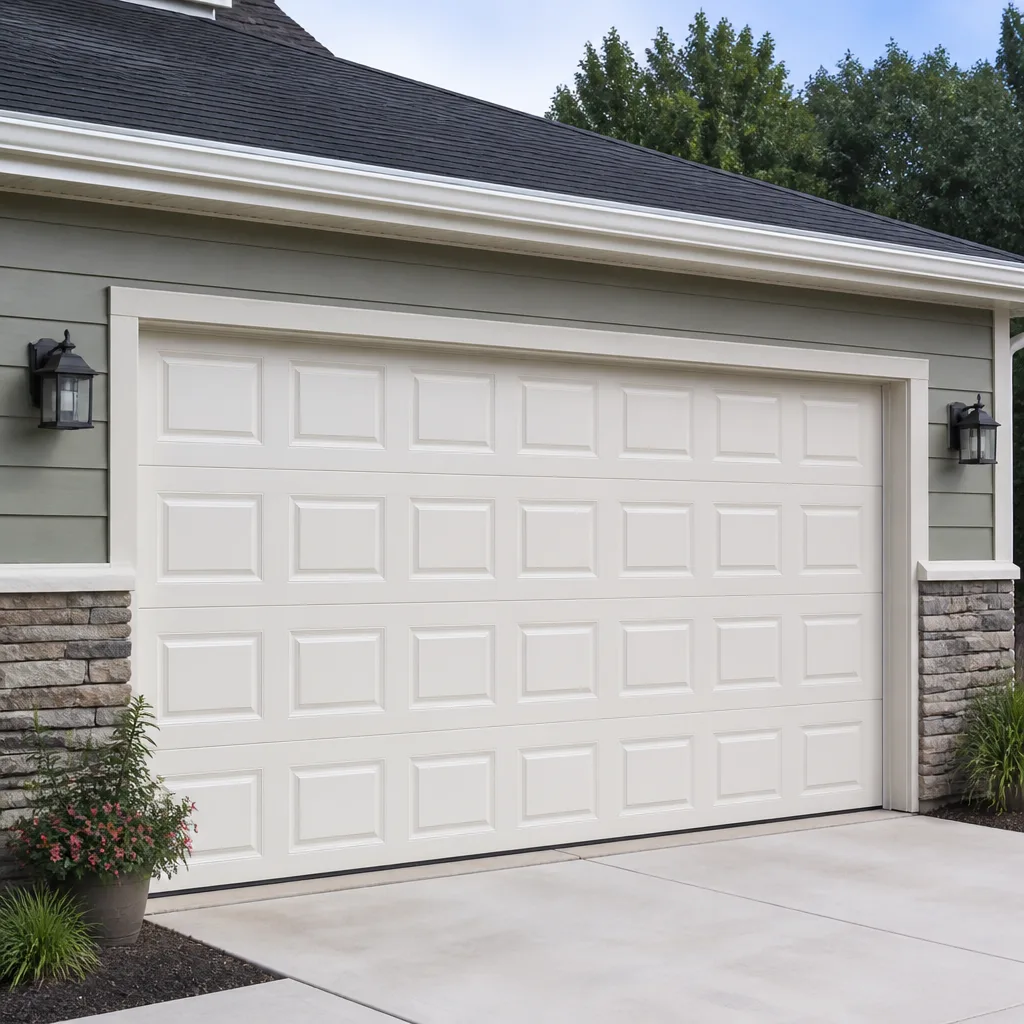 Raised-panel steel
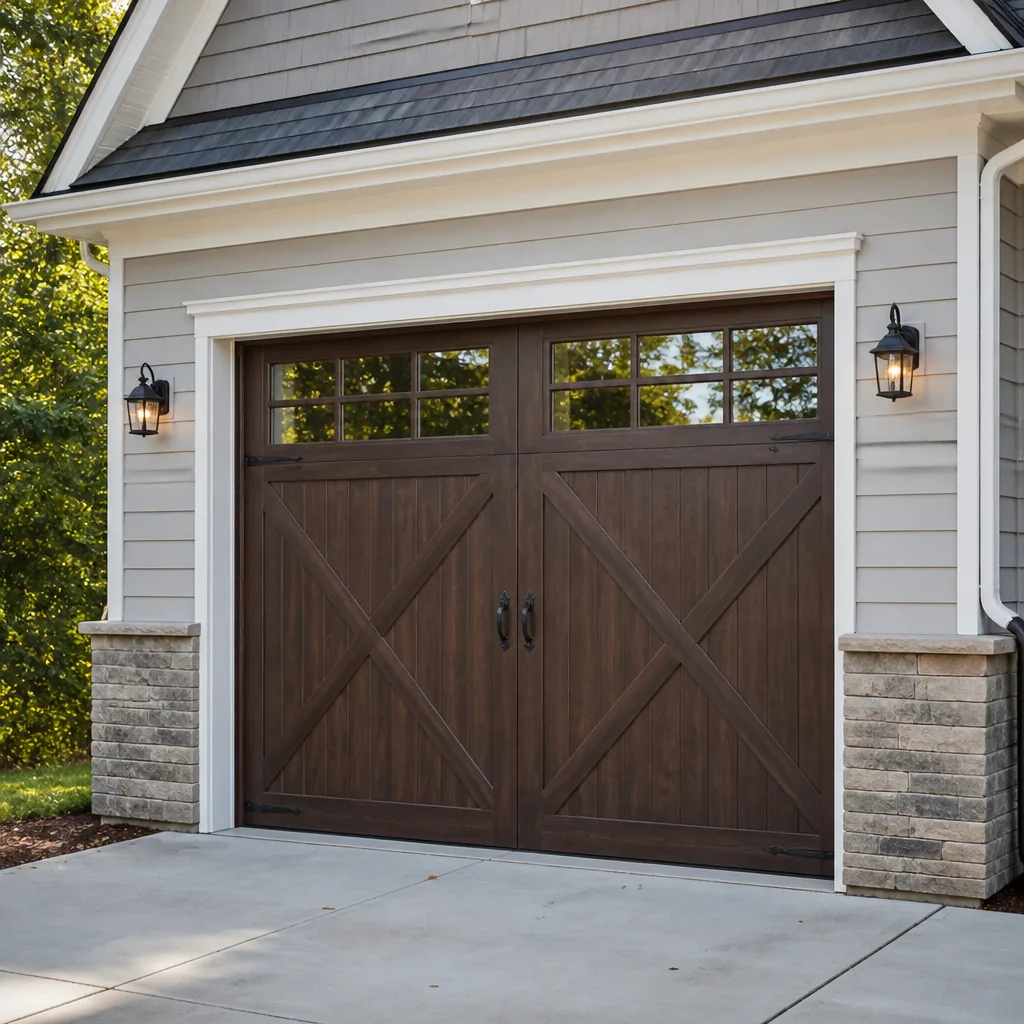 Carriage house
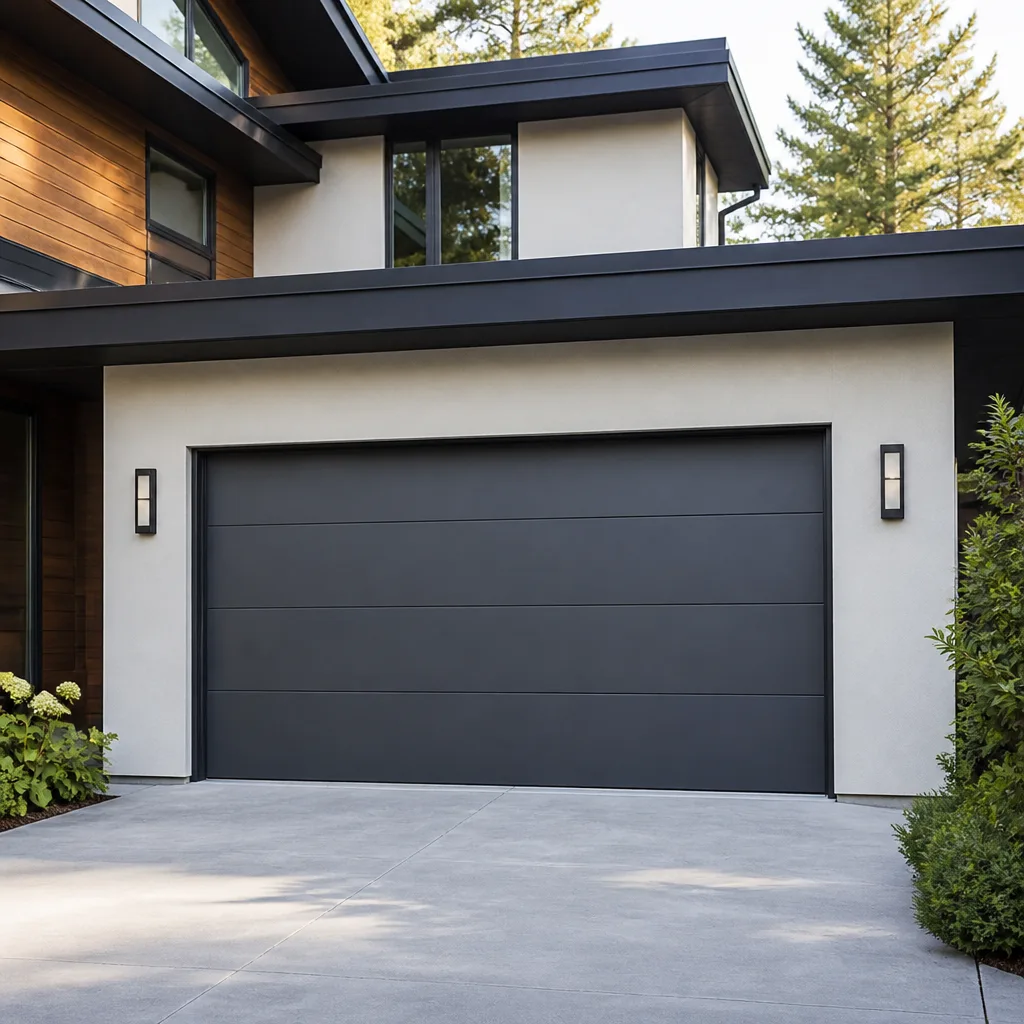 Modern flush
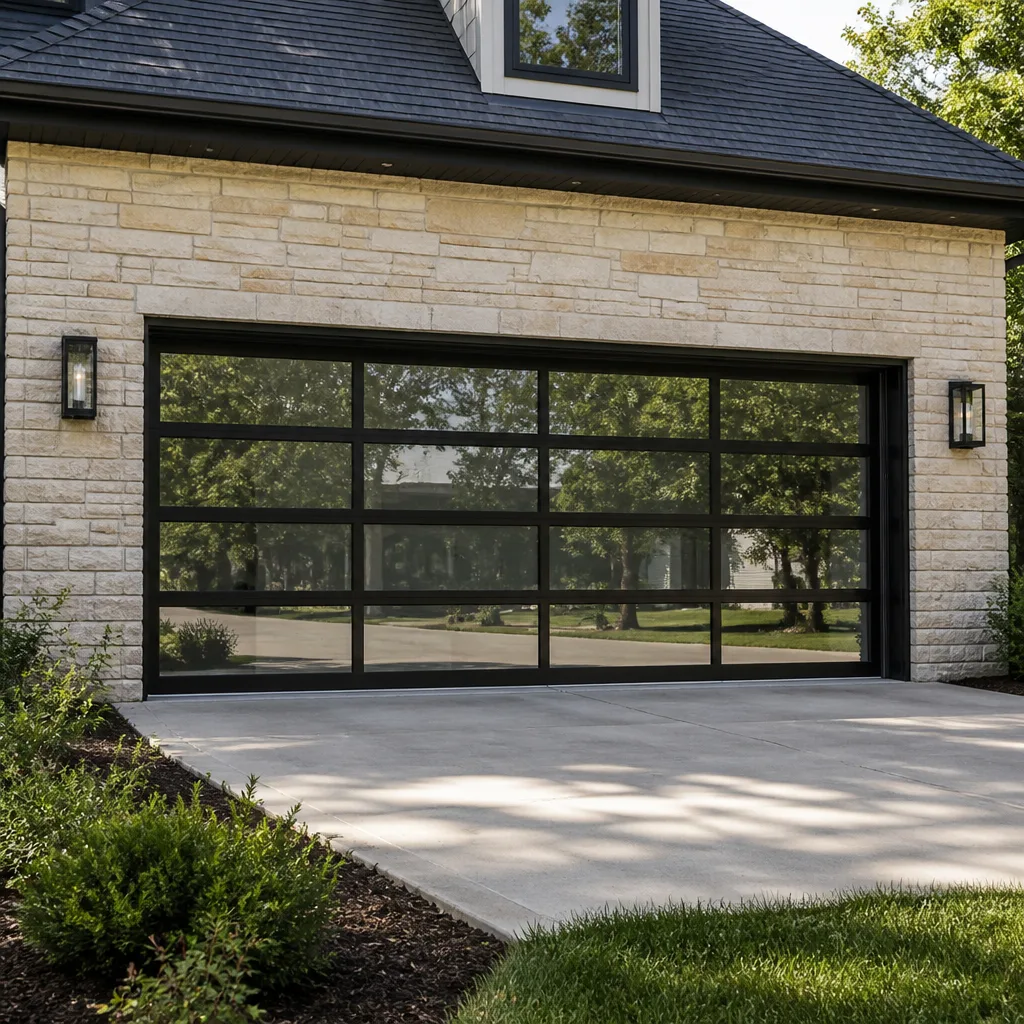 Full-view glass
 LiftMaster openers
 Chamberlain openers
Full 25-point door and opener safety check with every visit - springs, cables, rollers, tracks, and your LiftMaster or Chamberlain opener included
You get a price before we start. It does not change when the pro arrives.
Get your free estimateDIY vs Professional Garage Door: The Hartford Homeowner’s Decision Guide
Most garage door advice treats DIY as a personality trait. Either you’re the kind of homeowner who fixes things or you’re not. That framing is useless. The real question is task-specific: a bottom seal swap and a torsion spring replacement belong to entirely different risk categories, and putting them in the same “DIY or call a pro” bucket is how people get hurt. Torsion springs hold enough stored torque to do serious damage, and the failure is immediate when a winding bar slips. Some jobs are genuinely yours to do. Others aren’t. This guide separates them, task by task, with Hartford labor costs and warranty realities included.
Quick Answer
Low-risk garage door tasks like lubricating hinges and rollers, cleaning and aligning safety sensors, replacing a bottom weather seal, and reprogramming a remote are reasonable DIY projects for a careful homeowner. Torsion spring replacement, cable work, and structural repairs to the door’s header or track are not DIY territory: they carry documented injury risk, require specific tooling, and usually void manufacturer warranty terms that condition coverage on professional installation. In Hartford, the labor on a professional repair is often closer to the parts cost than most homeowners assume.
Styles & brands we work with
- Raised-panel steel
- Carriage house
- Modern flush
- Full-view glass
- LiftMaster openers
- Chamberlain openers
Table of Contents
- The Task-by-Task Risk Matrix
- Why Torsion Spring Work Is Categorically Different
- DIY vs Professional: The Hartford Cost Comparison
- The Voided-Warranty Problem
- The Middle Path: Buying Your Own Parts, Hiring Labor Only
- Why Brand Knowledge Changes the Calculation
- Reading Your Door: When DIY Stops Making Sense
- Hartford Winters and Your Garage Door
The Task-by-Task Risk Matrix
Garage door problems fall into three bands: safe to do yourself, doable with caution and some research, and professional-only. Sorting your specific issue into the right band is the entire decision. Here’s how that breakdown looks for the calls we get most often in Hartford.
Green: Genuinely Safe DIY
- Bottom seal and weatherstripping replacement. The door sits closed, nothing is under tension, and the seal slides into or nails onto the bottom section. A utility knife and a few minutes handle it.
- Safety sensor cleaning and alignment. A small LED on each sensor tells you if they’re talking to each other. Wiping the lenses and nudging them back into line fixes most sensor faults.
- Remote and keypad programming. Following the manufacturer’s button-press sequence for your opener. LiftMaster and Chamberlain models use a “learn” button on the motor housing; Genie uses a slightly different sequence. The manual covers both correctly.
- Lubrication. A light application of garage door lubricant on hinges, rollers, and the torsion spring (not the tracks) quiets a noisy door and slows wear. Twice a year is generous.
- Visual inspection. Catching a frayed cable or a bent track before it fails costs nothing.
Yellow: Possible With Research and the Right Tools
- Roller replacement. Straightforward on the door’s straight sections, but you’re working at height and the door must be in the fully open position with the proper clamp in place.
- Hinge replacement. Bolt-on work, but the wrong hinge under the wrong roller position causes tracking problems.
- Panel replacement on a sectional door. Larger Clopay and Amarr sections are heavy enough that two people and correct panel sequencing matter.
- Opener belt or chain adjustment. Doable if you understand the tension spec for your model, but over-tightening is a common DIY error that wears out the trolley.
Red: Professional Only
- Torsion and extension spring replacement. Immediate, forceful stored energy. No safe workaround exists.
- Cable replacement. Cables hold the spring tension. They fail violently and can catch hands or faces.
- Track realignment or replacement. The door’s full weight sits on those rollers. An improperly seated track can drop a panel.
- Header and structural repair. If the header above the door is cracked or the jamb has separated, this is carpentry and structural work, not garage door work.
- Any door that has come off its tracks. Do not try to close it to “reset” it.
Why Torsion Spring Work Is Categorically Different
Every home repair has risk. Torsion springs are in a different class. A torsion spring is a tightly wound length of steel under hundreds of foot-pounds of stored torque when the door is closed. That energy does the door’s lifting work. It also has to be released and re-wound every time the spring is replaced, and releasing it safely requires two specific winding bars inserted into the spring’s cone, moved in controlled increments. There’s no substitute for winding bars. A screwdriver, a pry bar, an Allen wrench, or a piece of rebar will slip under load, and when it slips the spring unwinds through an arc of a few inches in a fraction of a second. That’s the failure mechanism, and it’s why the injury pattern around garage doors is concentrated in spring and cable work.
What “Cannot Be Improvised” Actually Means
Most home repairs forgive an approximation. A gasket seated slightly crooked still works. A stripped bolt can usually be drilled out. Spring work doesn’t have that margin. The tooling is specific because the energy is specific. Winding bars are sized to fit the cone’s holes exactly and are long enough to keep hand and body out of the wheel. A technician trained on this task manipulates them from an angle that keeps the body clear of the spring’s rotation path. That’s not caution for its own sake; it’s the way the task is done safely.
Why Hartford Homes See This More Than They Expect
Hartford’s older housing stock, particularly the two- and three-family homes across the city’s neighborhoods, brings a higher concentration of original equipment than a newer suburban market would. A Wayne Dalton or a Craftsman-era opener and door on a house that hasn’t had a spring replaced yet has seen enough cycles for fatigue to matter. Cycle life is what retires a spring, not age alone. When a spring finally breaks, the door is typically stuck and partly open, and getting it closed to secure the house is harder than it looks.
The Safety Caveat
If you suspect a broken spring (a visible gap in the coil or an unwound end), do not run the opener. The motor will try to lift a door that has no counterbalance, which stresses the opener’s gear assembly and can force the door down unexpectedly. Leave it in its current position and call. Our garage door repair work includes spring replacement specifically because this is the repair where the competence gap matters most. Call (877) 792-6067. We answer 24/7. Fast dispatch from 7am to 7pm, Sunday through Friday.
DIY vs Professional: The Hartford Cost Comparison
The first thing to understand is that DIY savings on parts are smaller than most homeowners expect for branded components. The second is that on spring, cable, and opener repairs, the labor is not the biggest line item: the cost of an incorrect repair or an injury is. Here’s how the math looks in Hartford across the common repair categories. These are typical ranges; the written estimate sets the actual price.
| Task | Typical Professional Cost (Hartford) | DIY Parts Cost | DIY Verdict |
|---|---|---|---|
| Bottom seal replacement | $90 – $180 installed | $20 – $40 for seal and clips | Reasonable DIY if you’re comfortable with basic tools |
| Safety sensor cleaning/alignment | $70 – $140 service visit | $0 | Do this yourself first |
| Single torsion spring replacement | $180 – $340 | $40 – $90 for the spring (and winding bars, if you don’t own them) | Not advisable |
| Matched pair of torsion springs (usually replaced together, so roughly twice the single-spring price) | $360 – $680 | $80 – $180 for both springs | Not advisable |
| Opener replacement (LiftMaster, Chamberlain, Genie) | $380 – $650 installed | $180 – $350 for the unit alone | Saves money up front but can void warranty; proceed with caution |
| Panel replacement (Clopay, Amarr) | $280 – $650 per panel | Panel cost varies widely by model | Depends on the door and your help |
Where DIY Genuinely Saves Money
Seals, sensors, remotes, and lubrication. These are the tasks where the professional price reflects a minimum service visit more than the work itself. If you’re mildly handy and have the time, there’s no real risk and the savings are straightforward.
Where the Margin Is Too Thin
Spring work and opener swaps are the two categories where the DIY savings evaporate once you include the correct tooling, the warranty risk, and the sheer time. A homeowner who has never replaced a torsion spring is going to spend more time on YouTube than a technician spends on the job. On a matched-spring replacement, the price difference between professional and DIY is usually a few hundred dollars, and the professional version includes the door being cycled and balanced afterward, which the DIY version doesn’t guarantee unless you know how to check it.
The Hartford Labor Factor
Hartford labor rates sit in the moderate band for the Northeast. You’re not paying Boston or New York prices, but you’re also not getting a small-town rate. That’s the reason the DIY margin is thinner here than on paper. On larger jobs, like a new door or opener install, we’ve seen the saved money disappear fast once a homeowner has to rent a truck, recruit help, and take a second trip for missing hardware.
The Voided-Warranty Problem
Manufacturer warranty terms are the most overlooked reason to involve a professional on opener and door installations. LiftMaster, Genie, and Clopay warranty documents typically tie coverage to installation by a qualified or licensed professional. What that means practically: a homeowner who swaps their own opener motor and later has a board fail may find the warranty claim denied on the grounds that the installed unit wasn’t installed to spec. This matters most with modern openers, which include Wi-Fi modules, MyQ integration, and battery backups that require specific wiring and setup steps. Getting those right is not hard for a trained technician, but it’s also easy to get subtly wrong.
What Usually Triggers the Denial
- Opener mounted without the correct vibration isolation or bracket, leading to sensor or motor faults later
- Battery backup not wired per spec, so the unit’s self-test fails
- Safety reversal not tested and adjusted, which is standard install documentation
- Door and opener mismatched (an opener sized for a lighter or heavier door)
- Missing installation documentation, which some warranty claims require
How Professional Installation Protects the Warranty
A qualified installation includes the steps the manual specifies, the safety reversal test, the cycle confirmation, and the documentation trail that warranty service will ask for. For high-end doors, especially Clopay and Amarr models with factory-matched springs and panels, the manufacturer’s spec matters even more because the door, springs, and opener are tuned as a system. That’s part of the reason we treat garage door installation as a scheduled, measured job rather than a quick swap. If you’re considering a DIY install to save on labor, read the warranty document for your specific model before you buy the unit.
The Middle Path: Buying Your Own Parts, Hiring Labor Only
There’s a middle option that Hartford homeowners use less than they could: sourcing the part yourself and hiring a technician for labor only. It’s legitimate with many local contractors, and it’s most useful on higher-end components where the parts margin matters more than the labor cost. The tradeoff is that you take on the spec-matching work. If you bring the wrong spring for your door weight or the wrong opener for your rail type, the technician can’t install it, and you’re paying for a return visit.
How to Make It Work
- Identify the exact model. The door’s model label is typically on the inside face of one of the lower panels. The opener’s model is on the motor housing, and often on the inside of the wall-mount control panel cover.
- Confirm the specification. For a spring, you need inside diameter, wire size, and length. For an opener, you need door weight, door height, and opener type (belt, chain, or screw).
- Ask the contractor before you buy. Confirm they’ll work with customer-supplied parts, and confirm what their diagnostic visit includes.
- Keep the receipt and the packaging. If the part is wrong or fails, you’ll want the return path.
- Schedule the labor. A measured install job is scheduled; it’s not something you can assume will happen the same day.
Where This Saves the Most
On a matched pair of torsion springs with a known spec, on a premium opener (LiftMaster or Chamberlain with MyQ and battery backup), and on a panel replacement for a Clopay or Amarr door where the panel color and profile have to match exactly. Coordinate first. The estimate should reflect labor only, and it should be written before any work starts.
Why Brand Knowledge Changes the Calculation
There’s a category of DIY decision that gets mislabeled: repairs on branded hardware where the failure mode is well known in the trade but not documented in the homeowner manual. A Craftsman opener from the older generation uses a specific gear assembly that’s prone to a known wear pattern, and the diagnostic signals are easy to misread from the control panel. A Chamberlain unit with MyQ integration can show “offline” for reasons that have nothing to do with the motor. A Wayne Dalton door with a proprietary spring system requires parts that don’t cross-reference to standard catalog specs. Homeowners can troubleshoot these, but they tend to burn a lot of time before landing on the right answer.
We’ve seen this across the eight brands we work with. Our technicians have up to 11 years of experience with LiftMaster, Chamberlain, Genie, Clopay, Amarr, Wayne Dalton, Craftsman, and Raynor systems, and the difference is that brand-matched diagnostics get to the actual cause faster than a generic checklist. That matters most on the calls where DIY already went wrong: a door that won’t close after a sensor cleaning, an opener that runs but doesn’t lift, a spring swap that left the door unbalanced. Those are the repair scenarios where the savings from trying it yourself first tend to disappear. If your issue has drifted into that territory, our garage door opener repair work can take it from where it is.
Reading Your Door: When DIY Stops Making Sense
The door tells you when it’s crossed from maintenance into repair. These signals are worth checking routinely, because catching them early keeps the fix in the lower band.
Monthly Visual Check (Five Minutes)
- Close the door and check the spring. A visible gap in the coil means the spring is broken.
- Look at the cables. Fraying, kinks, or slack are signs of an imminent failure.
- Check the track alignment. The door’s rollers should sit evenly in the track with no gaps or bends.
- Roll a 2×4 flat on the floor under the door’s path and confirm the door reverses on contact.
- Break the safety sensor beam with your leg and confirm the door stops.
- Listen for grinding or popping from the opener motor and look for any play in the carriage.
The Four Signals That Mean “Stop”
- The door is visibly crooked or off its tracks. Don’t operate the opener. Don’t force it.
- A spring is audibly or visibly broken. Don’t run the opener.
- The door has come down unexpectedly or slammed. Do not raise it manually to inspect; call.
- The opener runs but the door doesn’t move, or moves in a surge. Could be a stripped gear or a broken spring. Don’t keep cycling it.
A stuck door is a security gap. An unsecured garage on a Hartford block is a problem worth solving today, not next week. We treat emergency garage door response as the safety call it is: broken springs, failed openers, doors stuck open or closed. Call (877) 792-6067. We answer 24/7. Fast dispatch from 7am to 7pm, Sunday through Friday.
Hartford Winters and Your Garage Door
Hartford’s freeze-thaw cycle is the specific condition that turns a marginal door into a stuck door. When the bottom seal contacts a frozen threshold, the opener tries to lift a door that’s mechanically stuck at the bottom. That’s when seals tear, hinges stress, and older springs get worked harder than they were designed for. Ice building up on the threshold is the most common winter problem we see, and it’s a maintenance issue, not a repair.
Winter Prep That’s Genuinely DIY
- Clear the snow and ice away from the door’s bottom edge and track path after every storm.
- Re-lubricate hinges, rollers, and the torsion spring before the first hard freeze, not after.
- Check the bottom seal by hand: if it’s stiff, cracked, or coming loose, replace it before temperatures drop.
- Confirm the safety sensors aren’t blocked and their lenses are clean, since dirt accumulates faster in cold weather.
What to Leave to the Professional
If your door is freezing to the ground, the issue is less likely the door and more likely the threshold or a roller problem. If your door is stiff or slow on cold mornings, the springs may be tired. Both cases are diagnostic conversations, not repairs to guess at. Schedule a free estimate and we’ll confirm the cause before recommending anything.
Common Mistakes to Avoid
- Using a screwdriver or pry bar in place of winding bars. This is the single most dangerous DIY mistake on a garage door. The tool slips under load and the spring unwinds through the space where your hand is.
- Replacing one spring when the door has a matched pair. The older spring has aged along with the one that failed. Replacing one leaves the door unbalanced, and the new spring carries the full load.
- Running the opener after a spring breaks. The opener pulls full door weight, stresses the gear, and in some configurations forces the door down without hydraulic resistance. It’ll cost far more than the spring repair.
- Installing a new opener without checking the door’s balance. An unbalanced door is the leading cause of premature opener failure. The opener is rated for a balanced load; the door has to be balanced first.
- Assuming the door is safe because it “seems fine.” A torsion spring can fail on the next cycle, not the next month. Monthly visual checks catch fatigue before failure.
- Skipping the safety reversal test after any adjustment. Hartford homes with kids or pets need that check to be routine, not one-time.
- Buying a replacement part without confirming the door weight. Springs are matched to door weight, and getting the spec wrong is a common reason a DIY repair ends up costing more than the professional version.
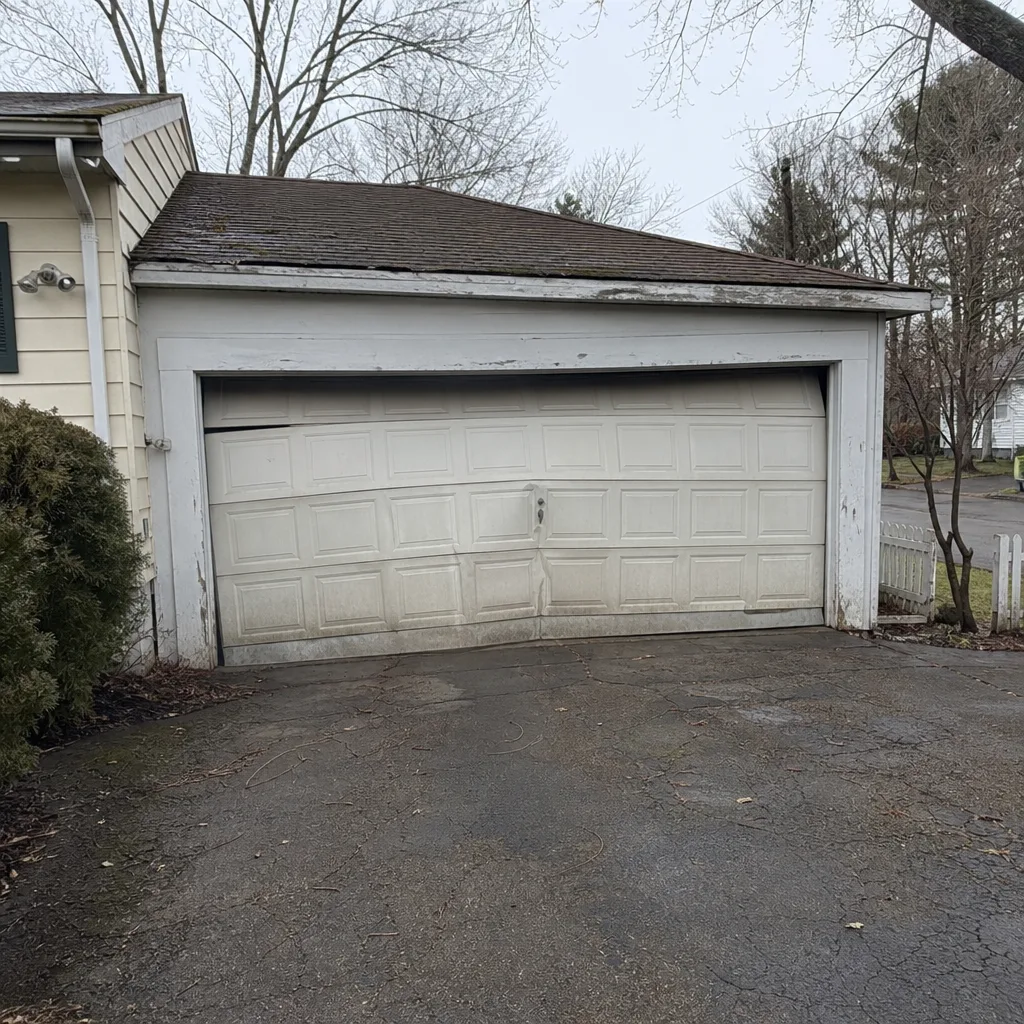
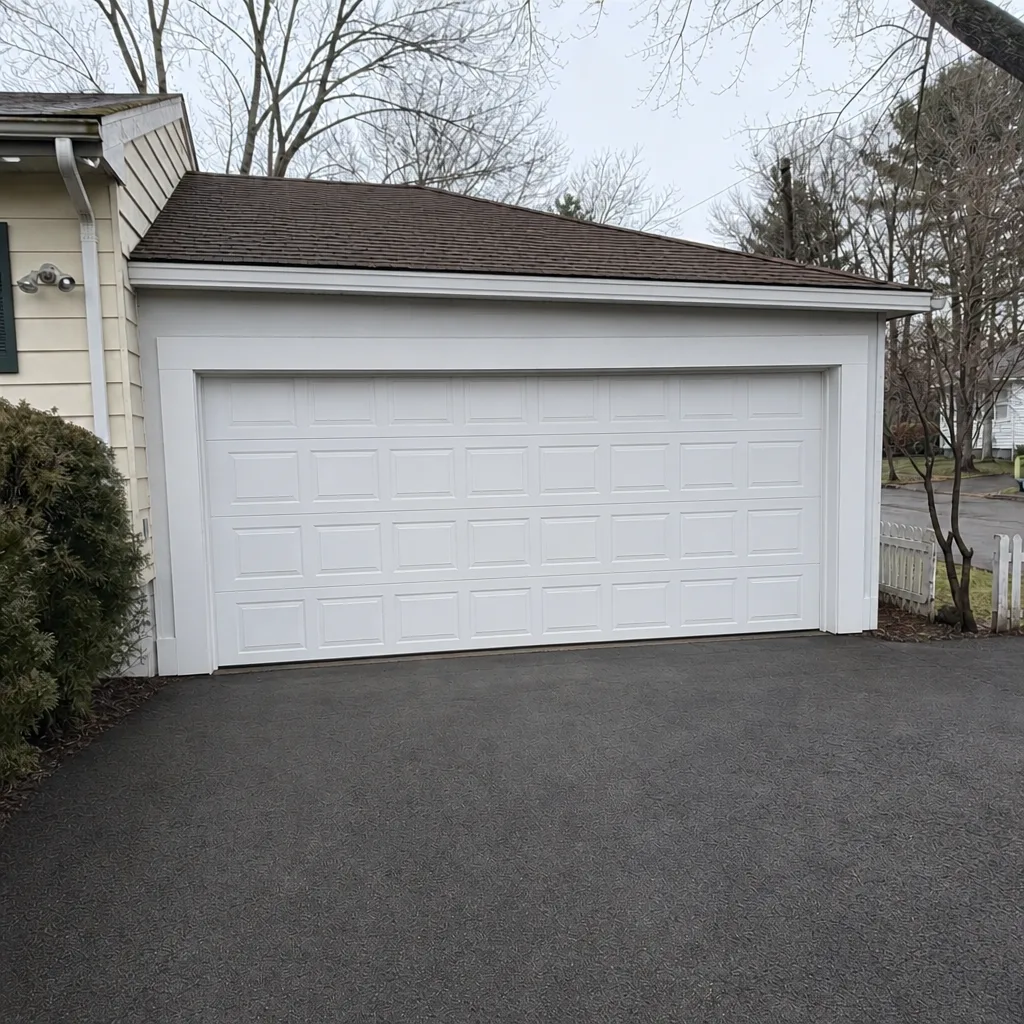
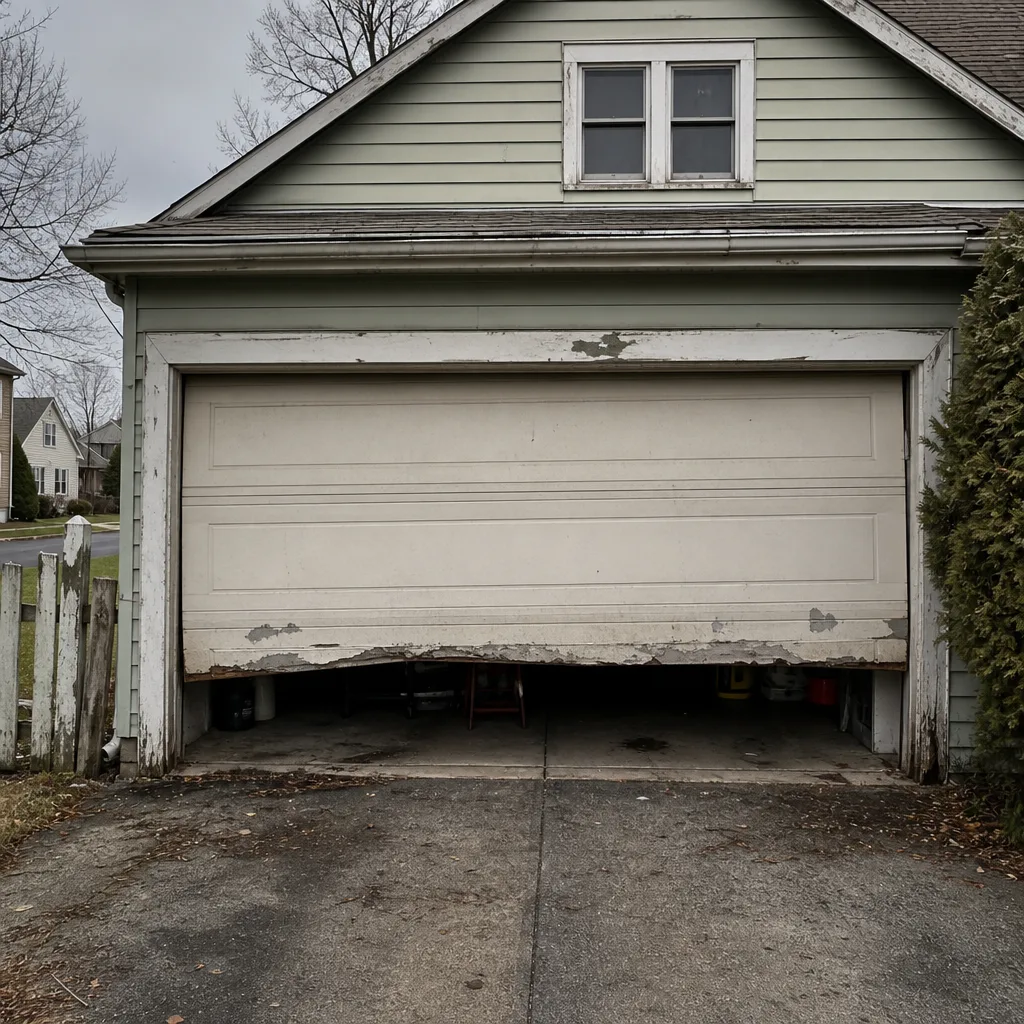
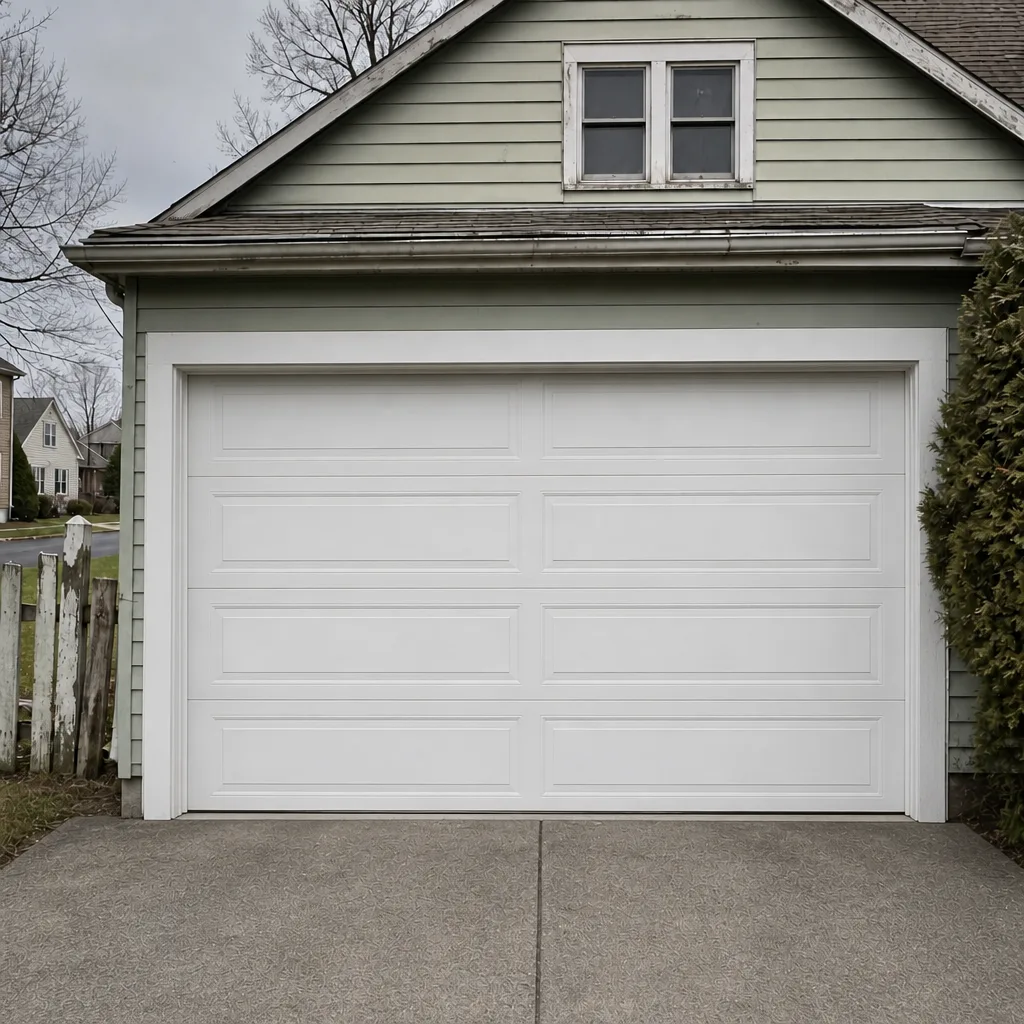
See the difference
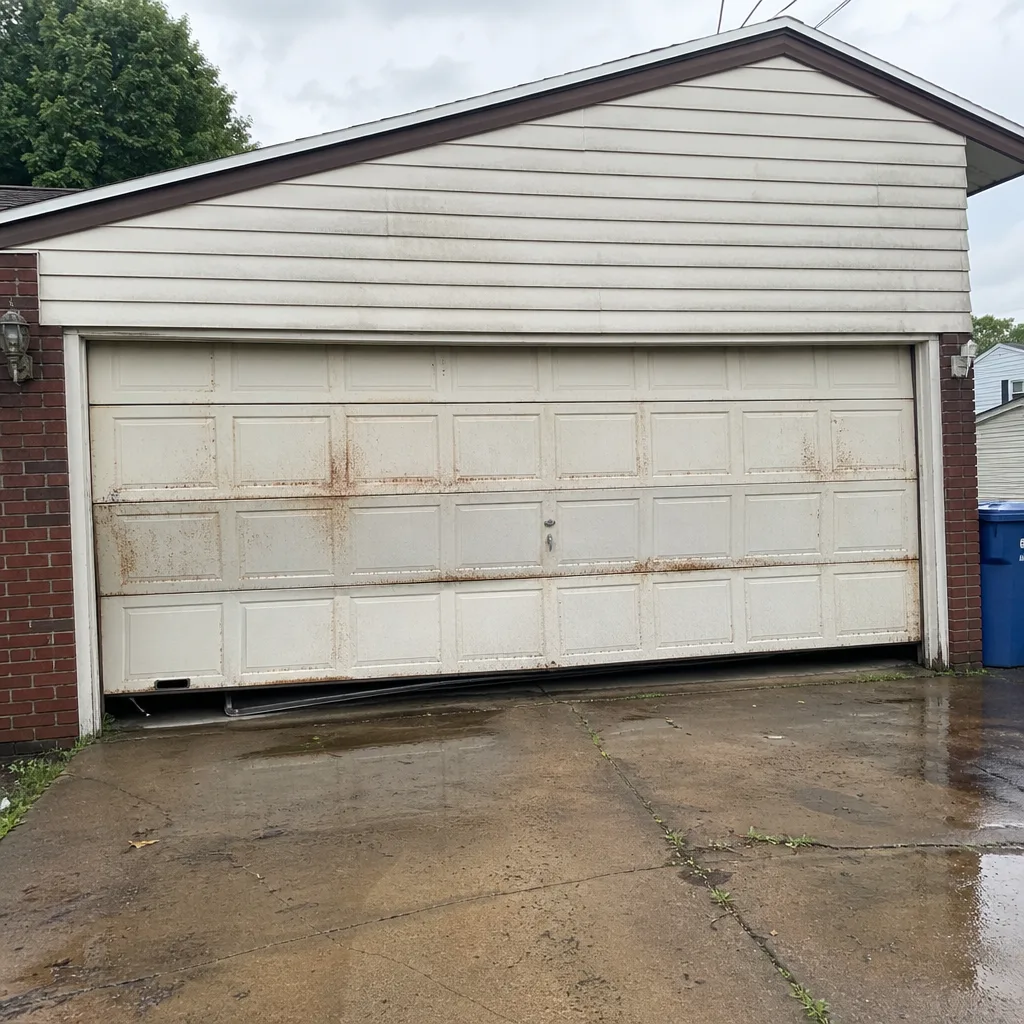 Before
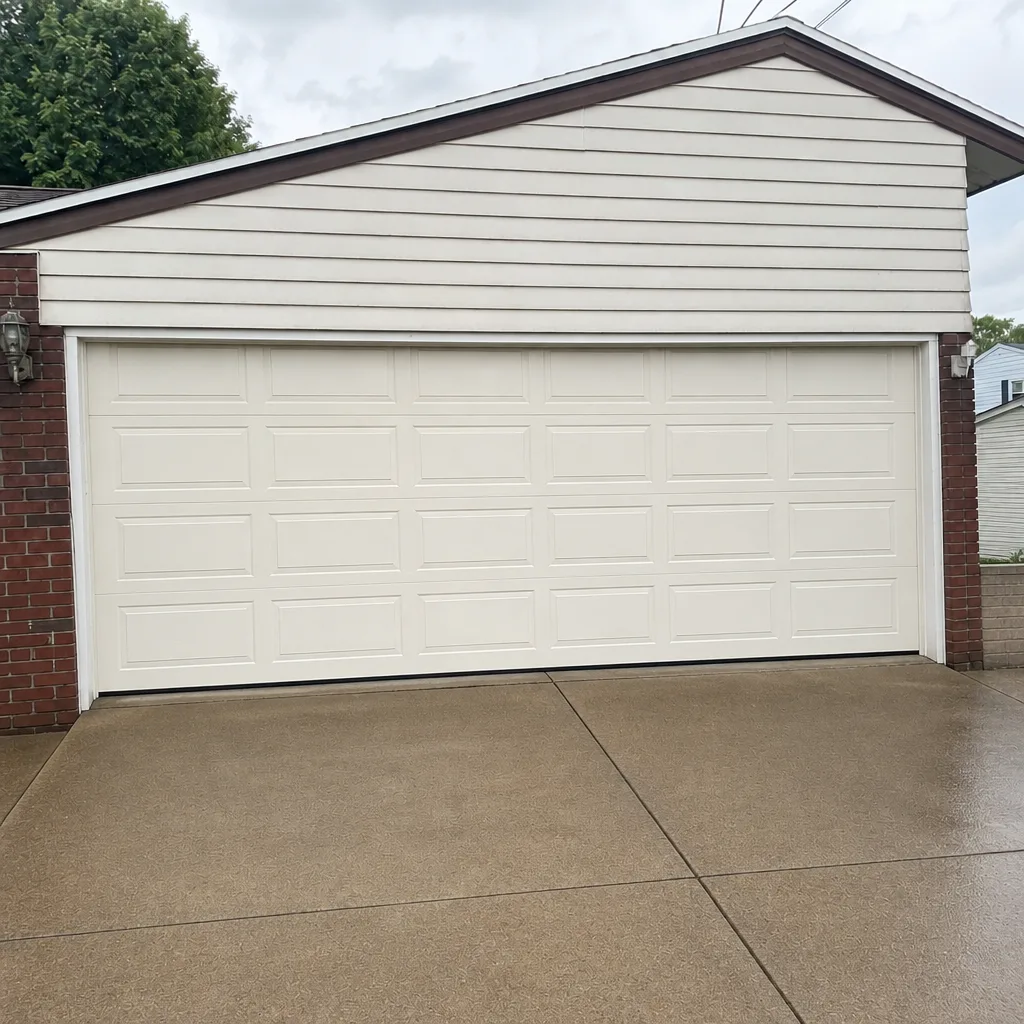 After
 Before
 After
 Before
 After
When to Call a Professional
Call a professional when the task involves stored spring energy (torsion or extension spring replacement, cable work), when the door has come off its tracks, when the header above the door is cracked or the jamb has moved, or when an opener problem has resisted two rounds of troubleshooting. Also call when the door is stuck open: securing the house matters more than saving on the diagnostic. In Hartford, we can address the full system, from the opener motor to the bottom panel, so you’re not coordinating between contractors. Our technicians have up to 11 years of experience across the major brands, and brand-matched diagnostics often solve in a visit what a generalist would spend days on. If you’re in the older neighborhoods around Asylum Hill or the West End, or out toward the South End and the North End, the housing stock here makes spring and opener issues common, and we know the equipment that tends to be installed. Hartford Garage Door Repair Pros offers free estimates in Hartford, and we can tell you whether the job is something you should take on or something we should. Call (877) 792-6067. We answer 24/7. Fast dispatch from 7am to 7pm, Sunday through Friday.
Frequently Asked Questions
It is technically possible but not advisable. Torsion springs hold enough stored energy that improper release can cause severe injury, and the process requires two specific winding bars that cannot be substituted. The failure mode is immediate and forceful. The alternative is a professional spring repair, which in Hartford typically runs $180 – $340 for a single spring and roughly double for a matched pair. Call (877) 792-6067 for a free estimate.
DIY opener replacement looks cheaper on paper: the unit alone is often $180 – $350, and installed professional cost runs $380 – $650 in Hartford. But LiftMaster, Chamberlain, and Genie warranty terms typically condition coverage on professional installation, and a faulty install can void coverage on a board failure later. If you have an older Craftsman era unit, do the comparison with the warranty documentation in hand before you buy. Call (877) 792-6067 to talk through the specific model first.
Bottom seal and weatherstripping replacement, safety sensor cleaning and alignment, remote and keypad programming, hinge and roller lubrication, and visual inspection are all reasonable DIY in Hartford, given the winters. These tasks involve no stored spring tension and no working at significant height beyond a step ladder.
It may be, depending on the manufacturer and the specific part. LiftMaster, Genie, and Clopay warranty documents typically specify professional installation as a condition of coverage on installation-related claims. That’s most relevant on a full opener swap or a new door installation. Remote programming and lubrication don’t touch the warranty. For model-specific warranty wording, check the document that came with your unit.
Typical Hartford repair ranges: bottom seal replacement $90 – $180 installed, safety sensor service $70 – $140, single torsion spring replacement $180 – $340, matched pair of springs $360 – $680, opener replacement $380 – $650, and panel replacement $280 – $650 per panel. These are typical estimates and the written estimate sets the final price. Call (877) 792-6067 and we’ll give you a written number before any work starts.
Often yes, and it’s a legitimate cost-saving route on higher-end components. What you own is the spec matching: bringing the wrong spring or opener for your door means the technician can’t complete the install. Confirm the arrangement up front and get the labor estimate in writing before the visit. Call (877) 792-6067 to confirm the part needs before you buy.
Secure the space first: close any interior entry door into the garage, and if the garage is attached to the house, don’t leave tools or valuables visible from the street. Don’t try to force the door down manually if a spring is visibly broken or the door is off its tracks, since the force of it coming down can cause injury. We treat a stuck door as a security issue, not just a scheduling one. Call (877) 792-6067. We answer 24/7. Fast dispatch from 7am to 7pm, Sunday through Friday.
The Bottom Line
The DIY vs professional question for a garage door isn’t a personality test, it’s a task classification. Seals, sensors, remotes, and lubrication are genuinely yours. Torsion springs, cables, track work, and anything involving a door that has come off its tracks belong to a trained professional, because the failure mode is fast and the tooling isn’t improvised. In Hartford, the labor savings on spring and opener work are thinner than they look once you account for parts, tools, and warranty exposure. The middle path of supplying your own parts and paying for labor works if you’ve matched the spec correctly. Above all, always ask for the written estimate before any work starts, so the price is settled before a wrench comes out. If you’re in Hartford and want a straight answer on your specific door, we’re glad to take a look. Hartford Garage Door Repair Pros is your call.
Written by the team at Hartford Garage Door Repair Pros.