
Last updated November 23, 2026
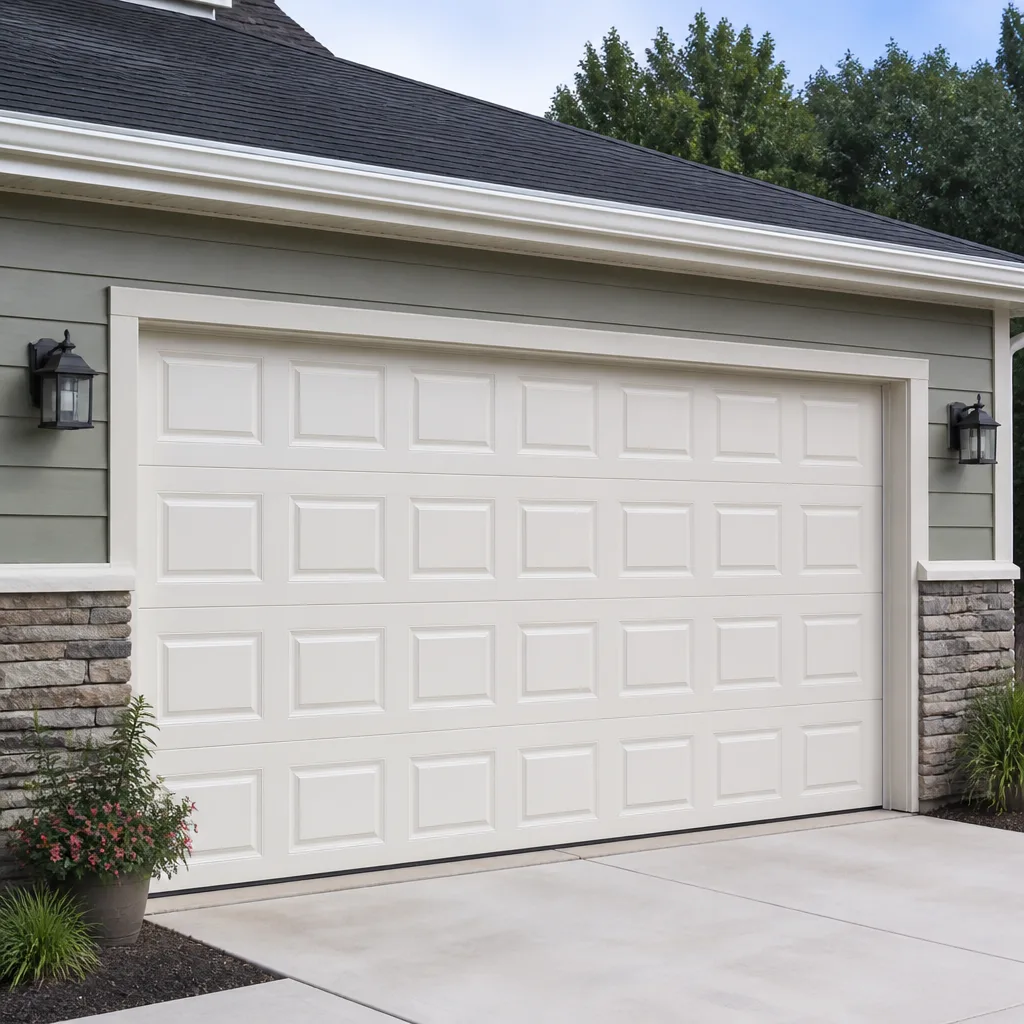 Raised-panel steel
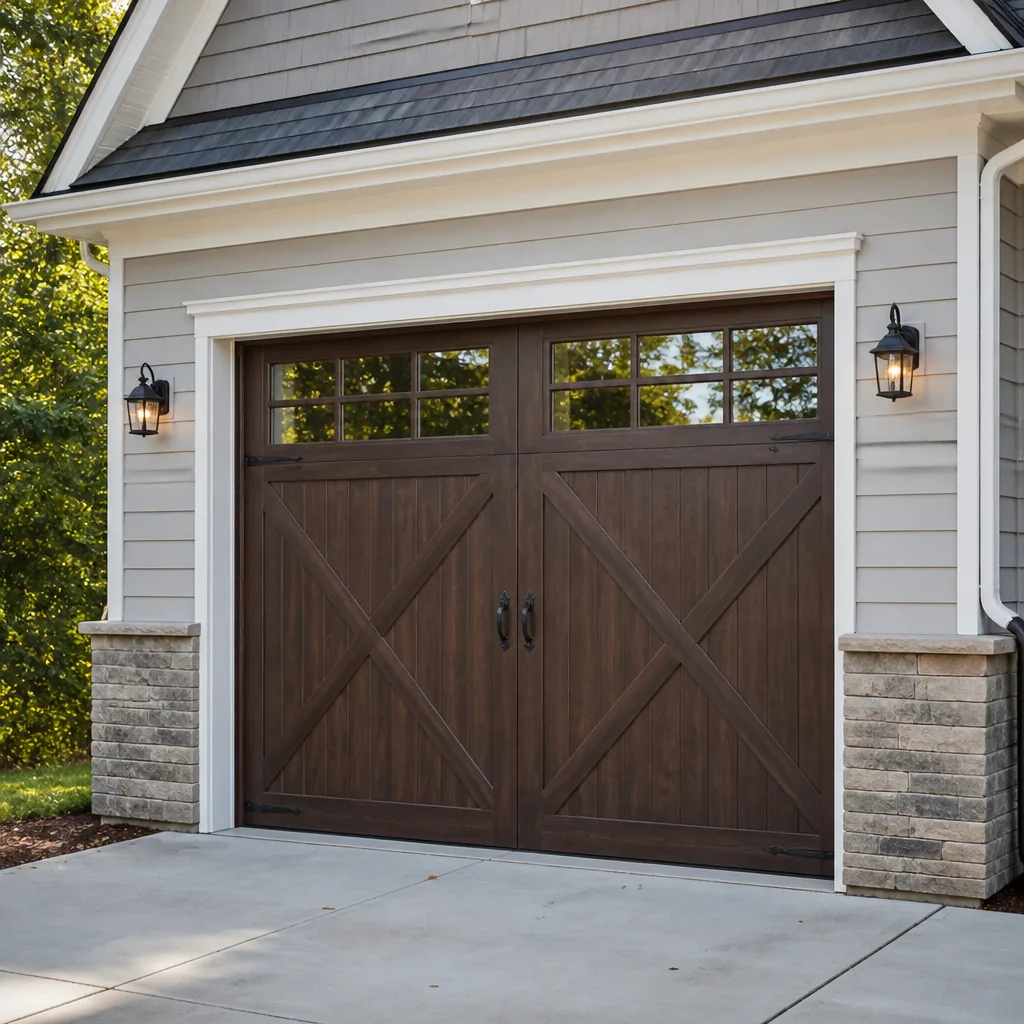 Carriage house
 Modern flush
 Full-view glass
 LiftMaster openers
 Chamberlain openers
Full 25-point door and opener safety check with every visit - springs, cables, rollers, tracks, and your LiftMaster or Chamberlain opener included
You get a price before we start. It does not change when the pro arrives.
Get your free estimateGarage Door Repair Maintenance Schedule: What to Do and When
A garage door has more moving parts than a residential HVAC system, yet most Hartford homeowners service it less often than they change a furnace filter – usually not until something breaks. That’s backwards. A torsion spring, four or more rollers, hinges, a track system, cables, and an opener motor all share load every time the door moves, and in Hartford that’s often several times a day through snow, thaw, and summer humidity. The right maintenance schedule isn’t a once-a-year checkbox; it’s a layered calendar where quarterly lubrication, biannual balance tests, and annual hardware audits each catch different failure modes at the right moment. This guide maps those intervals to Connecticut’s seasons, names the right lubricant for each component, and shows you exactly what to log so a technician can read your door’s wear history on the first visit.
Quick Answer
Lubricate springs, hinges, and rollers every three months; test the door balance and auto-reverse every six months; inspect cables, track alignment, and weatherstripping once a year. In Hartford, time the annual audit to October before the first freeze and add a short post-thaw check in April to catch roller wear and track misalignment caused by frost heave. If the door drifts more than two inches in the balance test or you see a frayed cable, stop operating it and call a specialist.
Styles & brands we work with
- Raised-panel steel
- Carriage house
- Modern flush
- Full-view glass
- LiftMaster openers
- Chamberlain openers
Table of Contents
- Why a Layered Schedule Beats an Annual Checklist
- Quarterly: Lubrication and the Right Products for Each Component
- Twice a Year: The Balance Test and Auto-Reverse Check
- October: Pre-Winter Prep for Hartford Weatherstripping and Torsion Tension
- April: The Post-Thaw Check for Rollers and Track Alignment
- The Annual Hardware and Safety Audit
- Brand-Specific Maintenance: Clopay, Wayne Dalton, and Others
- Building a Maintenance Log That Actually Helps a Technician
Why a Layered Schedule Beats an Annual Checklist
Most garage door maintenance advice compresses everything into a single annual list: lubricate, tighten, test, done. That works if your door is in a mild climate and used twice a day. Hartford isn’t that climate. A door here faces a real freeze-thaw cycle every winter, salt tracked in from the driveway, and humidity swings from July through September. Different components fail at different rates under those conditions, and a single yearly visit is too coarse to catch them at the right moment.
Think of the schedule as three layers running at different frequencies:
- Quarterly (four times a year): Lubrication. This layer exists because grease and oil films break down and collect grit. It catches friction before it becomes wear.
- Biannual (twice a year): Balance and auto-reverse testing. This layer exists because spring tension changes slowly and you won’t feel it until the door is already working too hard.
- Annual (once a year, timed to season): The full hardware audit. Cables, track alignment, weatherstripping, hinges, and fasteners. This layer catches slow degradation that you can’t see from the driver’s seat.
Layer them and each one catches what the others miss. Skip the quarterly oil and you accelerate roller and hinge wear, which shows up in the biannual test as a door that no longer balances. Skip the annual audit and a frayed cable goes unnoticed until it snaps. The frequencies aren’t arbitrary; they match how fast each failure mode develops in Hartford’s actual weather. When we open a door for the first time, the layer that’s been neglected is usually visible in the wear pattern, which is why a written log helps so much.
Quarterly: Lubrication and the Right Products for Each Component
Lubrication is the work most homeowners get wrong, not because it’s hard but because they use one product for everything. White lithium grease is right for some parts and wrong for others. The rule is simple: grease for metal-on-metal contact under load, silicone spray for sliding surfaces that should stay clean and dry. Here’s the component-by-component breakdown.
What to lubricate and with what
- Torsion springs: White lithium grease. Apply a thin film along the coils, not a thick paste. A product like WD-40 Specialist White Lithium Grease works well here. Never grease extension springs; those are a different system.
- Hinges: White lithium grease on the pivot points. Wipe off excess so grit doesn’t stick.
- Rollers: For metal rollers, a drop of light oil on the bearing. For nylon rollers, a small amount of silicone spray on the stem.
- Tracks: Silicone spray only. Never grease the tracks; grease collects grit and turns into an abrasive paste. A product like 3-IN-ONE Garage Door Lubricant is formulated for this and sprays clean.
- Opener rail and chain: Follow the opener manufacturer’s spec. LiftMaster and Chamberlain chain-drive rails take a light grease; belt-drive rails usually need nothing.
How to do the quarterly pass
- Disconnect the opener and raise the door by hand so the springs are under less tension during the work.
- Wipe each spring, hinge, and roller clean with a dry cloth before applying anything. Grease over grit is worse than no grease.
- Apply the correct lubricant per the list above, sparingly.
- Spray the tracks with silicone and run a rag through them to remove debris.
- Reconnect the opener and cycle the door twice to distribute the lubricant.
Quarterly means every three months. In Hartford, aim for January, April, July, and October. The October pass doubles as your pre-winter prep, and the April pass lines up with the post-thaw check.
Twice a Year: The Balance Test and Auto-Reverse Check
The balance test tells you how much life is left in your springs before they fail. You run it twice a year because spring tension changes gradually; a door that balanced in October may drift three inches by July. Here’s how to do it correctly.
The proper balance test
- Close the door fully. Pull the manual release cord on the opener carriage to disconnect the door from the motor.
- Raise the door by hand to about halfway, roughly waist height.
- Let go and watch. A properly balanced door should stay put or drift no more than a couple of inches.
- Lower it to about knee height and repeat.
- Reconnect the opener when done.
What a two-inch drift actually means
A door that drifts two inches or less is fine. A door that drifts more than two inches at either position is telling you the springs have lost tension or aren’t matched to the door weight. That matters because a door working against an unbalanced spring forces the opener to compensate. The motor strain shows up first as a noisy opener, then as premature gear wear, and eventually as a motor that quits. If the door drops fast when you let go, the springs are close to failing and the door is unsafe to operate. That’s the point to call a specialist rather than adjust anything yourself. Torsion springs are under extreme tension and adjusting them is genuinely dangerous work.
Auto-reverse check
Twice a year, test both the mechanical and photoelectric safety systems. Place a piece of wood (a 2×4 works) flat on the floor in the door’s path and close the door with the opener; it should reverse on contact. Then break the beam between the two photoelectric sensors near the floor while the door is closing; it should reverse immediately. If either test fails, the opener is a safety hazard and needs service. This is the single most important check on the whole schedule.
October: Pre-Winter Prep for Hartford Weatherstripping and Torsion Tension
October in Hartford is the month to get ahead of the freeze. Once the ground freezes and the temperature stays low, weatherstripping stiffens and small gaps get bigger, and a door that’s been running fine all summer starts straining in the cold. The pre-winter prep has two focuses: the bottom seal and the spring tension you just tested.
Weatherstripping and bottom seal
- Inspect the bottom seal for cracks, flat spots, and gaps. Run your hand along it from inside with the door closed; you should feel no draft.
- Check the perimeter seal on the jambs and header. In Hartford’s climate, seals that are compressed to the point they no longer rebound need replacement before the cold sets in.
- Look for daylight at the corners where the door meets the jamb. Any light means air and moisture are getting in, which affects both your heating bill and the door hardware.
- Wipe the seal with a silicone spray to keep it pliable through the freeze. This is one of the cheapest maintenance steps you can take, and it’s the one most people skip.
Torsion spring tension check
You already tested the balance in your fall pass. In October specifically, listen for the door while it runs. A door with a spring issue will often sound different in cold weather because the metal contracts and the spring coils sit slightly differently. Any new rattle, chirp, or bang means it’s time to have it looked at. Do not wind or unwind a torsion spring yourself; the tension in a residential spring can be enough to cause serious injury. We treat spring repair as a technician-level job on every door we open, and it’s the repair category where a homeowner call should always happen before anything else.
April: The Post-Thaw Check for Rollers and Track Alignment
April is the season most maintenance checklists ignore, and it’s the one Hartford doors need most. Frost heave moves the ground under your driveway and the slab your door sits on. That movement, even a small amount, throws off the alignment between the door and the track. If the slab has risen or settled, the door can catch on the way down or scrape the jamb on the way up.
What to check in April
- Open and close the door slowly by hand and listen for scraping or catching.
- Look at the gap between the rollers and the track. You should see consistent clearance on both sides all the way up.
- Check the vertical track for bends or bowing, especially near the bottom where frost movement has the most effect.
- Spin each roller by hand. A roller that wobbles on its stem or grinds needs replacement.
- Check the bottom of the door against the floor for a consistent seal. If one side touches and the other doesn’t, the door or the slab has shifted.
Roller wear is the most common April finding in Hartford because the winter cycle runs rollers against track that has moved slightly. Nylon rollers wear more quietly than steel ones, but both need replacement eventually. Track alignment adjustments are usually a same-visit repair once a technician has the door in front of them. If the door is binding hard enough that the opener strains, stop using it and get it looked at; continuing to run a misaligned door grinds the rollers and can bend the track further.
The Annual Hardware and Safety Audit
Once a year, ideally in October alongside the pre-winter prep, walk through the full hardware list. This is the layer that catches what the quarterly lubrication and biannual balance tests don’t. Set aside an hour, put on gloves, and work from the bottom of the door to the top.
- Cables: Look for fraying, kinks, or rust. Cables under tension that show damage should be replaced by a technician, not run until they snap. Cable replacement is not a homeowner repair.
- Hinges and fasteners: Check that every hinge is tight and every bolt on the track brackets and door panels is snug. Vibration from normal use loosens hardware over time.
- Panels: Look for dents, cracks, or separation between sections. A panel that’s pulling away from its hinge puts extra load on the whole door.
- Opener mount: Check the ceiling bracket and the rail mount for looseness. A wobbly opener mount is a common cause of noisy operation.
- Safety sensors: Confirm both photoelectric sensors are aligned (solid indicator lights on both) and free of cobwebs or dirt.
- Manual release: Test the release cord and make sure it disengages the door smoothly.
When to hand the audit to a professional
Most of the annual audit is safe to do yourself. The parts that aren’t are the springs and the cables, because both are under heavy tension. If anything in your audit points to those systems, that’s the call to make. A specialist will also catch things you can’t easily see, like a spring that’s still working but has visible coil wear that means it’s close to the end of its life. Even if you do the audit yourself every year, having a technician look at the door once is worth it for the spring and cable check alone.
Brand-Specific Maintenance: Clopay, Wayne Dalton, and Others
Garage door maintenance isn’t brand-neutral. The components look similar across makes, but the maintenance focus shifts depending on what’s installed. Three examples show how much the details matter.
Clopay steel doors
Clopay is one of the most common steel doors in Hartford’s residential stock. The maintenance watch item on a Clopay steel door is the seal at the bottom and the panel joints. Steel doors expand and contract more than wood or composite, so the bottom seal takes a harder beating through a Connecticut winter. Check the seal and the panel seams closely every October. Clopay also uses specific hinge and roller combinations, so a brand-matched replacement part matters when something wears out.
Wayne Dalton Torquemaster systems
Wayne Dalton’s Torquemaster uses a torsion system that’s built differently from the standard torsion setup. The springs are housed in a tube above the door rather than being exposed coils. If your door has a Torquemaster, the balance test still applies, but the visual spring inspection doesn’t; you can’t see the spring wear the way you can on an exposed coil. That makes the balance test more important, and it makes a professional inspection more valuable because the technician knows what to look for on that specific system. A generalist won’t know the Torquemaster’s quirks.
Amarr and Genie
Amarr doors are common on newer Hartford builds and tend to use nylon rollers as standard, which changes the lubrication schedule slightly (less oil, more silicone). Genie openers, especially the older screw-drive units, have their own maintenance rhythm: the rail needs periodic cleaning and the motor housing should be checked for dust buildup. If you have a Genie opener paired with an Amarr door, the opener side of your maintenance schedule is where attention is best spent.
Those brand differences are why we train technicians on the eight brands that dominate Hartford’s residential doors: LiftMaster, Chamberlain, Genie, Clopay, Amarr, Wayne Dalton, Craftsman, and Raynor. When the maintenance visit happens, the technician already knows what to look at first on your specific hardware instead of researching it on-site. If your door needs more than maintenance, we handle garage door repair across all of those brands, and opener issues fall under garage door opener repair.
Building a Maintenance Log That Actually Helps a Technician
Most homeowners keep no maintenance record at all, which means every technician who visits starts from zero. A simple log changes that. It’s not about being tidy; it’s about giving the next person who works on the door a fast read on cumulative wear, so they can make better decisions about what to replace and what to leave alone.
What to record
- Date and what you did: “Lubricated springs and hinges, silicone on tracks” is enough.
- Any change in sound or operation: Did the door get louder? Does it hesitate at a certain height? Note it with the date.
- Balance test results: “Stayed put” or “drifted one inch at half height, three inches at knee height.” The drift measurements over time show spring decline better than a single reading.
- Parts replaced and by whom: If a roller or hinge was replaced, note which one and when. If a technician replaced a spring, note the date; it’s the single most useful entry on the log.
- Weather events that affected the door: After a hard freeze or a deep thaw, note anything the door did differently.
How a technician reads it
On a first visit, the log lets a technician see how the door has behaved over a whole season rather than just the day of the call. A door that drifted one inch last October and three inches this March is on a clear path to spring failure. A door that’s been stable for two years is probably fine. That read changes the recommendation, and it’s why the log is worth keeping. We use brand-matched parts and model-specific diagnostics on Hartford Garage Door Repair Pros service calls, and a written history speeds up the diagnostic process considerably.
Keep the log in a plastic sleeve or a note on your phone. Either works. The point is to have it, not to make it formal.
Common Mistakes to Avoid
- Greasing the tracks. Grease on the tracks collects grit and becomes an abrasive paste that wears rollers faster than dry tracks do. Use silicone spray and leave it at that. This is the single most common lubrication error we see in Hartford.
- Skipping the April check because the door “seems fine.” Frost heave is invisible until the door starts catching. By then, the rollers are already wearing unevenly. The April pass catches the problem while it’s still a cheap adjustment.
- Adjusting a torsion spring yourself. The tension in a residential torsion spring can cause serious injury. This is the one component where the right call is always a specialist, every time.
- Ignoring a two-inch-plus balance drift. A door that drifts is forcing the opener to compensate. That strain shortens motor life and shows up later as a full opener replacement instead of a spring repair.
- Using a generic lube on everything. White lithium grease on the tracks and silicone on the springs is backwards. Match the product to the component as listed above.
- Running a door with a frayed cable. A damaged cable under tension can fail suddenly. Stop operating the door and get it looked at. Cable replacement is not a homeowner job.
- Not keeping a log. Every technician starts from scratch without one, which means more diagnostic time and less confidence in what’s actually worn versus what’s just old. The log is the cheapest maintenance tool you own.
See the difference
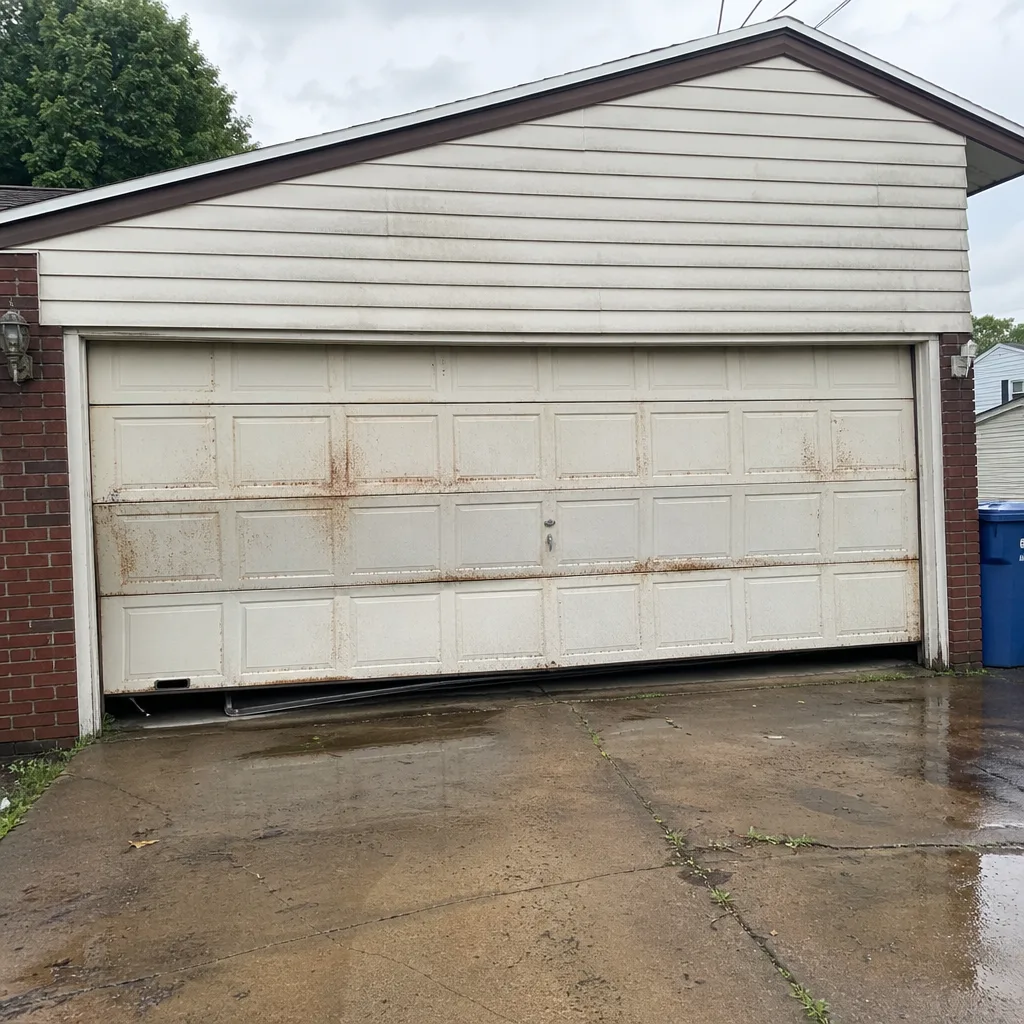 Before
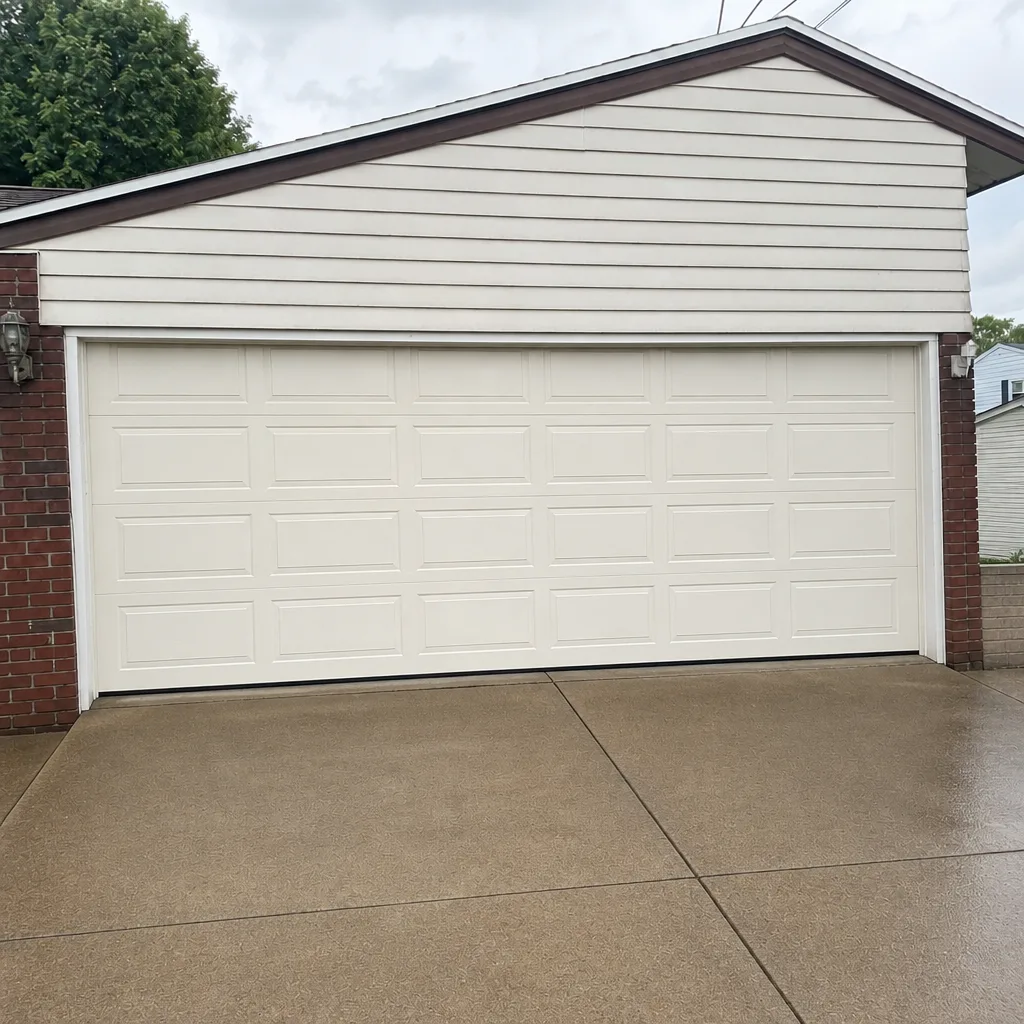 After
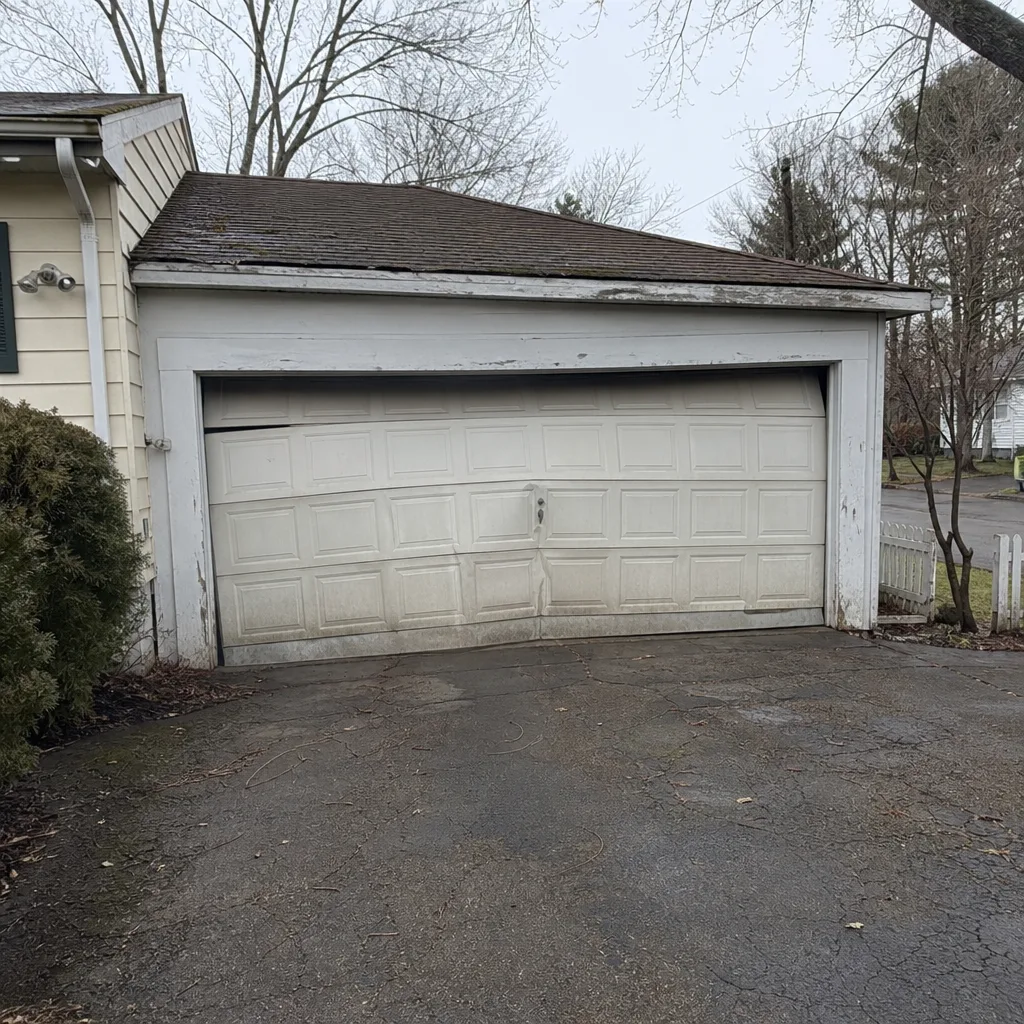 Before
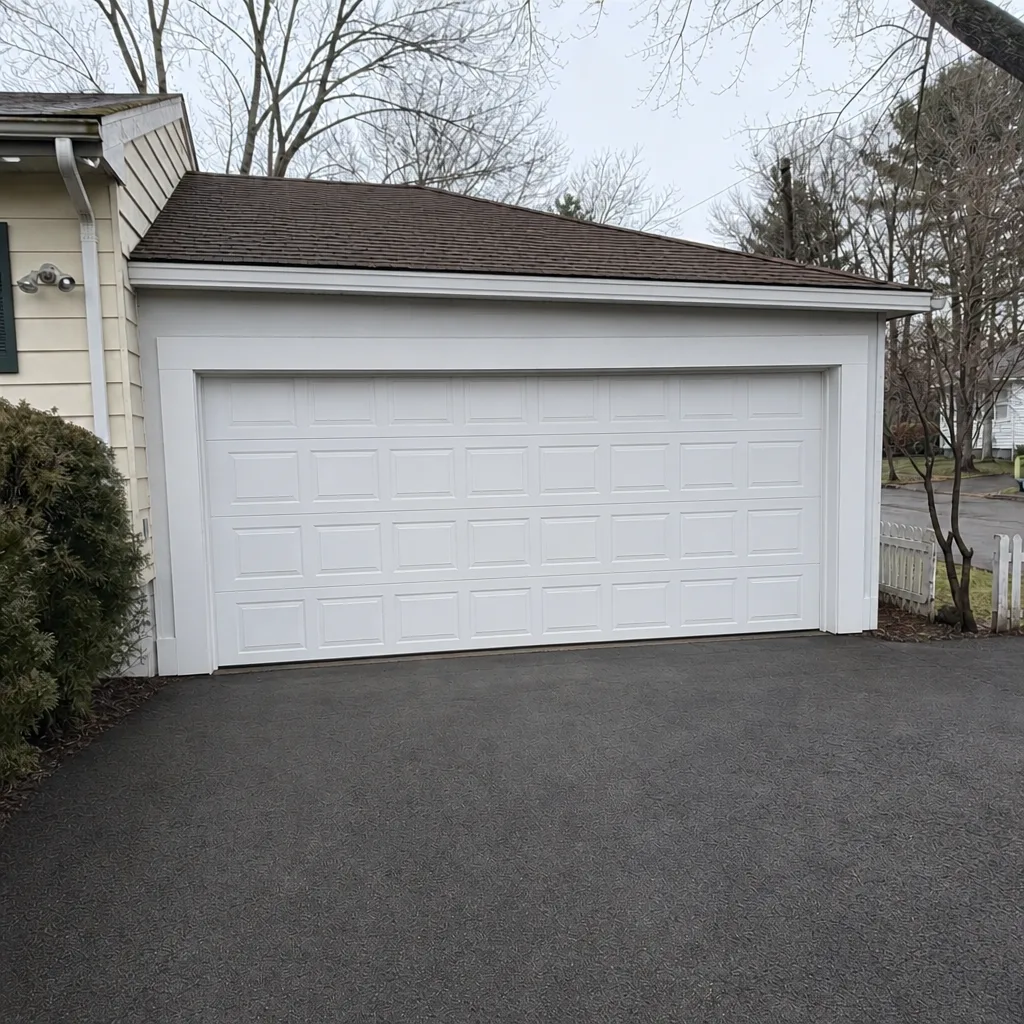 After
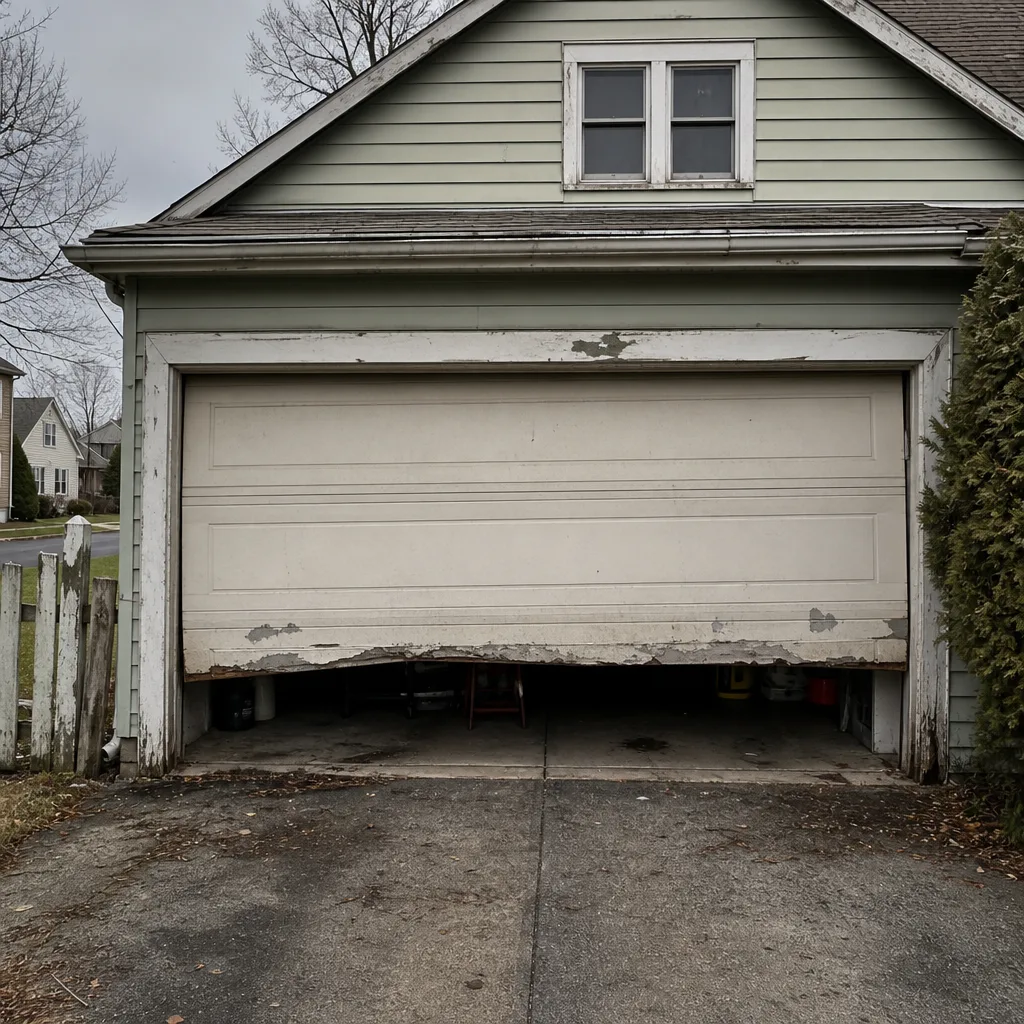 Before
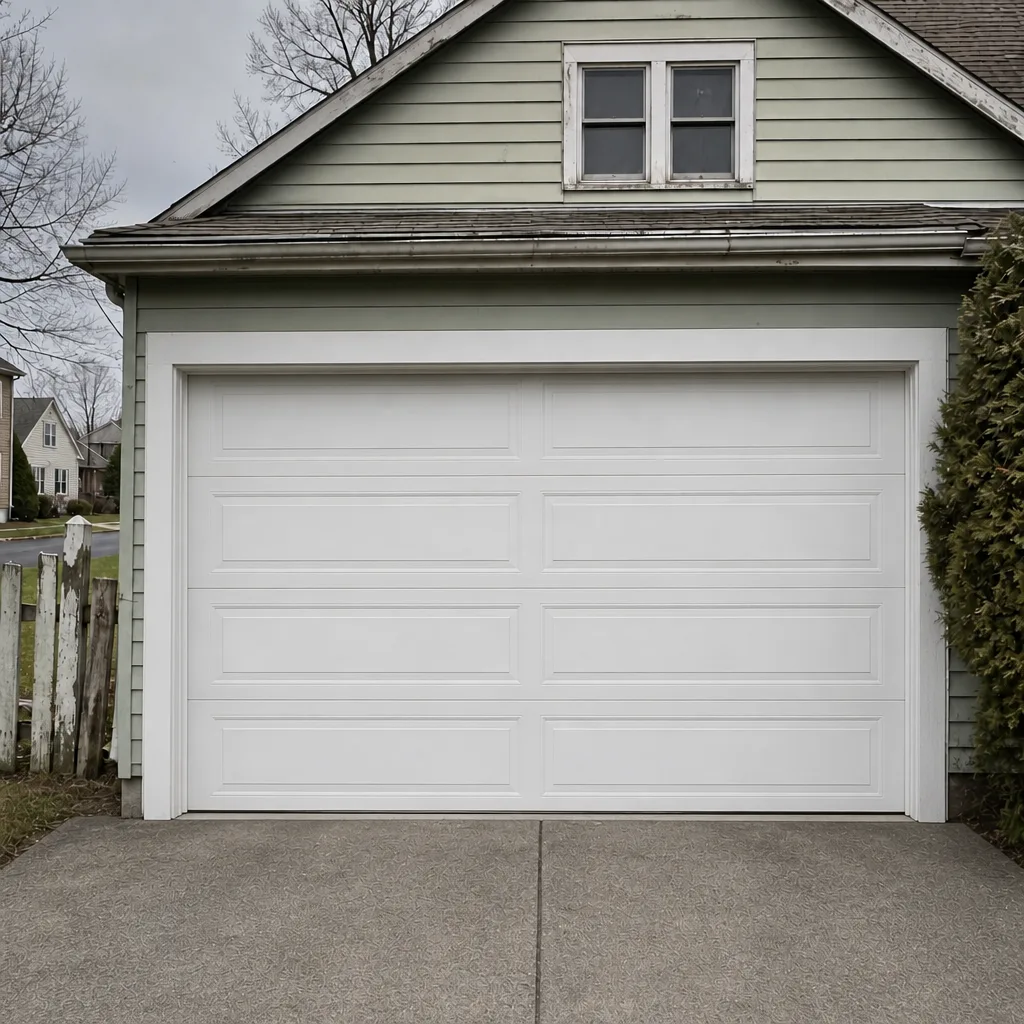 After
When to Call a Professional
Some maintenance is a homeowner job. Some isn’t. Call a specialist when the balance test shows more than two inches of drift, when you see frayed or kinked cables, when the door drops fast when released, or when the auto-reverse test fails. Call when the door scrapes or catches on the way up or down and a visual check doesn’t find the cause. Call when a spring has visibly failed (your door won’t lift by hand at all, or the opener runs but the door doesn’t move). And call when you’re about to replace the door rather than repair it; a proper garage door installation involves measuring, ordering, and scheduling, not a same-day fix. Hartford Garage Door Repair Pros offers free estimates in Hartford. Call (877) 792-6067. We answer 24/7. Fast dispatch from 7am to 7pm, Sunday through Friday. Our technicians have up to 11 years of experience, and we cover the eight brands that dominate Hartford’s residential doors. A stuck door is a security gap, and we treat it that way: if your door failed overnight or on a Sunday, call and we’ll get a technician out to make it safe.
Frequently Asked Questions
Every three months. Quarterly lubrication keeps springs, hinges, and rollers from wearing against grit and is the cheapest maintenance step on the whole schedule. In Hartford, aim for January, April, July, and October so the fall and spring passes line up with the seasonal checks. Call (877) 792-6067 for a free estimate if you’d rather have a technician do the pass.
It means the springs have lost tension or aren’t matched to the door weight. A door working against an unbalanced spring forces the opener motor to compensate, which shortens its life. More than two inches at either the half-height or knee-height position is the signal to have a specialist look at the springs before they fail. Call (877) 792-6067 for a free estimate.
No. Torsion springs are under extreme tension and adjusting them is genuinely dangerous; a slip can cause serious injury. This is the one maintenance item that should always go to a technician, and it’s a repair category we handle specifically. If your balance test points to spring trouble, call (877) 792-6067 and we’ll send someone out.
Because of frost heave. Hartford’s freeze-thaw cycle moves the ground and the slab your door sits on, which throws off the alignment between the door and the track. The April check catches roller wear and track misalignment while they’re still cheap to fix. Without it, the damage compounds through the summer. Call (877) 792-6067 for a free estimate if anything has changed since fall.
Clopay steel doors need a closer watch on the bottom seal and panel seams because steel expands and contracts more through a Connecticut winter. Wayne Dalton Torquemaster systems hide their springs inside a tube, so you can’t visually inspect spring wear the way you can on exposed coils; the balance test and a professional inspection carry more weight. We train on both, along with Amarr, Genie, LiftMaster, Chamberlain, Craftsman, and Raynor. Call (877) 792-6067 for a free estimate.
Yes, because it lets a technician read your door’s cumulative wear history on the first visit. A door that drifted one inch last fall and three inches this spring is headed for a spring failure; a door that’s been stable for two years is probably fine. That read changes the recommendation. Call (877) 792-6067 for a free estimate and bring the log with you.
The Bottom Line
Garage door maintenance in Hartford is a layered calendar, not a once-a-year task. Lubricate springs, hinges, and rollers every three months with the right product for each (white lithium grease on springs and hinges, silicone spray on tracks). Test the balance and auto-reverse every six months, and treat anything beyond two inches of drift as a warning. Time the full hardware audit to October so it lines up with pre-winter prep for weatherstripping and spring tension, and add the April post-thaw check for the roller and track issues frost heave causes. Keep a log. Skip the DIY spring work. And when the schedule points to something you shouldn’t touch, get a specialist involved before a maintenance item becomes a repair. The schedule only works if you actually run it, and it’s easier to run when you know what each layer is for. From the opener motor to the bottom panel, a door that gets serviced on schedule outlasts one that doesn’t by a wide margin.
Written by the team at Hartford Garage Door Repair Pros.