
Last updated November 23, 2026
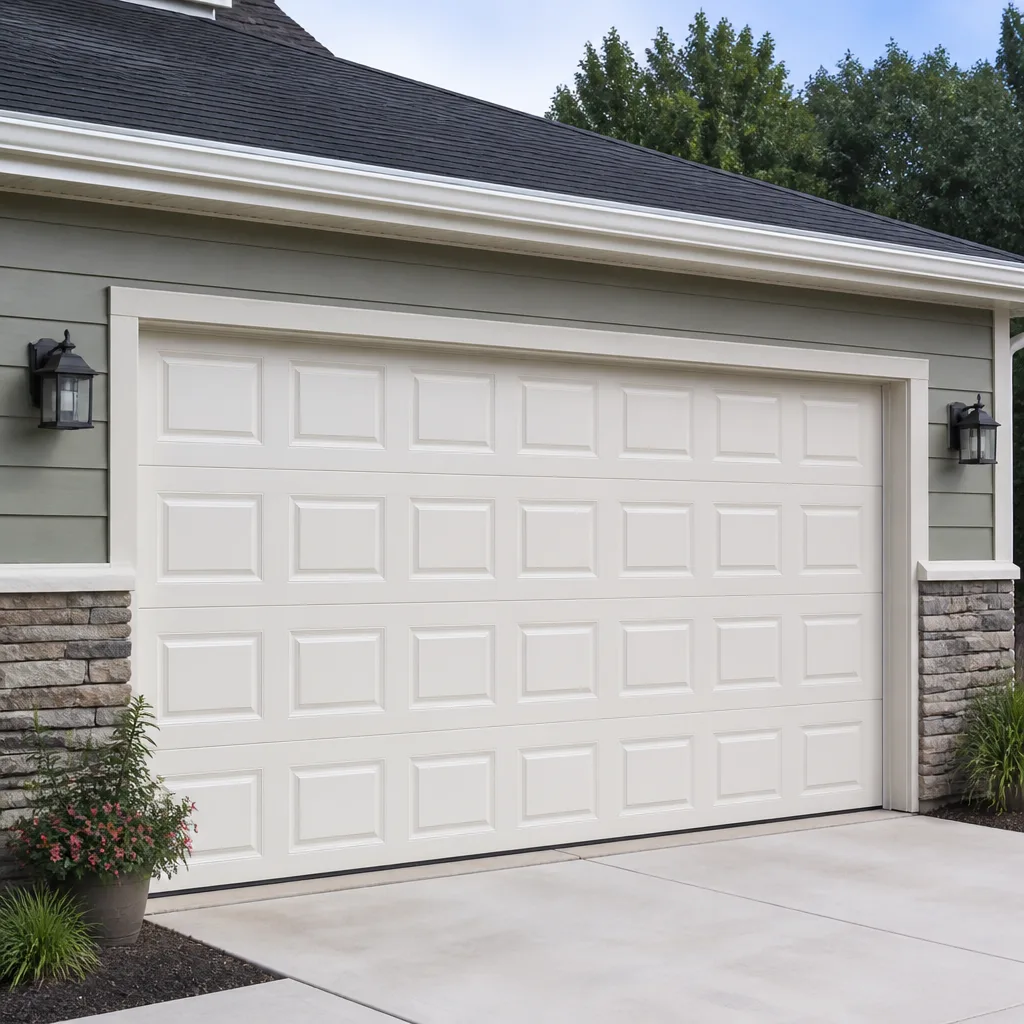 Raised-panel steel
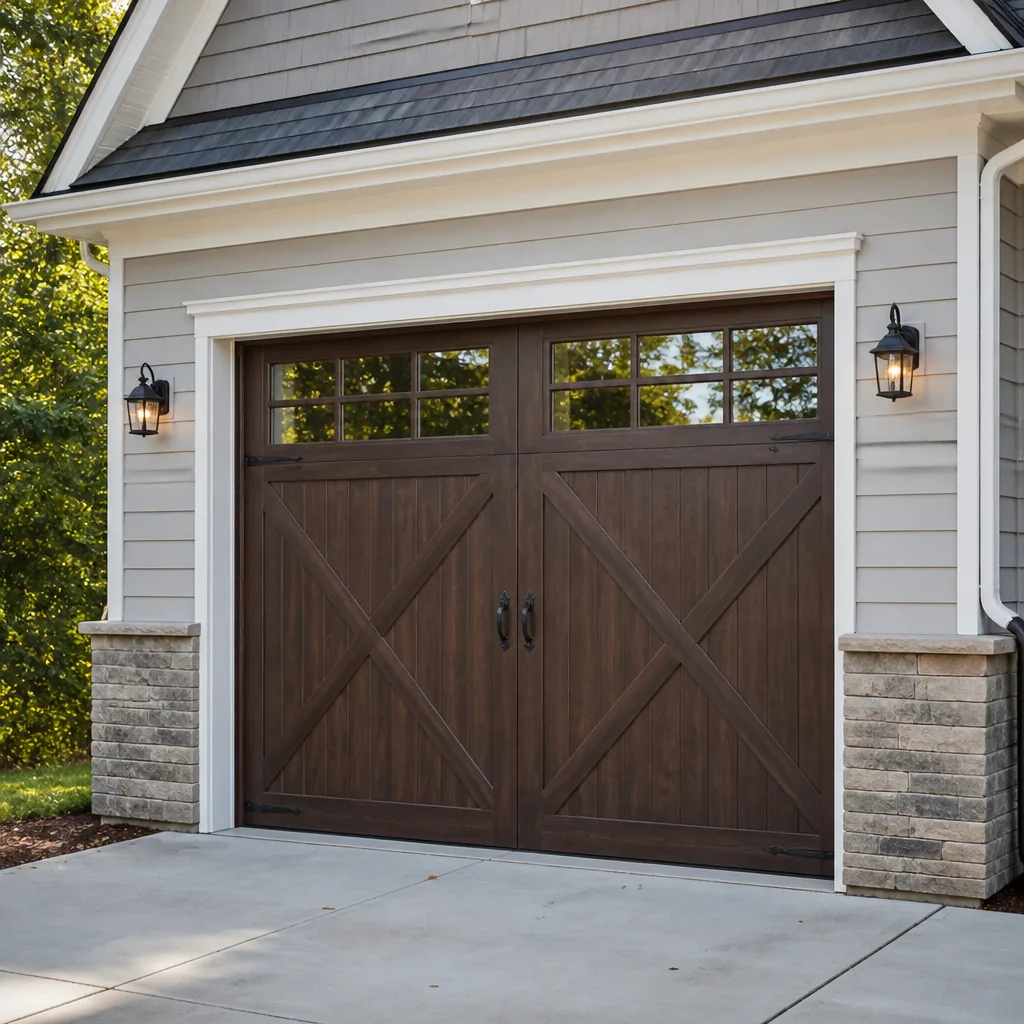 Carriage house
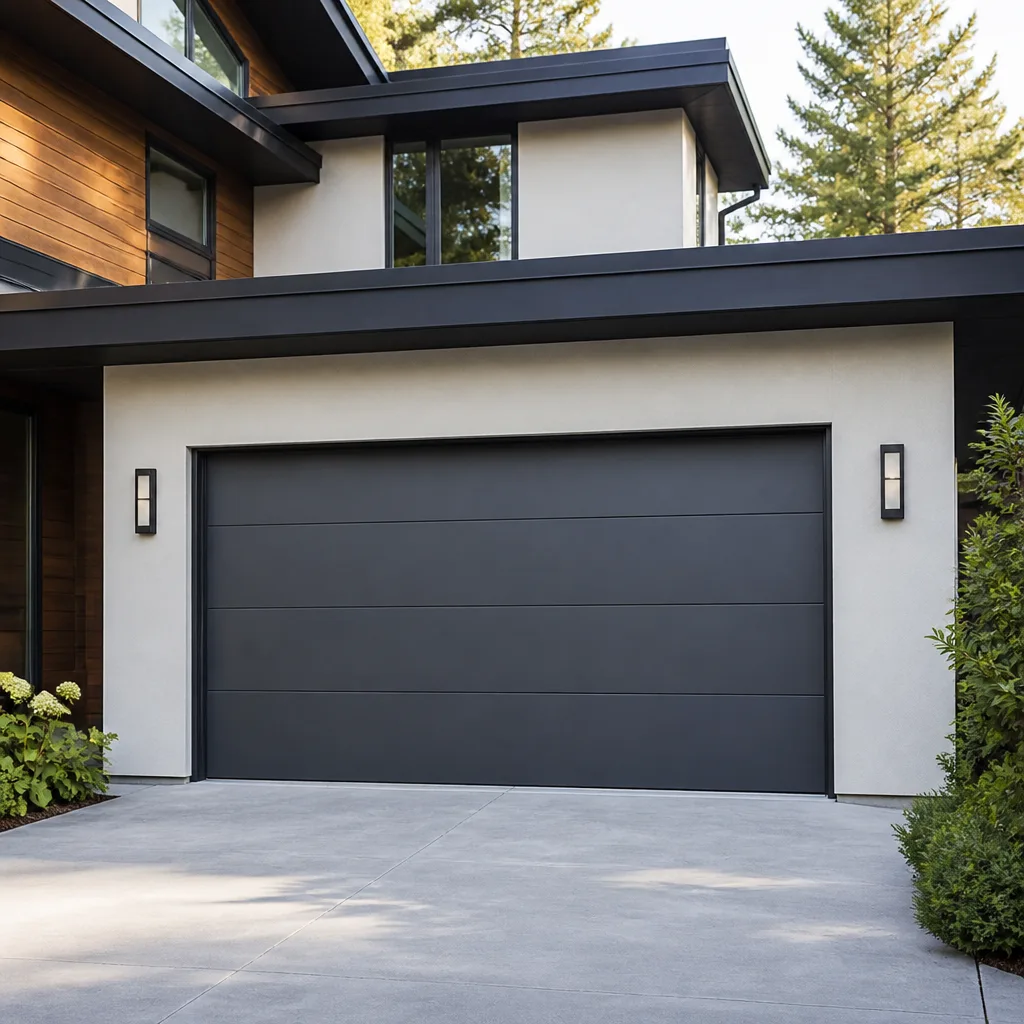 Modern flush
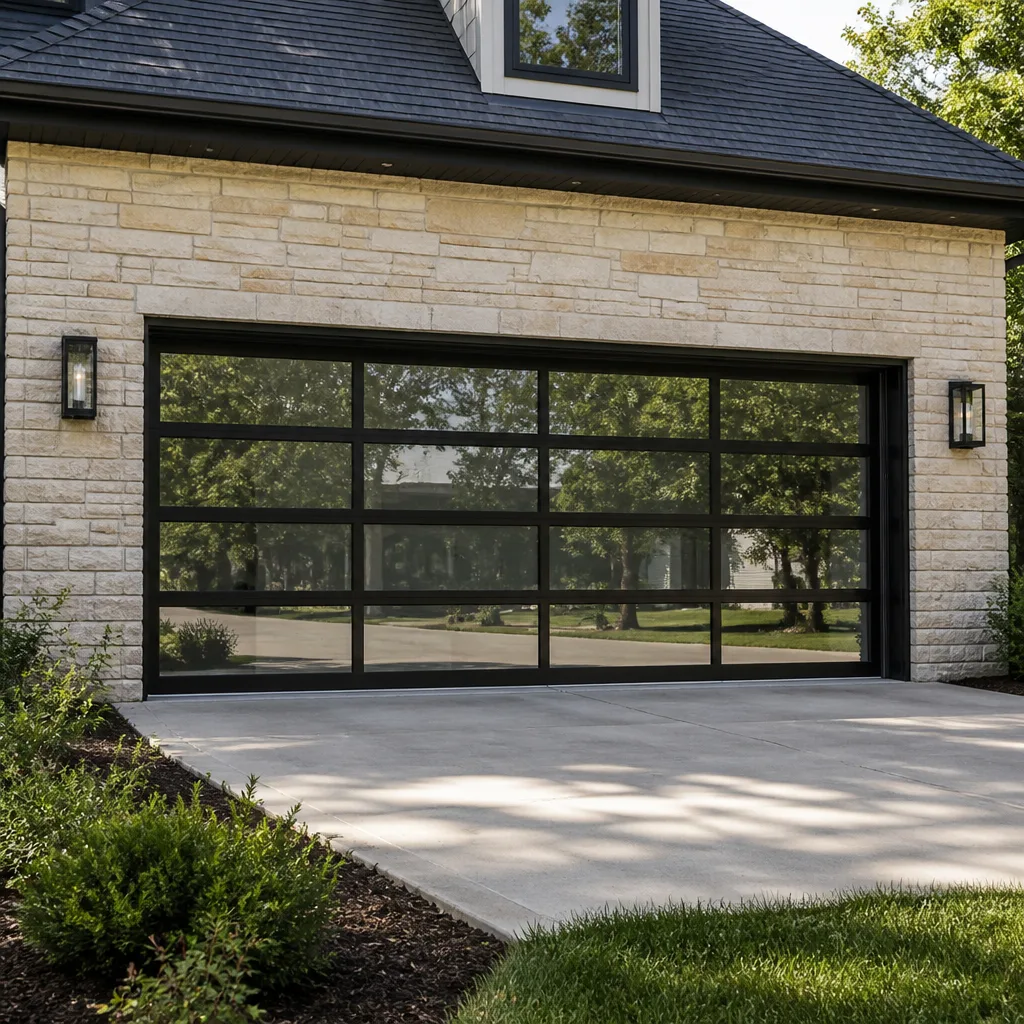 Full-view glass
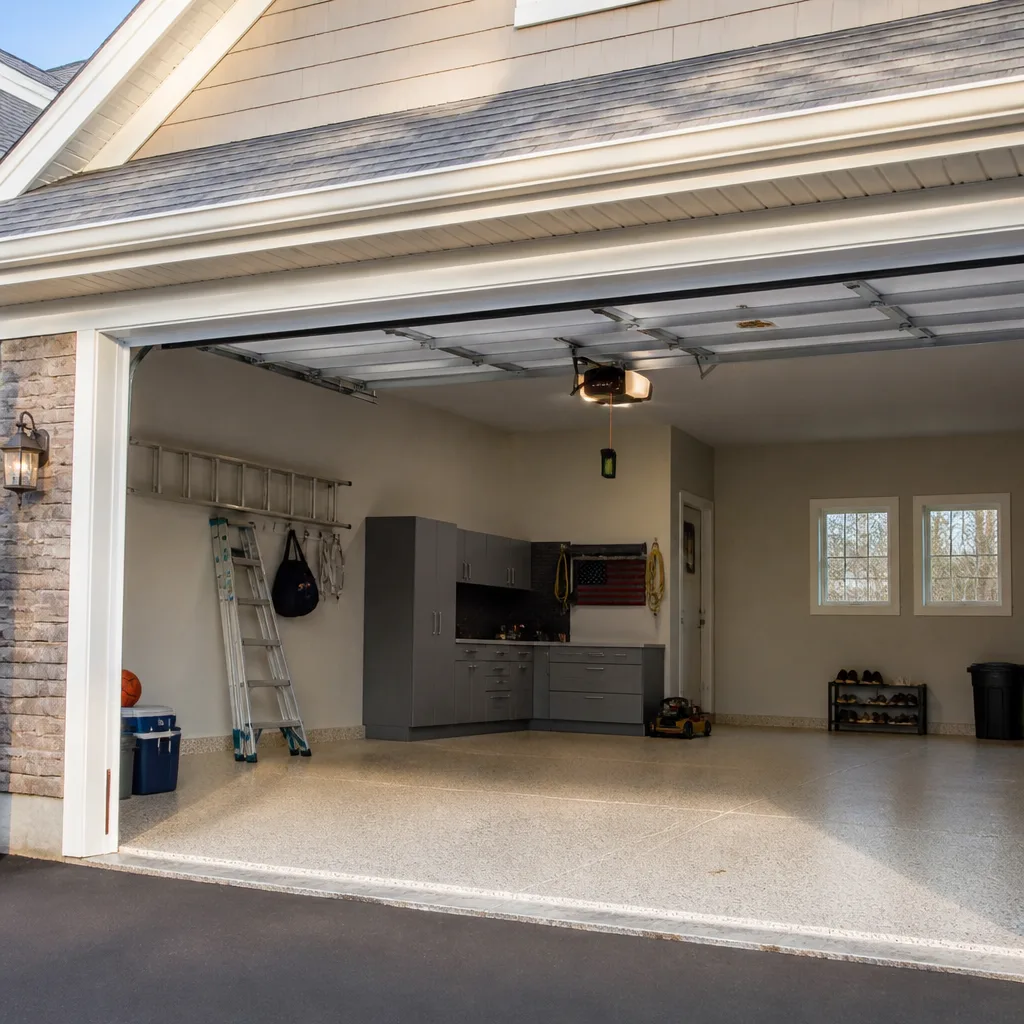 LiftMaster openers
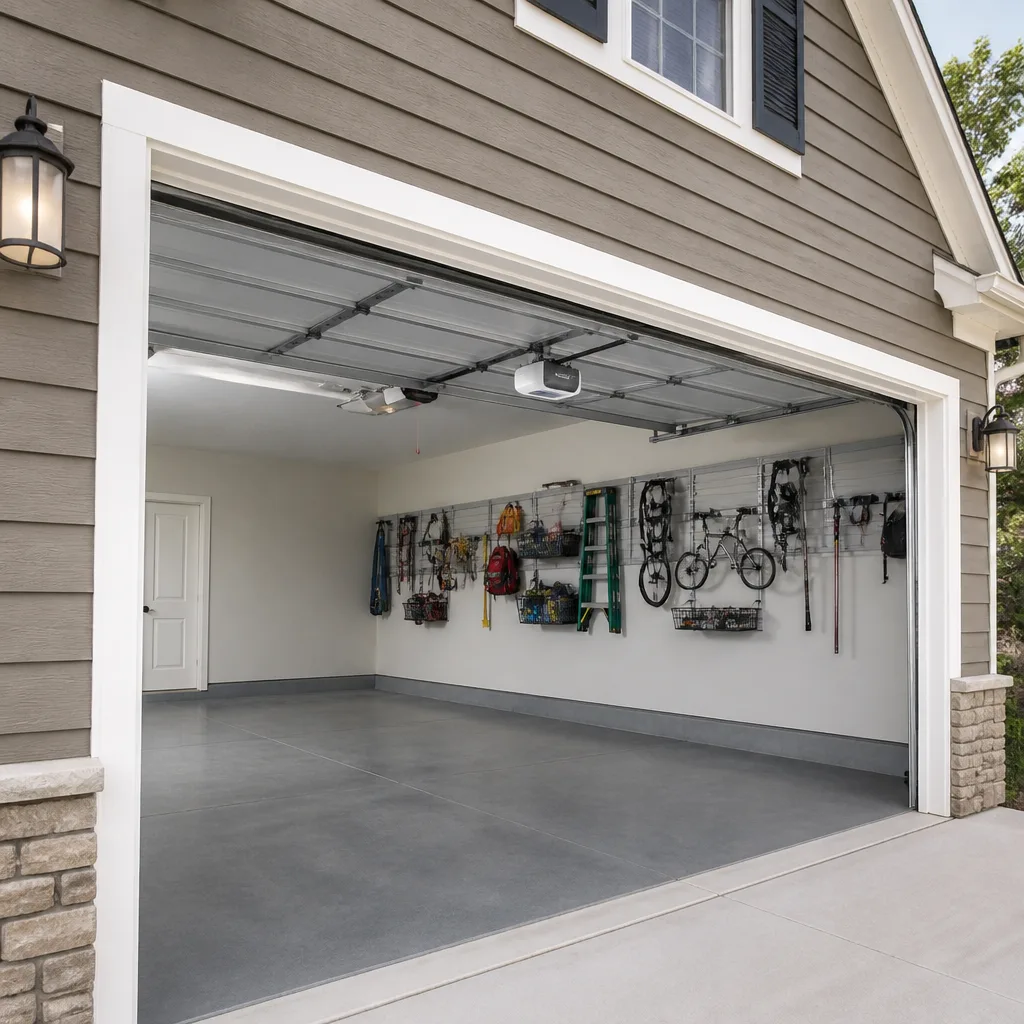 Chamberlain openers
Full 25-point door and opener safety check with every visit - springs, cables, rollers, tracks, and your LiftMaster or Chamberlain opener included
You get a price before we start. It does not change when the pro arrives.
Get your free estimateChoosing the Right Garage Door Brand: A Buyer’s Guide for Hartford
Most Hartford homeowners choose a garage door brand by looking at a photo. They pick a color, a window pattern, maybe a carriage-house style, and assume the name on the brochure matters less than the look. That’s backwards. Two doors with identical faces can carry very different steel gauges, very different insulation cores, and very different hardware systems underneath. The brand you choose determines how the door performs through Hartford’s cold winters and humid summers, what it costs to repair years from now, and whether your opener talks to your door without an adapter. This guide walks through what actually separates the major brands, how to match a product line to your garage’s real use, and where the marketing language stops being useful. We’ll cover Clopay, Amarr, and Wayne Dalton in depth, plus the opener side of the equation.
Quick Answer
There’s no single best garage door brand for Hartford. The right choice depends on three things: whether your garage is attached or detached, how much insulation your space actually needs, and which opener you’re running now or plan to run. Clopay and Amarr both build insulated steel doors, but their insulation methods produce different rigidity and thermal performance. Wayne Dalton offers strong value on entry-level steel but has a thinner dealer network in some parts of Hartford County. Match the product line to your use case first, then pick the brand.
Styles & brands we work with
- Raised-panel steel
- Carriage house
- Modern flush
- Full-view glass
- LiftMaster openers
- Chamberlain openers
Table of Contents
- Why Brand Matters More in Hartford Than You’d Think
- Clopay vs. Amarr vs. Wayne Dalton: The Real Differences
- Matching Insulation to Your Garage’s Actual Use
- Opener Compatibility: Where LiftMaster and Chamberlain Fit
- What “Wind Load Rated” Actually Means on a Spec Sheet
- The Parts Availability Question Hartford Homeowners Forget
- A Step-by-Step Way to Choose
- Common Mistakes to Avoid
- When to Call a Professional
- Frequently Asked Questions
Why Brand Matters More in Hartford Than You’d Think
Hartford sits in a climate that punishes cheap garage doors. Winter temperatures drop well below freezing, spring brings freeze-thaw cycling that works on seals and hinges, and summer humidity pushes moisture into every gap in a door’s construction. A door that holds up in a mild climate can start showing panel bowing, seal failure, and rusted hardware within a few seasons here. That’s not marketing talk. It’s the difference between a door built with heavier steel and a better seal design and one built to hit a low price point.
There’s also a neighborhood variable. Hartford’s housing stock is old. Many homes in the West End, Asylum Hill, and the South End have garages that were built decades ago and later updated with modern doors, and the measurements rarely come out perfectly square. A door brand with adjustable hardware and a flexible bottom seal handles those irregularities better than a rigid, one-size system. When you’re choosing a brand, you’re also choosing how forgiving the hardware will be when it meets an imperfect opening.
Brand also determines repair reality. A door with a healthy local dealer network means parts arrive in days. A door from a brand with weak local support means weeks of waiting or expensive retrofitted hardware. That’s a decision made at purchase and felt five, ten, fifteen years later.
Clopay vs. Amarr vs. Wayne Dalton: The Real Differences
These three brands dominate what Hartford-area dealers stock. They compete at similar price points, but they solve the engineering problems differently.
- Clopay builds its higher-end insulated doors with polyurethane injected under pressure until it fills the panel cavity completely (marketed as ClearFlo on some lines). The result is a denser, more rigid panel and better thermal performance than a polystyrene core.
- Amarr uses pre-formed polystyrene inserts in most of its insulated lines. It’s a lighter method that produces good R-value at a lower cost, but the panel isn’t quite as stiff and the thermal performance lags behind a fully injected polyurethane door.
- Wayne Dalton covers a broad range from basic uninsulated steel to insulated models. Its strength is value and options; its weakness is that the low-end lines sell on price and don’t hold up to Hartford’s temperature swings as well as a mid-tier Clopay or Amarr.
Steel gauge
Steel gauge is measured in numbers where lower means thicker. A 24-gauge door is noticeably stiffer than a 27-gauge door, and in a Hartford winter the difference shows up as dents, panel bowing, and rattling. Ask for the gauge on the specific product line, not the brand overall.
Bottom seal design
The bottom seal is what keeps wind, water, and pests out. A quality brand uses a replaceable vinyl or EPDM seal in a track-mounted retainer, not a flimsy astragal glued to the bottom. In Hartford’s freeze-thaw cycle, seals degrade faster than anywhere warm, and a replaceable seal saves you from replacing the whole bottom panel later.
Warranty terms
Warranties on garage doors vary widely by product line and cover different things: panel finish, structural hardware, and the opener electronics are usually separate. Read the exclusions carefully. A long warranty on paper means little if the dealer who installs it isn’t around or the parts aren’t locally available.
Matching Insulation to Your Garage’s Actual Use
The insulation question is where most Hartford buyers get it wrong. The right spec depends entirely on how the garage functions in your home.
- Attached garage with conditioned living space above (common on Hartford’s two-story homes with bedrooms or a family room over the garage): you want a fully insulated, polyurethane-core door, minimum 2 inches thick, with a tight perimeter seal. Heat loss here drives up heating costs upstairs and can cause moisture problems.
- Attached garage with no conditioned space above (a single-story garage bumped out from the house): a polystyrene-insulated door is usually sufficient. Full polyurethane is a nice upgrade but not a hard requirement.
- Detached garage: an insulated door still makes sense in Hartford for the sake of holding heat overnight and reducing condensation, but the R-value bar is lower. Uninsulated steel is a mistake here in our experience, because condensation from cold nights and warm days rusts hardware fast.
- Converted garage (living space, studio, workshop): if the garage has been converted into conditioned space, you need a fully sealed, well-insulated door, ideally with a bottom threshold that fully closes the gap. A converted garage with a cheap door leaks heat year-round.
- Heated or unheated garage on a hillside: on some Hartford-area homes with a sloped driveway, the garage is also the main entryway. A tighter door matters for both insulation and pest exclusion.
Insulation goes by R-value, which appears on the spec sheet. Ignore it on an uninsulated door, since there’s no meaningful R-value there. On an insulated door, ask the dealer to show you the R-value on the exact product line, not the brand’s overall marketing number.
For homeowners planning an install, our garage door installation page walks through how the measure and fit process works in Hartford.
Opener Compatibility: Where LiftMaster and Chamberlain Fit
Garage door openers and garage doors need to work together. Most Hartford homes run LiftMaster or Chamberlain openers, and that’s a good thing, since both brands are built for the same accessory ecosystem.
- LiftMaster and Chamberlain share the same electronics foundation and the same MyQ smart-home platform. If you have one, you’ll find doors from every major brand that pair cleanly with it.
- Chamberlain Wi-Fi openers support battery backup and MyQ on most modern models. Battery backup is worth considering given Hartford’s winter storm outages.
- LiftMaster professional-grade openers handle heavy insulated doors more comfortably than consumer models, which matters if you choose a fully insulated Clopay or Amarr door.
- Adapter hardware issues usually arise on older openers running proprietary signal protocols, not on modern LiftMaster or Chamberlain units. If your existing opener is older than about fifteen years, ask about compatibility before you commit to a door.
Where things get complicated: doors with unusual lifting torque (very heavy insulated doors, carriage-house styles with swing-out hardware) sometimes need a specific opener spring rating. That’s a case where a mismatch adds cost and friction. If you’re considering an opener upgrade alongside a new door, our garage door opener repair team can advise on what will pair cleanly with the door you’re leaning toward.
A related guide worth reading: if a door and opener are already installed and behaving oddly, our garage door repair page covers the diagnostics most common in Hartford homes.
What “Wind Load Rated” Actually Means on a Spec Sheet
A “wind load rated” garage door is built to withstand a specific wind pressure without structural failure. The rating appears on the spec sheet as a maximum wind speed and a pressure rating per square foot. It’s not a marketing upgrade, and it isn’t just for coastal states.
In Hartford, wind load rating matters in a few situations:
- Corner lots with an exposed garage face: if the garage door faces open street or open ground with no windbreak, wind gusts hit the door with more force than a sheltered door faces.
- Homes with a wide door and a north-facing or west-facing garage opening: these catch the prevailing winds harder, especially during winter storm systems.
- Door width: a 16-foot double door requires significantly more structural support than a 9-foot single door. Wind rating scales with width.
- Above-garage living space: a rated door with proper reinforcement transmits less vibration into the structure above during heavy gusts.
What to look for on the spec sheet: a stated design pressure rating and the specific hardware that enables it (reinforcement struts, heavier track, additional hinges). A door rated at a high wind load with standard duty hardware is a spec sheet illusion. Ask whether the door you’re looking at is rated only with reinforced hardware that adds cost. If your Hartford home is near an exposed corner and no wind rating is stated, ask.
The Parts Availability Question Hartford Homeowners Forget
Every garage door brand you buy has to live through a service life of ten to twenty years. In that time, parts wear out: rollers, hinges, cables, springs, bottom seals, top brackets, or the opener’s logic board. Which parts you can get, how fast, and at what cost depends on one thing: whether the brand has local dealer support where you live.
Hartford County has strong coverage for Clopay, Amarr, and Wayne Dalton products. When a door needs repair, that coverage means parts arrive from a warehouse within days rather than weeks. Brands with a healthy dealer network also make it easier for technicians to access the specific model’s diagrams and specifications, which matters for accurate diagnosis.
Our team covers eight brands for exactly this reason. If a customer has a Clopay carriage-house door and needs a bottom seal replaced, we know what seal that model uses and where to find it. If a Hartford homeowner has a LiftMaster opener from a decade ago and needs a specific logic board or remote, we can diagnose it by model. The brands we work with most often are LiftMaster, Chamberlain, Genie, Clopay, Amarr, Wayne Dalton, Craftsman, and Raynor. Coverage across those brands means we don’t have to refer a customer elsewhere for a single repair issue within scope.
When you’re buying a new door, ask the dealer: if a bottom panel is dented three years from now, how long does replacement take, and which local dealer handles it? If the answer is vague, that’s information.
A Step-by-Step Way to Choose
Here’s the order that works best when you’re comparing brands:
- Measure the usage. Is the garage attached, detached, conditioned, or converted? Note whether there’s conditioned living space above or beside it.
- Pick the insulation method. Polyurethane-injected for conditioned overlap; polystyrene acceptable when there’s no heat to retain above.
- Confirm steel gauge. Ask specifically for the gauge on the product line you’re considering, not the brand.
- Check the opener. Note the model and brand of your opener, or if you’re adding one, whether it’s a LiftMaster, Chamberlain, or another model.
- Verify wind load if exposed. For a corner or exposed garage opening, ask for the door’s rated design pressure and confirm the reinforcement hardware is included.
- Ask about local dealer support. Request the dealer name that services your chosen brand in Hartford County and ask how parts are delivered.
- Get a written quote that specifies the model and product line. A price for “a Clopay door” tells you nothing. A price for a Clopay Model X in a specific insulation spec tells you what you’re actually buying.
If you’re going through this exercise and want a specialist’s read on your specific door opening, the team behind Hartford Garage Door Repair Pros works across these brands and can walk you through the brand selection in person. We know the product lines by make and model, not from memory of a brochure.
See the difference
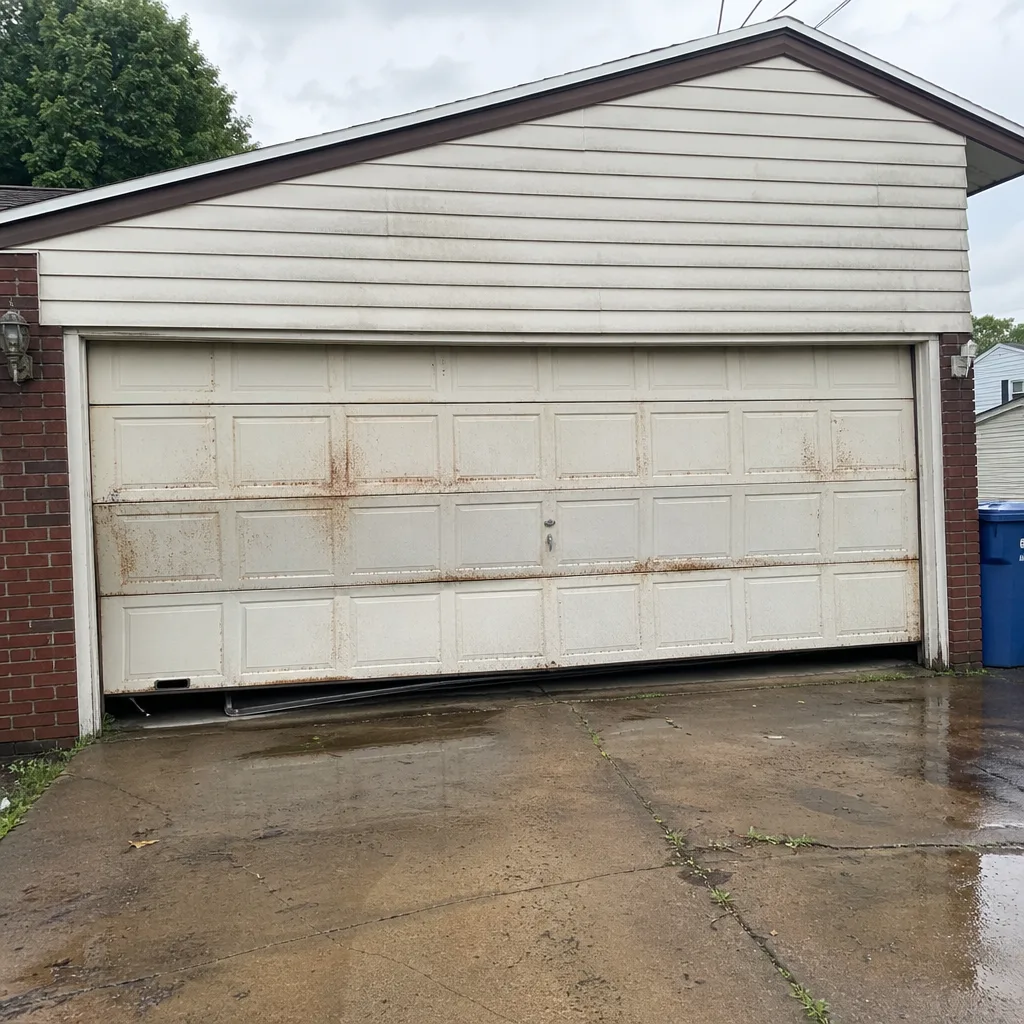 Before
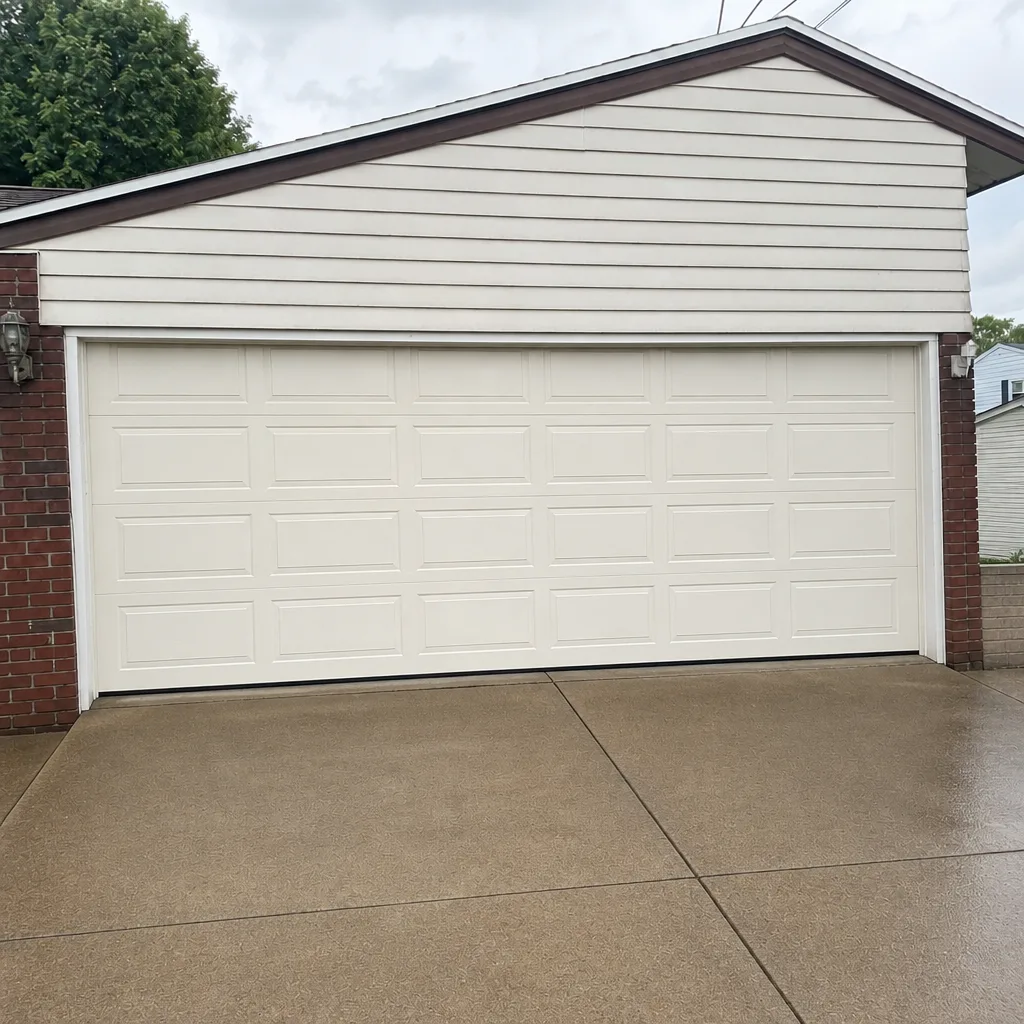 After
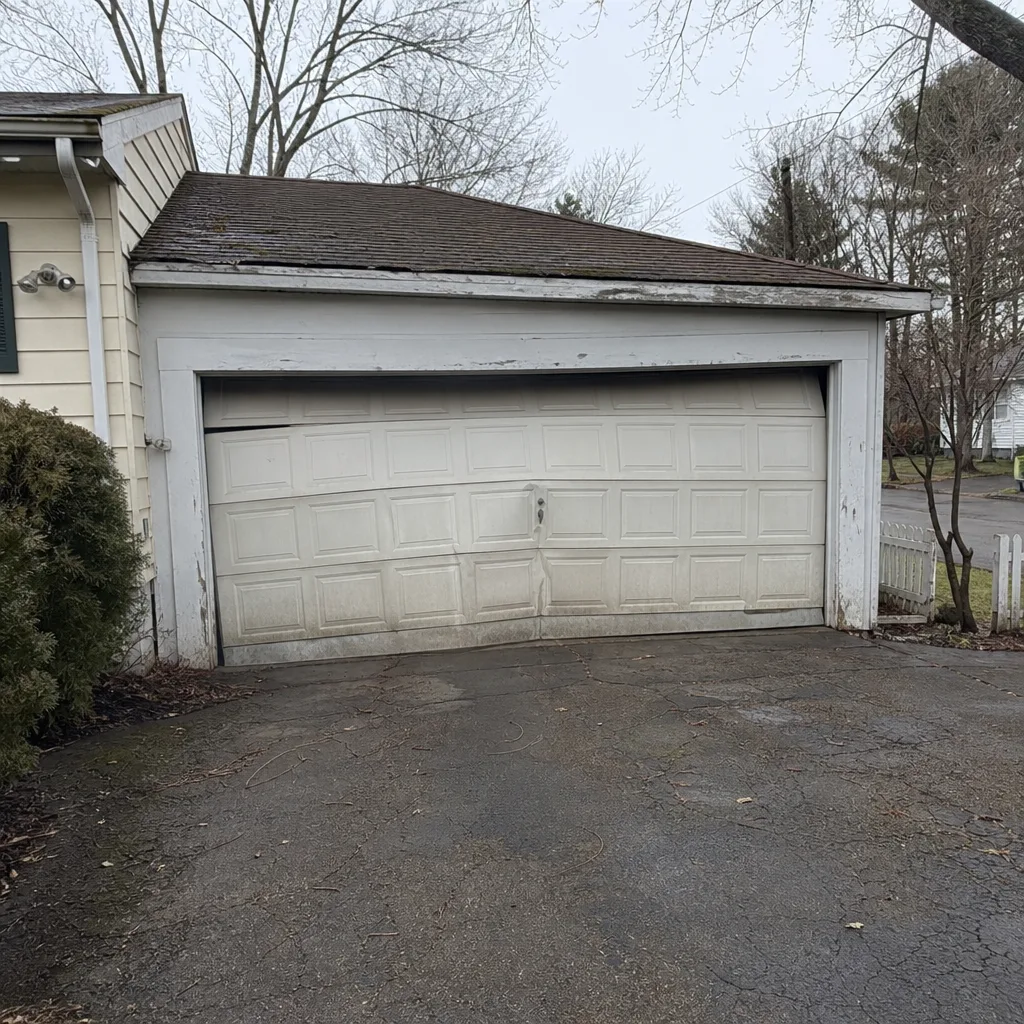 Before
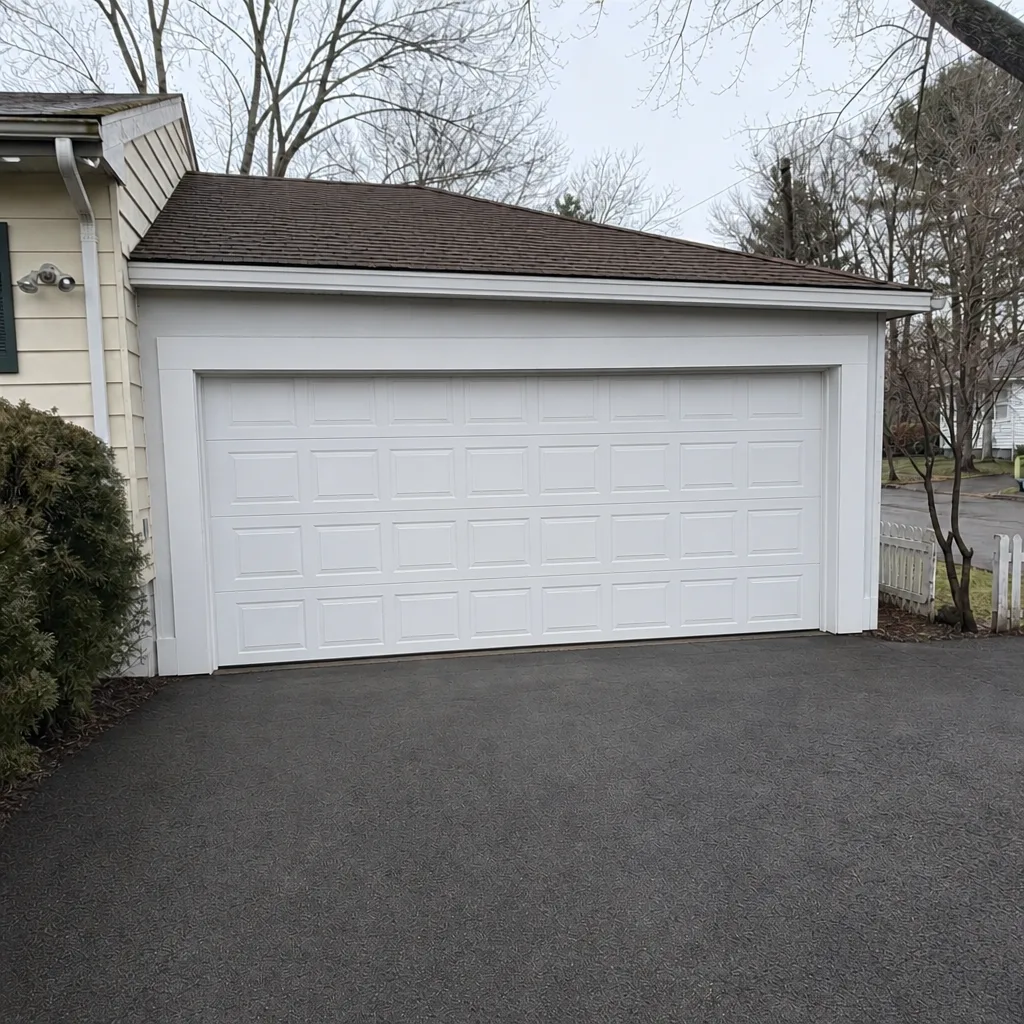 After
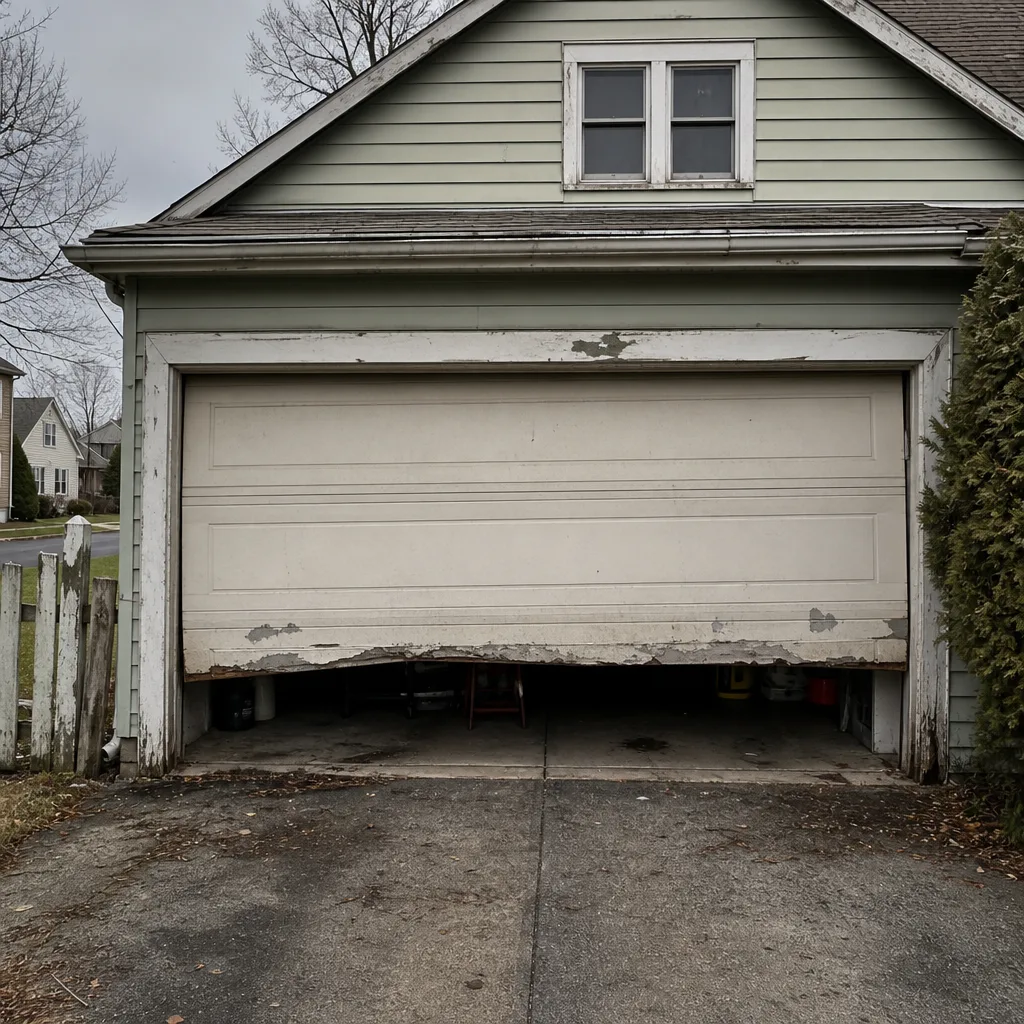 Before
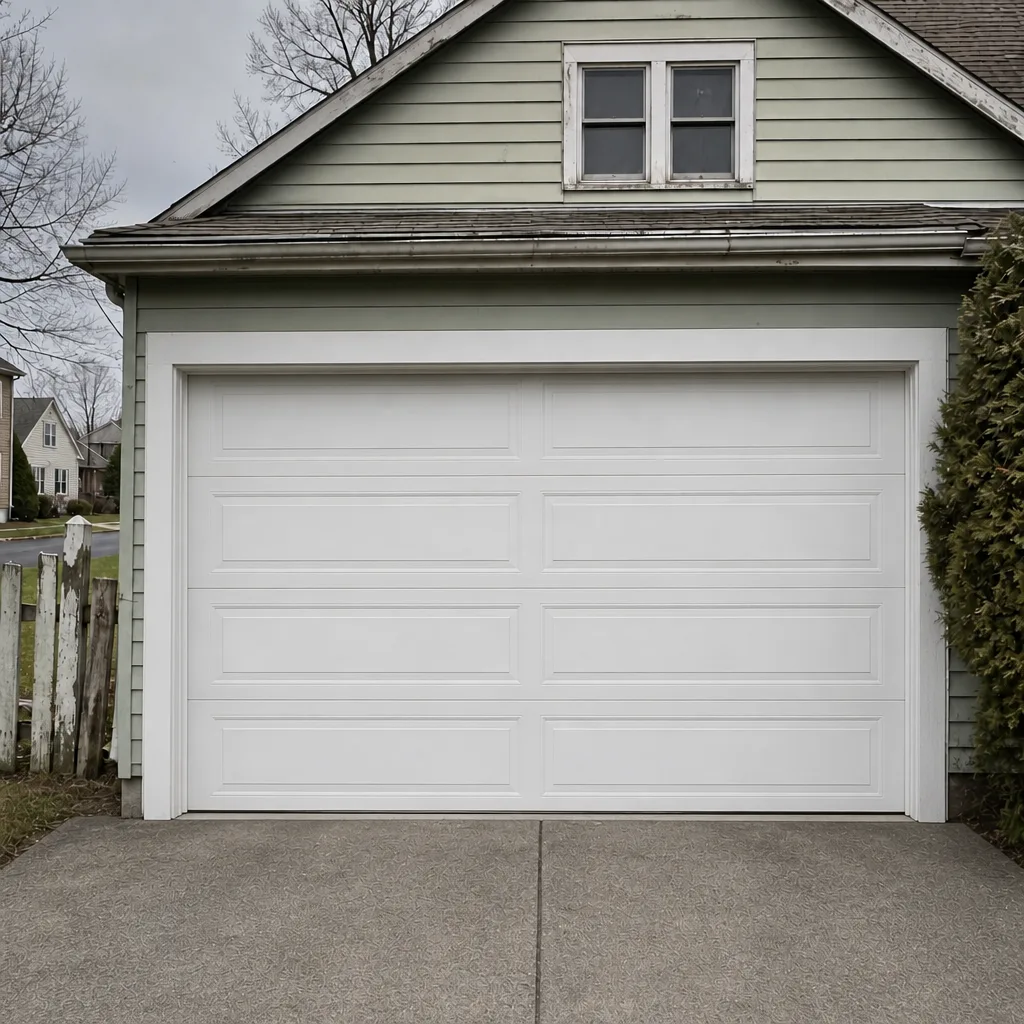 After
Common Mistakes to Avoid
In our experience across Hartford, the same mistakes come up:
- Buying on style alone. A door can look perfect in a photo and still have thin steel, a glued-on seal, and cheap hardware underneath. Ask for the gauge and the seal spec.
- Assuming “insulated” means the same thing everywhere. A polystyrene insert and an injected polyurethane core are both “insulated steel doors.” Their performance is not the same, especially in an attached garage with living space above.
- Ignoring opener compatibility. If your existing opener is a LiftMaster or Chamberlain of recent vintage, most doors are fine. Older units with proprietary signaling need a compatibility check before purchase.
- Skipping the wind load question on exposed garages. Corner lots and garages facing open ground are the ones where wind rating matters most. Ask before the door is ordered, not after installation.
- Buying a brand with no local parts support. A $100 savings at purchase can become weeks of downtime five years from now if the dealer network doesn’t reach Hartford County.
- Choosing the bottom seal by eye instead of by spec. Replaceable seals save significant cost. Ask how the seal attaches and whether replacement is a part swap or a panel replacement.
- Skipping the measure. On older Hartford homes, garage openings aren’t always square. A professional measure before installation catches that.
When to Call a Professional
Any door purchase or installation is worth a professional measure before you commit. The same applies if you’re unsure which product line fits your Hartford home, or if your existing door is behaving oddly in ways that suggest underlying issues. For spring repairs, opener electronics, panel damage, or a door that won’t open or close, the safety stake goes up sharply. A garage door spring under tension is genuinely dangerous to work on, and the diagnosis should be done by someone with experience. Hartford Garage Door Repair Pros offers free estimates in Hartford – call (877) 792-6067. We answer 24/7. Fast dispatch from 7am to 7pm, Sunday through Friday. Our technicians have up to 11 years of experience, and we work the brands most Hartford homes actually have installed.
Frequently Asked Questions
There’s no single best garage door brand for Hartford. Clopay, Amarr, and Wayne Dalton each have product lines that work well in different situations, and the right pick depends on whether your garage is attached, detached, conditioned, or converted. Match the product line to your use case, and pick the brand that fits. Call (877) 792-6067 for a free estimate – estimates are free.
Neither is universally better. Clopay’s polyurethane-injection method produces a denser, more rigid panel that performs slightly better in cold weather and in attached garages with conditioned space above. Amarr’s polystyrene inserts produce a good door at lower cost and are usually adequate for detached garages or attached garages without conditioned space above.
Yes, in nearly every case. Modern LiftMaster and Chamberlain openers pair cleanly with Clopay, Amarr, and Wayne Dalton doors without adapter hardware. If your opener is older than about fifteen years or you’re considering a very heavy insulated door, ask about opener compatibility before you finalize the door choice. Call (877) 792-6067 – estimates are free.
A wind load rating states how much wind pressure a garage door is designed to withstand without structural failure. Hartford homes with corner-lot or exposed garage openings benefit most, and wide doors benefit more than narrow ones. Ask for the rating and confirm the reinforcement hardware is included. Call (877) 792-6067 for a free estimate on your specific garage.
Parts availability depends on the brand and its local dealer support. Clopay, Amarr, and Wayne Dalton all have dealer networks covering Hartford County, so parts for door and hardware repairs generally arrive in days. Brands with no local support can take weeks. Call (877) 792-6067 for a free estimate.
No. We dispatch Sunday through Friday, 7am to 7pm, and we’re closed on Saturday. We answer 24/7; a call outside dispatch hours is booked into the next opening, Sunday through Friday, 7am to 7pm. Installation work is measured, ordered, and scheduled, so expect a written price before the job. Call (877) 792-6067 – estimates are free.
The Bottom Line
Picking a garage door brand for a Hartford home comes down to matching the product line to how the garage actually functions. Clopay and Amarr both produce insulated steel doors, but the insulation method makes a real performance difference in an attached garage with conditioned space above. Wayne Dalton offers value at the entry level, though its thinner steel and less robust parts network show up in the winter. Whichever brand you lean toward, ask for the specific product line, steel gauge, insulation method, bottom seal design, and opener compatibility before you commit. The brand printed on the door matters less than the spec sheet behind it. If you want help comparing options or have a door that needs service, call Hartford Garage Door Repair Pros at (877) 792-6067 for a free estimate. Our technicians have up to 11 years of experience, and we work across Clopay, Amarr, Wayne Dalton, LiftMaster, Chamberlain, Genie, Craftsman, and Raynor.
Written by the team at Hartford Garage Door Repair Pros.